




AnthroboticsLab
  • Home
  • Research
    Soft Robotics: Advancements in Bio-Inspired Flexible Systems

    Soft Robotics: Advancements in Bio-Inspired Flexible Systems

    Autonomous Robots and Reinforcement Learning: Paving the Way for Intelligent Machines

    Autonomous Robots and Reinforcement Learning: Paving the Way for Intelligent Machines

    Designing Adaptive User Interfaces: Enhancing Human-Computer Interaction through Dynamic Interfaces

    Designing Adaptive User Interfaces: Enhancing Human-Computer Interaction through Dynamic Interfaces

    Human-Machine Interaction in Augmented Reality and Virtual Reality: A Comprehensive Exploration

    Human-Machine Interaction in Augmented Reality and Virtual Reality: A Comprehensive Exploration

    Affective Computing and Human-Machine Emotional Interaction: The Future of Emotional AI

    Affective Computing and Human-Machine Emotional Interaction: The Future of Emotional AI

    Researching How Machines Can Understand, Recognize, and Respond to Human Emotions

    Researching How Machines Can Understand, Recognize, and Respond to Human Emotions

  • Technology
    Edge Computing: A Key Technology for Real-Time Computer Vision Applications

    Edge Computing: A Key Technology for Real-Time Computer Vision Applications

    Image Fusion in Computer Vision: Enhancing Scene Understanding Through Multi-Sensor Integration

    Image Fusion in Computer Vision: Enhancing Scene Understanding Through Multi-Sensor Integration

    Sensor Fusion Technology: Achieving High-Precision Environmental Perception in Modern Robotics

    Sensor Fusion Technology: Achieving High-Precision Environmental Perception in Modern Robotics

    3D Vision Reconstruction and Depth Estimation: Foundations, Techniques, and Applications

    3D Vision Reconstruction and Depth Estimation: Foundations, Techniques, and Applications

    Computer Vision: The Foundation of Robotic Perception and Its Broad Applications in Autonomous Driving, Industrial Automation, and Medical Surgery

    Computer Vision: The Foundation of Robotic Perception and Its Broad Applications in Autonomous Driving, Industrial Automation, and Medical Surgery

    Ensuring Robots Do Not Harm Humans While Performing Tasks

    Ensuring Robots Do Not Harm Humans While Performing Tasks

  • Industry
    The Application of Robotics and Automated Logistics Systems in Supply Chain Management

    The Application of Robotics and Automated Logistics Systems in Supply Chain Management

    Collaborative Robots and Human Workers: Enhancing Productivity and Ensuring Worker Safety

    Collaborative Robots and Human Workers: Enhancing Productivity and Ensuring Worker Safety

    Modern Production Lines: Emphasizing Flexibility and Customization

    Modern Production Lines: Emphasizing Flexibility and Customization

    The Expanding Role of Robots in Manufacturing: Advancements, Applications, and Future Prospects

    The Expanding Role of Robots in Manufacturing: Advancements, Applications, and Future Prospects

    Industry 4.0: Revolutionizing Manufacturing with IoT, AI, Robotics, and Big Data

    Industry 4.0: Revolutionizing Manufacturing with IoT, AI, Robotics, and Big Data

    Smart Manufacturing and Industry 4.0: Revolutionizing the Future of Production

    Smart Manufacturing and Industry 4.0: Revolutionizing the Future of Production

  • Insights
    How to Improve Robot Flexibility While Ensuring Strength and Durability: A Major Technological Challenge

    How to Improve Robot Flexibility While Ensuring Strength and Durability: A Major Technological Challenge

    Expert Interview: The Future of Biomimicry in Technology and Innovation

    Expert Interview: The Future of Biomimicry in Technology and Innovation

    Biomimetic Robots: Drawing Inspiration from Nature to Simulate the Behavior and Structure of Plants and Animals

    Biomimetic Robots: Drawing Inspiration from Nature to Simulate the Behavior and Structure of Plants and Animals

    Recent Advances in Flexible Materials and Bionic Muscle Actuation Technologies

    Recent Advances in Flexible Materials and Bionic Muscle Actuation Technologies

    Integrating Artificial Intelligence and Biomimetics: How Bionic Robots in Healthcare Can Provide Personalized Treatment Plans

    Integrating Artificial Intelligence and Biomimetics: How Bionic Robots in Healthcare Can Provide Personalized Treatment Plans

    The Great Potential of Bionic Robots in Neurorehabilitation

    The Great Potential of Bionic Robots in Neurorehabilitation

  • Futures
    Robotics and Societal Change: Smart Cities and Digitalized Living

    Robotics and Societal Change: Smart Cities and Digitalized Living

    The Widespread Application of Robotics: Potential Impact on Traditional Jobs

    The Widespread Application of Robotics: Potential Impact on Traditional Jobs

    Smart Homes and Life Assistants: The Future of Everyday Living

    Smart Homes and Life Assistants: The Future of Everyday Living

    The Expanding Role of Robots in the Service Industry: From Customer Service to Personalized Healthcare

    The Expanding Role of Robots in the Service Industry: From Customer Service to Personalized Healthcare

    Fully Automated Production and Services: The Future of Industry and Innovation

    Fully Automated Production and Services: The Future of Industry and Innovation

    The Future of Robots: From Tools to Understanding, Learning, and Responding to Human Society

    The Future of Robots: From Tools to Understanding, Learning, and Responding to Human Society

AnthroboticsLab
  • Home
  • Research
    Soft Robotics: Advancements in Bio-Inspired Flexible Systems

    Soft Robotics: Advancements in Bio-Inspired Flexible Systems

    Autonomous Robots and Reinforcement Learning: Paving the Way for Intelligent Machines

    Autonomous Robots and Reinforcement Learning: Paving the Way for Intelligent Machines

    Designing Adaptive User Interfaces: Enhancing Human-Computer Interaction through Dynamic Interfaces

    Designing Adaptive User Interfaces: Enhancing Human-Computer Interaction through Dynamic Interfaces

    Human-Machine Interaction in Augmented Reality and Virtual Reality: A Comprehensive Exploration

    Human-Machine Interaction in Augmented Reality and Virtual Reality: A Comprehensive Exploration

    Affective Computing and Human-Machine Emotional Interaction: The Future of Emotional AI

    Affective Computing and Human-Machine Emotional Interaction: The Future of Emotional AI

    Researching How Machines Can Understand, Recognize, and Respond to Human Emotions

    Researching How Machines Can Understand, Recognize, and Respond to Human Emotions

  • Technology
    Edge Computing: A Key Technology for Real-Time Computer Vision Applications

    Edge Computing: A Key Technology for Real-Time Computer Vision Applications

    Image Fusion in Computer Vision: Enhancing Scene Understanding Through Multi-Sensor Integration

    Image Fusion in Computer Vision: Enhancing Scene Understanding Through Multi-Sensor Integration

    Sensor Fusion Technology: Achieving High-Precision Environmental Perception in Modern Robotics

    Sensor Fusion Technology: Achieving High-Precision Environmental Perception in Modern Robotics

    3D Vision Reconstruction and Depth Estimation: Foundations, Techniques, and Applications

    3D Vision Reconstruction and Depth Estimation: Foundations, Techniques, and Applications

    Computer Vision: The Foundation of Robotic Perception and Its Broad Applications in Autonomous Driving, Industrial Automation, and Medical Surgery

    Computer Vision: The Foundation of Robotic Perception and Its Broad Applications in Autonomous Driving, Industrial Automation, and Medical Surgery

    Ensuring Robots Do Not Harm Humans While Performing Tasks

    Ensuring Robots Do Not Harm Humans While Performing Tasks

  • Industry
    The Application of Robotics and Automated Logistics Systems in Supply Chain Management

    The Application of Robotics and Automated Logistics Systems in Supply Chain Management

    Collaborative Robots and Human Workers: Enhancing Productivity and Ensuring Worker Safety

    Collaborative Robots and Human Workers: Enhancing Productivity and Ensuring Worker Safety

    Modern Production Lines: Emphasizing Flexibility and Customization

    Modern Production Lines: Emphasizing Flexibility and Customization

    The Expanding Role of Robots in Manufacturing: Advancements, Applications, and Future Prospects

    The Expanding Role of Robots in Manufacturing: Advancements, Applications, and Future Prospects

    Industry 4.0: Revolutionizing Manufacturing with IoT, AI, Robotics, and Big Data

    Industry 4.0: Revolutionizing Manufacturing with IoT, AI, Robotics, and Big Data

    Smart Manufacturing and Industry 4.0: Revolutionizing the Future of Production

    Smart Manufacturing and Industry 4.0: Revolutionizing the Future of Production

  • Insights
    How to Improve Robot Flexibility While Ensuring Strength and Durability: A Major Technological Challenge

    How to Improve Robot Flexibility While Ensuring Strength and Durability: A Major Technological Challenge

    Expert Interview: The Future of Biomimicry in Technology and Innovation

    Expert Interview: The Future of Biomimicry in Technology and Innovation

    Biomimetic Robots: Drawing Inspiration from Nature to Simulate the Behavior and Structure of Plants and Animals

    Biomimetic Robots: Drawing Inspiration from Nature to Simulate the Behavior and Structure of Plants and Animals

    Recent Advances in Flexible Materials and Bionic Muscle Actuation Technologies

    Recent Advances in Flexible Materials and Bionic Muscle Actuation Technologies

    Integrating Artificial Intelligence and Biomimetics: How Bionic Robots in Healthcare Can Provide Personalized Treatment Plans

    Integrating Artificial Intelligence and Biomimetics: How Bionic Robots in Healthcare Can Provide Personalized Treatment Plans

    The Great Potential of Bionic Robots in Neurorehabilitation

    The Great Potential of Bionic Robots in Neurorehabilitation

  • Futures
    Robotics and Societal Change: Smart Cities and Digitalized Living

    Robotics and Societal Change: Smart Cities and Digitalized Living

    The Widespread Application of Robotics: Potential Impact on Traditional Jobs

    The Widespread Application of Robotics: Potential Impact on Traditional Jobs

    Smart Homes and Life Assistants: The Future of Everyday Living

    Smart Homes and Life Assistants: The Future of Everyday Living

    The Expanding Role of Robots in the Service Industry: From Customer Service to Personalized Healthcare

    The Expanding Role of Robots in the Service Industry: From Customer Service to Personalized Healthcare

    Fully Automated Production and Services: The Future of Industry and Innovation

    Fully Automated Production and Services: The Future of Industry and Innovation

    The Future of Robots: From Tools to Understanding, Learning, and Responding to Human Society

    The Future of Robots: From Tools to Understanding, Learning, and Responding to Human Society

AnthroboticsLab
No Result
View All Result
Home Industry

The Convergence of Robotics and IoT Technology: Driving the Development of Smart Factories

October 15, 2025
in Industry
The Convergence of Robotics and IoT Technology: Driving the Development of Smart Factories

1. Introduction

In the context of Industry 4.0, the boundaries between digital and physical systems are rapidly blurring, giving rise to fully interconnected, intelligent manufacturing environments. The integration of robotics and IoT technologies has emerged as a key driver in the establishment of smart factories—facilities where machines, robots, sensors, and production systems are seamlessly interconnected through the Internet.

Smart factories utilize a range of cutting-edge technologies to optimize production, enhance flexibility, and reduce costs, all while improving product quality. The convergence of robotics and IoT not only supports automation but also transforms how factories operate, offering greater visibility, control, and efficiency at every stage of the manufacturing process.

In this article, we will examine the fundamental role that robotics and IoT play in the development of smart factories. We will explore their synergistic effects, the benefits they bring to manufacturing operations, and the challenges businesses face as they work to integrate these technologies into their production systems.


2. What Are Smart Factories?

2.1 Defining Smart Factories

A smart factory is an advanced manufacturing facility that uses a variety of digital technologies, including IoT, artificial intelligence (AI), machine learning, cloud computing, and robotics, to monitor, control, and optimize the entire production process. The aim of a smart factory is to achieve efficiency, flexibility, and sustainability by connecting devices, machines, robots, and human workers in real-time.

Key characteristics of smart factories include:

  • Connected Devices: Machines and robots equipped with sensors and IoT technology communicate with each other and the central system to share data in real-time.
  • Autonomous Operations: Robotics and AI enable autonomous decision-making, allowing machines to adjust their behavior based on the information they receive.
  • Real-time Monitoring: Sensors and IoT devices provide continuous monitoring of production processes, enabling businesses to track performance, identify issues, and optimize operations.
  • Predictive Maintenance: IoT sensors monitor machine health, predicting when maintenance is needed, reducing downtime, and preventing unexpected failures.

2.2 The Role of IoT in Smart Factories

The Internet of Things (IoT) is a network of connected devices that communicate with each other and with central systems through the internet. In the context of smart factories, IoT connects various machines, sensors, robots, and workers, enabling real-time data sharing and control.

IoT technology in smart factories serves several key functions:

  • Data Collection: IoT sensors gather vast amounts of data on machine performance, environmental conditions, and production metrics.
  • Real-time Communication: Machines, robots, and workers can instantly communicate with each other, sharing information and adjusting operations as needed.
  • Automation and Optimization: The data collected by IoT devices is analyzed in real-time, enabling intelligent systems to make automated adjustments to improve production efficiency and product quality.

3. Robotics in Smart Factories

3.1 The Evolution of Robotics in Manufacturing

Robots have been an integral part of manufacturing since the 1960s, primarily used for tasks such as welding, assembly, and painting. However, the integration of robotics into smart factories has introduced more advanced functionalities, such as collaborative robots (cobots), autonomous mobile robots (AMRs), and robotic process automation (RPA).

  • Collaborative Robots (Cobots): Cobots are designed to work alongside human workers in a shared workspace, enhancing productivity while ensuring safety. These robots are often equipped with sensors and AI to adapt to their environment and collaborate seamlessly with humans.
  • Autonomous Mobile Robots (AMRs): AMRs are mobile robots capable of navigating factories autonomously. They are used for tasks like material handling, inventory management, and delivery, reducing the need for human labor and improving efficiency.
  • Robotic Process Automation (RPA): In addition to physical tasks, robots are increasingly being used in non-manufacturing processes, such as data entry and supply chain management, through RPA.

3.2 How Robotics Enhances Smart Factories

Robots play a central role in the operation of smart factories, automating complex tasks and improving operational efficiency. Key contributions include:

  • Precision and Consistency: Robots are known for their precision and consistency, making them ideal for tasks that require high accuracy, such as assembly, welding, and quality control.
  • 24/7 Operation: Unlike human workers, robots can operate around the clock without the need for rest, leading to increased production output and faster turnaround times.
  • Adaptability: Modern robots are highly adaptable, capable of handling a wide range of tasks without needing to be reprogrammed. This flexibility allows manufacturers to quickly change production lines to meet evolving market demands.
  • Collaborative Manufacturing: Cobots can work in tandem with human workers, performing repetitive, dangerous, or physically demanding tasks, while leaving more complex decision-making and creative tasks to humans.
4. The Synergy Between Robotics and IoT

4.1 Real-Time Data for Optimized Performance

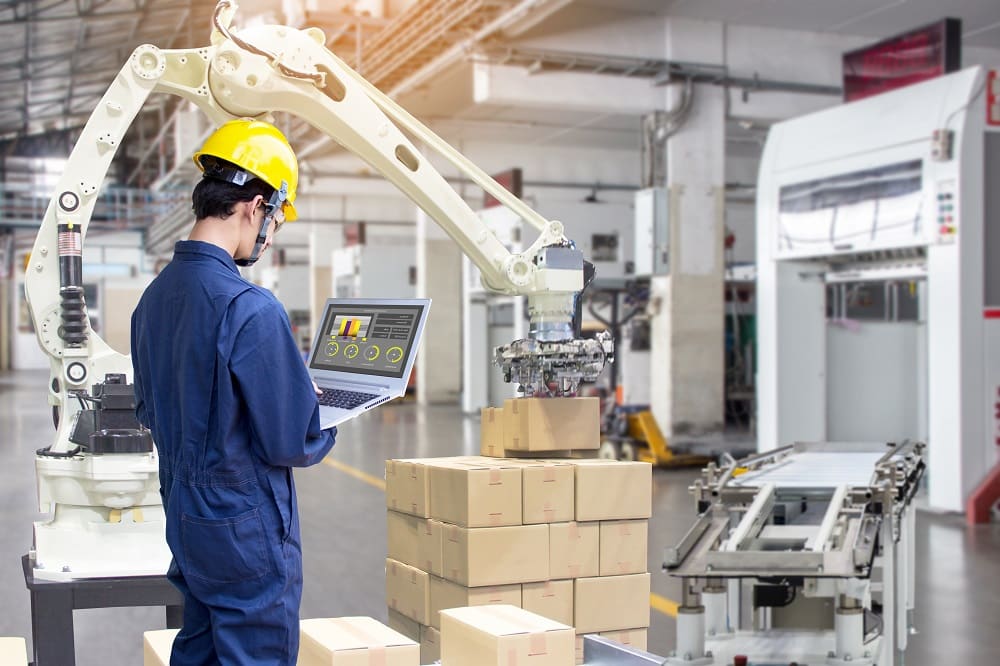
The integration of robotics and IoT in smart factories creates a feedback loop where real-time data from IoT sensors informs robotic actions, while robots contribute data back to the IoT network. This real-time data exchange enhances the ability to monitor and optimize production processes.

For example:

  • Dynamic Adjustment: If an IoT sensor detects a machine anomaly or a deviation from production standards, robots can automatically adjust their operations to compensate for these changes, ensuring the manufacturing process continues smoothly.
  • Performance Monitoring: IoT sensors embedded in robots track their performance in real time, allowing for continuous monitoring and fine-tuning to maximize efficiency and productivity.

4.2 Predictive Maintenance and Reduced Downtime

One of the most significant advantages of combining robotics with IoT technology is predictive maintenance. IoT sensors monitor the condition of machines and robots, detecting early signs of wear and tear, such as temperature fluctuations, vibration, or performance degradation. This data is sent to a central system, which analyzes it to predict when maintenance is needed, preventing unexpected breakdowns and reducing costly downtime.

The synergy between robots and IoT allows for:

  • Real-Time Monitoring: Constant monitoring of robots’ health ensures early detection of faults.
  • Smart Maintenance Scheduling: Maintenance tasks are carried out at the most optimal times, minimizing disruption to production.

5. Benefits of Integrating Robotics and IoT in Smart Factories

5.1 Increased Efficiency and Productivity

By automating complex tasks and enabling real-time monitoring, robots and IoT systems work together to streamline production processes. This integration results in:

  • Faster Production Cycles: The ability to continuously monitor and adjust operations means that bottlenecks can be quickly identified and addressed, speeding up production cycles.
  • Optimized Resource Utilization: IoT sensors track the usage of materials, energy, and labor, allowing manufacturers to optimize their resources and reduce waste.

5.2 Enhanced Flexibility and Customization

With the ability to rapidly adjust production lines and customize processes, smart factories are far more flexible than traditional manufacturing environments. Robots and IoT systems can quickly adapt to:

  • Market Demands: When demand for a specific product increases, robots can adjust the production process without needing significant reprogramming, allowing businesses to scale operations efficiently.
  • Product Customization: Smart factories enable mass customization, where products are tailored to individual customer preferences while still benefiting from the efficiency of mass production.

5.3 Improved Quality Control

The integration of robots and IoT allows for continuous monitoring of production quality. IoT sensors can detect defects in real time, alerting robots to make adjustments or halt production if necessary. Additionally, robots can perform consistent and precise quality checks, ensuring that products meet the highest standards.


6. Challenges in Implementing Robotics and IoT in Smart Factories

6.1 High Initial Investment

While the benefits of robotics and IoT are clear, the initial cost of implementing these technologies can be substantial. Many manufacturers, particularly smaller companies, may struggle to afford the investment required for high-end robots and IoT infrastructure. However, the long-term savings from increased productivity and efficiency often outweigh the initial cost.

6.2 Integration Complexity

Integrating robotics and IoT into existing production systems can be complex. Many factories rely on legacy equipment that may not be compatible with modern IoT sensors or robotic systems. The process of upgrading these systems and ensuring they work together smoothly can be challenging and time-consuming.

6.3 Data Security Concerns

As factories become more connected, the risk of cyberattacks and data breaches increases. Manufacturers must invest in robust cybersecurity measures to protect sensitive data and ensure the integrity of their IoT networks and robotic systems.


7. The Future of Robotics and IoT in Smart Factories

As robotics and IoT technologies continue to evolve, the future of smart factories looks increasingly promising. The integration of 5G networks, edge computing, and AI-driven analytics will further enhance the capabilities of smart factories, enabling even more efficient and autonomous production processes.

  • AI-Powered Robots: With advances in AI, robots will be able to make more complex decisions, optimize workflows autonomously, and predict potential issues before they arise.
  • Edge Computing: Edge computing will enable real-time data processing at the source, reducing latency and improving decision-making speed.
  • Global Connectivity: The proliferation of 5G networks will allow for more efficient communication between robots, IoT devices, and centralized cloud systems, enabling real-time global collaboration and coordination across factories.

8. Conclusion

The combination of robotics and IoT technology is playing a transformative role in the development of smart factories. By automating production processes, enhancing flexibility, and providing real-time insights into factory operations, these technologies are helping manufacturers achieve unprecedented levels of efficiency and productivity. As the world continues to embrace Industry 4.0, the integration of robotics and IoT will remain at the heart of manufacturing innovation, driving the next generation of smart, connected factories that will define the future of industrial production.
Tags: IndustryIoT TechnologySmart Factories
ShareTweetShare

Related Posts

The Application of Robotics and Automated Logistics Systems in Supply Chain Management
Industry

The Application of Robotics and Automated Logistics Systems in Supply Chain Management

December 1, 2025
Collaborative Robots and Human Workers: Enhancing Productivity and Ensuring Worker Safety
Industry

Collaborative Robots and Human Workers: Enhancing Productivity and Ensuring Worker Safety

November 30, 2025
Modern Production Lines: Emphasizing Flexibility and Customization
Industry

Modern Production Lines: Emphasizing Flexibility and Customization

November 29, 2025
The Expanding Role of Robots in Manufacturing: Advancements, Applications, and Future Prospects
Industry

The Expanding Role of Robots in Manufacturing: Advancements, Applications, and Future Prospects

November 28, 2025
Industry 4.0: Revolutionizing Manufacturing with IoT, AI, Robotics, and Big Data
Industry

Industry 4.0: Revolutionizing Manufacturing with IoT, AI, Robotics, and Big Data

November 27, 2025
Smart Manufacturing and Industry 4.0: Revolutionizing the Future of Production
Industry

Smart Manufacturing and Industry 4.0: Revolutionizing the Future of Production

November 26, 2025
Leave Comment
  • Trending
  • Comments
  • Latest
The Revolutionary Impact of Robotics on Disaster Rescue and Environmental Protection

The Revolutionary Impact of Robotics on Disaster Rescue and Environmental Protection

October 20, 2025
Defining the Relationship Between Humans and Robots

Defining the Relationship Between Humans and Robots

October 20, 2025
Biomimetics: A Multidisciplinary Approach to the Future of Robotics and Innovation

Biomimetics: A Multidisciplinary Approach to the Future of Robotics and Innovation

October 20, 2025
How Robots Understand, Respond to, and Simulate Human Emotions to Enhance Interaction Experience

How Robots Understand, Respond to, and Simulate Human Emotions to Enhance Interaction Experience

October 20, 2025
The Integration of Artificial Intelligence and Human-Computer Interaction

The Integration of Artificial Intelligence and Human-Computer Interaction

Researching How Machines Can Recognize and Understand Human Emotions to Improve the Naturalness of Human-Computer Interaction

Researching How Machines Can Recognize and Understand Human Emotions to Improve the Naturalness of Human-Computer Interaction

AI Can Recognize User Emotions Through Facial Expressions, Voice Tones, and Other Signals and Respond Accordingly

AI Can Recognize User Emotions Through Facial Expressions, Voice Tones, and Other Signals and Respond Accordingly

Voice Assistant Research Drives Breakthroughs in Speech Recognition and Natural Language Understanding

Voice Assistant Research Drives Breakthroughs in Speech Recognition and Natural Language Understanding

Robotics and Societal Change: Smart Cities and Digitalized Living

Robotics and Societal Change: Smart Cities and Digitalized Living

December 1, 2025
How to Improve Robot Flexibility While Ensuring Strength and Durability: A Major Technological Challenge

How to Improve Robot Flexibility While Ensuring Strength and Durability: A Major Technological Challenge

December 1, 2025
The Application of Robotics and Automated Logistics Systems in Supply Chain Management

The Application of Robotics and Automated Logistics Systems in Supply Chain Management

December 1, 2025
Edge Computing: A Key Technology for Real-Time Computer Vision Applications

Edge Computing: A Key Technology for Real-Time Computer Vision Applications

December 1, 2025
AnthroboticsLab

Through expert commentary and deep dives into industry trends and ethical considerations, we bridge the gap between academic research and real-world application, fostering a deeper understanding of our technological future.

© 2025 anthroboticslab.com. contacts:[email protected]

No Result
View All Result
  • Home
  • Research
  • Technology
  • Industry
  • Insights
  • Futures

© 2025 anthroboticslab.com. contacts:[email protected]

Welcome Back!

Login to your account below

Forgotten Password?

Retrieve your password

Please enter your username or email address to reset your password.

Log In