AnthroboticsLab
  • Home
  • Research
    Soft Robotics: Advancements in Bio-Inspired Flexible Systems

    Soft Robotics: Advancements in Bio-Inspired Flexible Systems

    Autonomous Robots and Reinforcement Learning: Paving the Way for Intelligent Machines

    Autonomous Robots and Reinforcement Learning: Paving the Way for Intelligent Machines

    Designing Adaptive User Interfaces: Enhancing Human-Computer Interaction through Dynamic Interfaces

    Designing Adaptive User Interfaces: Enhancing Human-Computer Interaction through Dynamic Interfaces

    Human-Machine Interaction in Augmented Reality and Virtual Reality: A Comprehensive Exploration

    Human-Machine Interaction in Augmented Reality and Virtual Reality: A Comprehensive Exploration

    Affective Computing and Human-Machine Emotional Interaction: The Future of Emotional AI

    Affective Computing and Human-Machine Emotional Interaction: The Future of Emotional AI

    Researching How Machines Can Understand, Recognize, and Respond to Human Emotions

    Researching How Machines Can Understand, Recognize, and Respond to Human Emotions

  • Technology
    Edge Computing: A Key Technology for Real-Time Computer Vision Applications

    Edge Computing: A Key Technology for Real-Time Computer Vision Applications

    Image Fusion in Computer Vision: Enhancing Scene Understanding Through Multi-Sensor Integration

    Image Fusion in Computer Vision: Enhancing Scene Understanding Through Multi-Sensor Integration

    Sensor Fusion Technology: Achieving High-Precision Environmental Perception in Modern Robotics

    Sensor Fusion Technology: Achieving High-Precision Environmental Perception in Modern Robotics

    3D Vision Reconstruction and Depth Estimation: Foundations, Techniques, and Applications

    3D Vision Reconstruction and Depth Estimation: Foundations, Techniques, and Applications

    Computer Vision: The Foundation of Robotic Perception and Its Broad Applications in Autonomous Driving, Industrial Automation, and Medical Surgery

    Computer Vision: The Foundation of Robotic Perception and Its Broad Applications in Autonomous Driving, Industrial Automation, and Medical Surgery

    Ensuring Robots Do Not Harm Humans While Performing Tasks

    Ensuring Robots Do Not Harm Humans While Performing Tasks

  • Industry
    The Application of Robotics and Automated Logistics Systems in Supply Chain Management

    The Application of Robotics and Automated Logistics Systems in Supply Chain Management

    Collaborative Robots and Human Workers: Enhancing Productivity and Ensuring Worker Safety

    Collaborative Robots and Human Workers: Enhancing Productivity and Ensuring Worker Safety

    Modern Production Lines: Emphasizing Flexibility and Customization

    Modern Production Lines: Emphasizing Flexibility and Customization

    The Expanding Role of Robots in Manufacturing: Advancements, Applications, and Future Prospects

    The Expanding Role of Robots in Manufacturing: Advancements, Applications, and Future Prospects

    Industry 4.0: Revolutionizing Manufacturing with IoT, AI, Robotics, and Big Data

    Industry 4.0: Revolutionizing Manufacturing with IoT, AI, Robotics, and Big Data

    Smart Manufacturing and Industry 4.0: Revolutionizing the Future of Production

    Smart Manufacturing and Industry 4.0: Revolutionizing the Future of Production

  • Insights
    How to Improve Robot Flexibility While Ensuring Strength and Durability: A Major Technological Challenge

    How to Improve Robot Flexibility While Ensuring Strength and Durability: A Major Technological Challenge

    Expert Interview: The Future of Biomimicry in Technology and Innovation

    Expert Interview: The Future of Biomimicry in Technology and Innovation

    Biomimetic Robots: Drawing Inspiration from Nature to Simulate the Behavior and Structure of Plants and Animals

    Biomimetic Robots: Drawing Inspiration from Nature to Simulate the Behavior and Structure of Plants and Animals

    Recent Advances in Flexible Materials and Bionic Muscle Actuation Technologies

    Recent Advances in Flexible Materials and Bionic Muscle Actuation Technologies

    Integrating Artificial Intelligence and Biomimetics: How Bionic Robots in Healthcare Can Provide Personalized Treatment Plans

    Integrating Artificial Intelligence and Biomimetics: How Bionic Robots in Healthcare Can Provide Personalized Treatment Plans

    The Great Potential of Bionic Robots in Neurorehabilitation

    The Great Potential of Bionic Robots in Neurorehabilitation

  • Futures
    Robotics and Societal Change: Smart Cities and Digitalized Living

    Robotics and Societal Change: Smart Cities and Digitalized Living

    The Widespread Application of Robotics: Potential Impact on Traditional Jobs

    The Widespread Application of Robotics: Potential Impact on Traditional Jobs

    Smart Homes and Life Assistants: The Future of Everyday Living

    Smart Homes and Life Assistants: The Future of Everyday Living

    The Expanding Role of Robots in the Service Industry: From Customer Service to Personalized Healthcare

    The Expanding Role of Robots in the Service Industry: From Customer Service to Personalized Healthcare

    Fully Automated Production and Services: The Future of Industry and Innovation

    Fully Automated Production and Services: The Future of Industry and Innovation

    The Future of Robots: From Tools to Understanding, Learning, and Responding to Human Society

    The Future of Robots: From Tools to Understanding, Learning, and Responding to Human Society

AnthroboticsLab
  • Home
  • Research
    Soft Robotics: Advancements in Bio-Inspired Flexible Systems

    Soft Robotics: Advancements in Bio-Inspired Flexible Systems

    Autonomous Robots and Reinforcement Learning: Paving the Way for Intelligent Machines

    Autonomous Robots and Reinforcement Learning: Paving the Way for Intelligent Machines

    Designing Adaptive User Interfaces: Enhancing Human-Computer Interaction through Dynamic Interfaces

    Designing Adaptive User Interfaces: Enhancing Human-Computer Interaction through Dynamic Interfaces

    Human-Machine Interaction in Augmented Reality and Virtual Reality: A Comprehensive Exploration

    Human-Machine Interaction in Augmented Reality and Virtual Reality: A Comprehensive Exploration

    Affective Computing and Human-Machine Emotional Interaction: The Future of Emotional AI

    Affective Computing and Human-Machine Emotional Interaction: The Future of Emotional AI

    Researching How Machines Can Understand, Recognize, and Respond to Human Emotions

    Researching How Machines Can Understand, Recognize, and Respond to Human Emotions

  • Technology
    Edge Computing: A Key Technology for Real-Time Computer Vision Applications

    Edge Computing: A Key Technology for Real-Time Computer Vision Applications

    Image Fusion in Computer Vision: Enhancing Scene Understanding Through Multi-Sensor Integration

    Image Fusion in Computer Vision: Enhancing Scene Understanding Through Multi-Sensor Integration

    Sensor Fusion Technology: Achieving High-Precision Environmental Perception in Modern Robotics

    Sensor Fusion Technology: Achieving High-Precision Environmental Perception in Modern Robotics

    3D Vision Reconstruction and Depth Estimation: Foundations, Techniques, and Applications

    3D Vision Reconstruction and Depth Estimation: Foundations, Techniques, and Applications

    Computer Vision: The Foundation of Robotic Perception and Its Broad Applications in Autonomous Driving, Industrial Automation, and Medical Surgery

    Computer Vision: The Foundation of Robotic Perception and Its Broad Applications in Autonomous Driving, Industrial Automation, and Medical Surgery

    Ensuring Robots Do Not Harm Humans While Performing Tasks

    Ensuring Robots Do Not Harm Humans While Performing Tasks

  • Industry
    The Application of Robotics and Automated Logistics Systems in Supply Chain Management

    The Application of Robotics and Automated Logistics Systems in Supply Chain Management

    Collaborative Robots and Human Workers: Enhancing Productivity and Ensuring Worker Safety

    Collaborative Robots and Human Workers: Enhancing Productivity and Ensuring Worker Safety

    Modern Production Lines: Emphasizing Flexibility and Customization

    Modern Production Lines: Emphasizing Flexibility and Customization

    The Expanding Role of Robots in Manufacturing: Advancements, Applications, and Future Prospects

    The Expanding Role of Robots in Manufacturing: Advancements, Applications, and Future Prospects

    Industry 4.0: Revolutionizing Manufacturing with IoT, AI, Robotics, and Big Data

    Industry 4.0: Revolutionizing Manufacturing with IoT, AI, Robotics, and Big Data

    Smart Manufacturing and Industry 4.0: Revolutionizing the Future of Production

    Smart Manufacturing and Industry 4.0: Revolutionizing the Future of Production

  • Insights
    How to Improve Robot Flexibility While Ensuring Strength and Durability: A Major Technological Challenge

    How to Improve Robot Flexibility While Ensuring Strength and Durability: A Major Technological Challenge

    Expert Interview: The Future of Biomimicry in Technology and Innovation

    Expert Interview: The Future of Biomimicry in Technology and Innovation

    Biomimetic Robots: Drawing Inspiration from Nature to Simulate the Behavior and Structure of Plants and Animals

    Biomimetic Robots: Drawing Inspiration from Nature to Simulate the Behavior and Structure of Plants and Animals

    Recent Advances in Flexible Materials and Bionic Muscle Actuation Technologies

    Recent Advances in Flexible Materials and Bionic Muscle Actuation Technologies

    Integrating Artificial Intelligence and Biomimetics: How Bionic Robots in Healthcare Can Provide Personalized Treatment Plans

    Integrating Artificial Intelligence and Biomimetics: How Bionic Robots in Healthcare Can Provide Personalized Treatment Plans

    The Great Potential of Bionic Robots in Neurorehabilitation

    The Great Potential of Bionic Robots in Neurorehabilitation

  • Futures
    Robotics and Societal Change: Smart Cities and Digitalized Living

    Robotics and Societal Change: Smart Cities and Digitalized Living

    The Widespread Application of Robotics: Potential Impact on Traditional Jobs

    The Widespread Application of Robotics: Potential Impact on Traditional Jobs

    Smart Homes and Life Assistants: The Future of Everyday Living

    Smart Homes and Life Assistants: The Future of Everyday Living

    The Expanding Role of Robots in the Service Industry: From Customer Service to Personalized Healthcare

    The Expanding Role of Robots in the Service Industry: From Customer Service to Personalized Healthcare

    Fully Automated Production and Services: The Future of Industry and Innovation

    Fully Automated Production and Services: The Future of Industry and Innovation

    The Future of Robots: From Tools to Understanding, Learning, and Responding to Human Society

    The Future of Robots: From Tools to Understanding, Learning, and Responding to Human Society

AnthroboticsLab
No Result
View All Result
Home Insights

Biomimetic Robotic Technology in the Design of Prosthetics and Assistive Devices

October 15, 2025
in Insights
Biomimetic Robotic Technology in the Design of Prosthetics and Assistive Devices

1. Introduction

In recent years, biomimetic robotics has made significant strides, particularly in the realm of assistive technology. The fusion of biological principles with advanced robotics has led to the development of devices that emulate natural movements and enhance the lives of those with mobility impairments. Through the design of biomimetic prosthetics and assistive devices, technology is offering solutions that not only restore lost functions but also improve independence and autonomy for individuals with disabilities.

At the forefront of this innovation are robotic prosthetics and assistive devices, which leverage advanced biomimetic principles to recreate the natural functions of the human body. These systems are now capable of mimicking human movement patterns more closely than ever before, with the ability to adapt to different environments and perform complex tasks. This paper provides an in-depth analysis of the advancements in biomimetic prosthetics and assistive devices, the underlying technologies that make them possible, and the broader societal implications of these innovations.


2. Biomimetic Prosthetics: Revolutionizing Limb Replacement

2.1 The Evolution of Prosthetics

Prosthetics have existed for centuries, with early versions made from wood and metal. However, these early prosthetics were rudimentary and lacked functionality. Over time, technological advancements allowed for more sophisticated designs, such as mechanical limbs controlled by muscle contractions or external actuators.

The real revolution came with the integration of biomimetic technology, which brought us closer to replicating the natural movement of human limbs. Biomimetic prosthetics seek to emulate the efficiency of biological systems, utilizing sensors, actuators, and neural interfaces to produce smooth, natural motion.

Today, prosthetics are not just replacements for lost limbs but are capable of performing complex actions, from walking and running to grasping objects and even fine motor tasks. These advancements have drastically improved the quality of life for amputees, restoring functions that were once thought irretrievable.

2.2 Key Technologies in Biomimetic Prosthetics

Several key technologies enable the development of biomimetic prosthetics:

  1. Neural Interfaces: The integration of brain-machine interfaces (BMIs) allows users to control prosthetic limbs through neurological signals. These signals are captured via electrodes placed on the skin or implanted directly into the nervous system, translating thought commands into mechanical actions. This interface enables direct control of the prosthesis, making the movement more intuitive and natural.
  2. Sensors and Feedback Systems: Advanced sensors, such as pressure sensors and force sensors, are incorporated into prosthetic limbs to provide feedback to the user. For instance, a prosthetic hand equipped with tactile sensors can sense the pressure exerted on an object, allowing for grasp force regulation. This feedback allows for more precise control, enhancing the dexterity and functionality of the prosthesis.
  3. Artificial Muscles: Inspired by biological muscles, artificial muscles made from materials like shape memory alloys or electroactive polymers provide the flexibility and strength necessary for realistic movement. These materials expand and contract in response to electrical signals, mimicking the action of human muscles and making prosthetic movement more fluid.
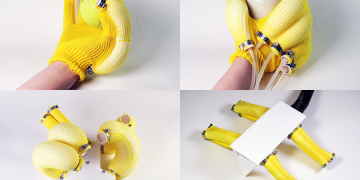
  4. Actuation Mechanisms: Actuators are the mechanical components that convert electrical energy into motion. By utilizing biomimetic designs, these actuators can replicate the complex range of motion that natural limbs possess. For example, the use of soft actuators enables prosthetics to move with the flexibility and dexterity of human limbs.

2.3 Examples of Biomimetic Prosthetics

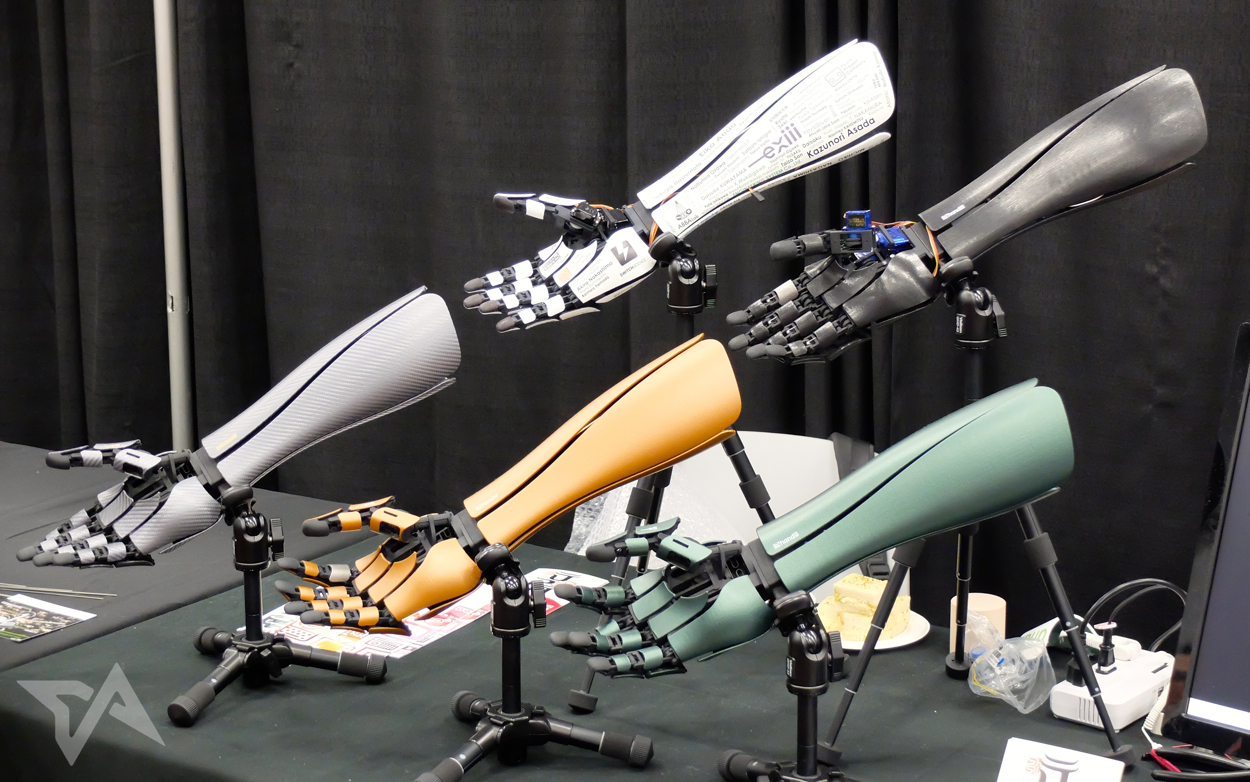
  • Bionic Hands: Modern bionic hands, such as those developed by companies like Ottobock and DEKA, use neural interfaces to allow users to control the prosthesis with their mind. These hands are equipped with tactile sensors and actuators, allowing them to perform fine motor tasks like writing, typing, or gripping small objects.
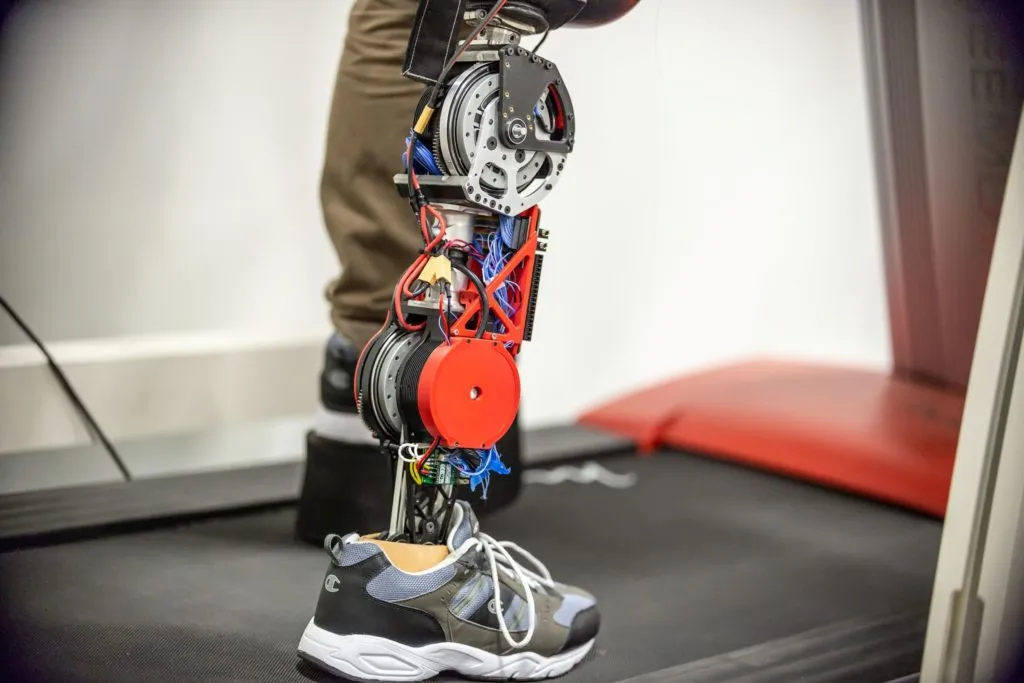
  • Biomimetic Legs: Prosthetic legs have also made significant advancements. Technologies like the Ottobock C-Leg incorporate microprocessors to adjust the stiffness and flexibility of the knee and ankle joints, providing smoother and more natural walking patterns. Robotic exoskeletons, like those from ReWalk, allow users with paralysis to stand and walk again, improving their mobility and independence.
3. Biomimetic Assistive Devices: Enhancing Mobility and Independence

3.1 Assistive Robotics for Mobility

In addition to prosthetics, biomimetic robotics is also being applied to the design of assistive devices that help people with mobility impairments regain independence. These devices include exoskeletons, robotic walkers, and wheelchairs that mimic the natural motion and functions of human limbs.

  • Exoskeletons: Exoskeletons are wearable robots designed to support and enhance a user’s physical movement. They are often used for individuals with spinal cord injuries, stroke survivors, or elderly patients with mobility issues. These devices mimic the flexion and extension of human joints, providing strength, stability, and movement assistance. Advanced biomimetic exoskeletons incorporate sensors, actuators, and machine learning algorithms to adapt to the user’s movements and provide real-time assistance.
  • Robotic Walkers: Unlike traditional walkers, robotic walkers are designed to assist with walking by providing active support to users. These devices use motorized legs and sensors to detect the user’s movements and provide dynamic assistance, ensuring that users maintain their balance and gait.
  • Smart Wheelchairs: Smart wheelchairs, often equipped with AI-driven navigation systems, allow users to control the wheelchair with minimal physical effort. Advanced wheelchairs can navigate obstacles, respond to voice commands, and even navigate autonomously in certain environments. Biomimetic designs in these systems ensure that they provide smooth, natural motion in various terrains.

3.2 Neural-Controlled Assistive Devices

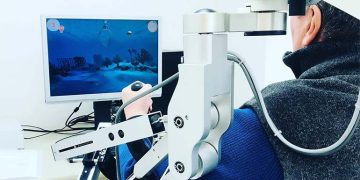
The integration of neural control with assistive devices opens up new possibilities for people with severe disabilities. Neuroprosthetic devices use brain-machine interfaces to enable users to control robotic devices, such as exoskeletons or prosthetic limbs, with their thoughts. This direct control allows for intuitive, natural movements, vastly improving the user’s quality of life.

  • Brain-Computer Interface (BCI): BCIs allow users to send commands directly from their brain to an assistive device. This technology has been used in the development of robotic arms, wheelchairs, and even exoskeletons, enabling users to regain autonomy and independence.

4. Challenges and Future Directions

4.1 Challenges in Biomimetic Design

Despite the significant advancements in biomimetic prosthetics and assistive devices, several challenges remain:

  1. Miniaturization: For these devices to work effectively, components need to be miniaturized without sacrificing functionality or performance. This requires the development of new materials and actuators that can provide the necessary strength and flexibility in a small form factor.
  2. Biocompatibility: Prosthetic limbs and assistive devices must be biocompatible to ensure they do not cause adverse reactions in the body. This involves using materials that do not trigger immune responses or lead to tissue rejection.
  3. Affordability and Accessibility: The development of cutting-edge biomimetic prosthetics and assistive devices comes with significant costs. While some of these devices are currently only available to individuals in developed nations, there is a push to make them more affordable and accessible to a global population.

4.2 Future Directions

The future of biomimetic prosthetics and assistive devices is promising, with advancements in AI, machine learning, and neural control paving the way for more advanced, personalized devices. Future prosthetics will likely feature self-learning algorithms that adapt to the user’s needs, improved sensory feedback systems, and even the ability to regenerate lost tissue through bio-robotic integration.

Additionally, as 3D printing and custom manufacturing evolve, it will become easier and more cost-effective to produce highly personalized devices, making biomimetic robotics more widely available to those in need.


5. Conclusion

Biomimetic robotic technology is transforming the design of prosthetics and assistive devices, offering individuals with disabilities the opportunity to regain independence, mobility, and functionality. By mimicking natural biological systems, these devices are moving beyond simple replacements and evolving into advanced tools that offer natural movement, precision control, and user adaptability. Although challenges remain, the rapid advancements in biomimetic prosthetics and assistive robotics promise to revolutionize the lives of millions, making the future of healthcare and assistive technology an exciting and transformative field.
Tags: Assistive DevicesBiomimetic RoboticInsights
ShareTweetShare

Related Posts

How to Improve Robot Flexibility While Ensuring Strength and Durability: A Major Technological Challenge
Insights

How to Improve Robot Flexibility While Ensuring Strength and Durability: A Major Technological Challenge

December 1, 2025
Expert Interview: The Future of Biomimicry in Technology and Innovation
Insights

Expert Interview: The Future of Biomimicry in Technology and Innovation

November 30, 2025
Biomimetic Robots: Drawing Inspiration from Nature to Simulate the Behavior and Structure of Plants and Animals
Insights

Biomimetic Robots: Drawing Inspiration from Nature to Simulate the Behavior and Structure of Plants and Animals

November 29, 2025
Recent Advances in Flexible Materials and Bionic Muscle Actuation Technologies
Insights

Recent Advances in Flexible Materials and Bionic Muscle Actuation Technologies

November 28, 2025
Integrating Artificial Intelligence and Biomimetics: How Bionic Robots in Healthcare Can Provide Personalized Treatment Plans
Insights

Integrating Artificial Intelligence and Biomimetics: How Bionic Robots in Healthcare Can Provide Personalized Treatment Plans

November 27, 2025
The Great Potential of Bionic Robots in Neurorehabilitation
Insights

The Great Potential of Bionic Robots in Neurorehabilitation

November 26, 2025
Leave Comment
  • Trending
  • Comments
  • Latest
The Revolutionary Impact of Robotics on Disaster Rescue and Environmental Protection

The Revolutionary Impact of Robotics on Disaster Rescue and Environmental Protection

October 20, 2025
Defining the Relationship Between Humans and Robots

Defining the Relationship Between Humans and Robots

October 20, 2025
Biomimetics: A Multidisciplinary Approach to the Future of Robotics and Innovation

Biomimetics: A Multidisciplinary Approach to the Future of Robotics and Innovation

October 20, 2025
How Robots Understand, Respond to, and Simulate Human Emotions to Enhance Interaction Experience

How Robots Understand, Respond to, and Simulate Human Emotions to Enhance Interaction Experience

October 20, 2025
The Integration of Artificial Intelligence and Human-Computer Interaction

The Integration of Artificial Intelligence and Human-Computer Interaction

Researching How Machines Can Recognize and Understand Human Emotions to Improve the Naturalness of Human-Computer Interaction

Researching How Machines Can Recognize and Understand Human Emotions to Improve the Naturalness of Human-Computer Interaction

AI Can Recognize User Emotions Through Facial Expressions, Voice Tones, and Other Signals and Respond Accordingly

AI Can Recognize User Emotions Through Facial Expressions, Voice Tones, and Other Signals and Respond Accordingly

Voice Assistant Research Drives Breakthroughs in Speech Recognition and Natural Language Understanding

Voice Assistant Research Drives Breakthroughs in Speech Recognition and Natural Language Understanding

Robotics and Societal Change: Smart Cities and Digitalized Living

Robotics and Societal Change: Smart Cities and Digitalized Living

December 1, 2025
How to Improve Robot Flexibility While Ensuring Strength and Durability: A Major Technological Challenge

How to Improve Robot Flexibility While Ensuring Strength and Durability: A Major Technological Challenge

December 1, 2025
The Application of Robotics and Automated Logistics Systems in Supply Chain Management

The Application of Robotics and Automated Logistics Systems in Supply Chain Management

December 1, 2025
Edge Computing: A Key Technology for Real-Time Computer Vision Applications

Edge Computing: A Key Technology for Real-Time Computer Vision Applications

December 1, 2025
AnthroboticsLab

Through expert commentary and deep dives into industry trends and ethical considerations, we bridge the gap between academic research and real-world application, fostering a deeper understanding of our technological future.

© 2025 anthroboticslab.com. contacts:[email protected]

No Result
View All Result
  • Home
  • Research
  • Technology
  • Industry
  • Insights
  • Futures

© 2025 anthroboticslab.com. contacts:[email protected]

Welcome Back!

Login to your account below

Forgotten Password?

Retrieve your password

Please enter your username or email address to reset your password.

Log In