



AnthroboticsLab
  • Home
  • Research
    Soft Robotics: Advancements in Bio-Inspired Flexible Systems

    Soft Robotics: Advancements in Bio-Inspired Flexible Systems

    Autonomous Robots and Reinforcement Learning: Paving the Way for Intelligent Machines

    Autonomous Robots and Reinforcement Learning: Paving the Way for Intelligent Machines

    Designing Adaptive User Interfaces: Enhancing Human-Computer Interaction through Dynamic Interfaces

    Designing Adaptive User Interfaces: Enhancing Human-Computer Interaction through Dynamic Interfaces

    Human-Machine Interaction in Augmented Reality and Virtual Reality: A Comprehensive Exploration

    Human-Machine Interaction in Augmented Reality and Virtual Reality: A Comprehensive Exploration

    Affective Computing and Human-Machine Emotional Interaction: The Future of Emotional AI

    Affective Computing and Human-Machine Emotional Interaction: The Future of Emotional AI

    Researching How Machines Can Understand, Recognize, and Respond to Human Emotions

    Researching How Machines Can Understand, Recognize, and Respond to Human Emotions

  • Technology
    Edge Computing: A Key Technology for Real-Time Computer Vision Applications

    Edge Computing: A Key Technology for Real-Time Computer Vision Applications

    Image Fusion in Computer Vision: Enhancing Scene Understanding Through Multi-Sensor Integration

    Image Fusion in Computer Vision: Enhancing Scene Understanding Through Multi-Sensor Integration

    Sensor Fusion Technology: Achieving High-Precision Environmental Perception in Modern Robotics

    Sensor Fusion Technology: Achieving High-Precision Environmental Perception in Modern Robotics

    3D Vision Reconstruction and Depth Estimation: Foundations, Techniques, and Applications

    3D Vision Reconstruction and Depth Estimation: Foundations, Techniques, and Applications

    Computer Vision: The Foundation of Robotic Perception and Its Broad Applications in Autonomous Driving, Industrial Automation, and Medical Surgery

    Computer Vision: The Foundation of Robotic Perception and Its Broad Applications in Autonomous Driving, Industrial Automation, and Medical Surgery

    Ensuring Robots Do Not Harm Humans While Performing Tasks

    Ensuring Robots Do Not Harm Humans While Performing Tasks

  • Industry
    The Application of Robotics and Automated Logistics Systems in Supply Chain Management

    The Application of Robotics and Automated Logistics Systems in Supply Chain Management

    Collaborative Robots and Human Workers: Enhancing Productivity and Ensuring Worker Safety

    Collaborative Robots and Human Workers: Enhancing Productivity and Ensuring Worker Safety

    Modern Production Lines: Emphasizing Flexibility and Customization

    Modern Production Lines: Emphasizing Flexibility and Customization

    The Expanding Role of Robots in Manufacturing: Advancements, Applications, and Future Prospects

    The Expanding Role of Robots in Manufacturing: Advancements, Applications, and Future Prospects

    Industry 4.0: Revolutionizing Manufacturing with IoT, AI, Robotics, and Big Data

    Industry 4.0: Revolutionizing Manufacturing with IoT, AI, Robotics, and Big Data

    Smart Manufacturing and Industry 4.0: Revolutionizing the Future of Production

    Smart Manufacturing and Industry 4.0: Revolutionizing the Future of Production

  • Insights
    How to Improve Robot Flexibility While Ensuring Strength and Durability: A Major Technological Challenge

    How to Improve Robot Flexibility While Ensuring Strength and Durability: A Major Technological Challenge

    Expert Interview: The Future of Biomimicry in Technology and Innovation

    Expert Interview: The Future of Biomimicry in Technology and Innovation

    Biomimetic Robots: Drawing Inspiration from Nature to Simulate the Behavior and Structure of Plants and Animals

    Biomimetic Robots: Drawing Inspiration from Nature to Simulate the Behavior and Structure of Plants and Animals

    Recent Advances in Flexible Materials and Bionic Muscle Actuation Technologies

    Recent Advances in Flexible Materials and Bionic Muscle Actuation Technologies

    Integrating Artificial Intelligence and Biomimetics: How Bionic Robots in Healthcare Can Provide Personalized Treatment Plans

    Integrating Artificial Intelligence and Biomimetics: How Bionic Robots in Healthcare Can Provide Personalized Treatment Plans

    The Great Potential of Bionic Robots in Neurorehabilitation

    The Great Potential of Bionic Robots in Neurorehabilitation

  • Futures
    Robotics and Societal Change: Smart Cities and Digitalized Living

    Robotics and Societal Change: Smart Cities and Digitalized Living

    The Widespread Application of Robotics: Potential Impact on Traditional Jobs

    The Widespread Application of Robotics: Potential Impact on Traditional Jobs

    Smart Homes and Life Assistants: The Future of Everyday Living

    Smart Homes and Life Assistants: The Future of Everyday Living

    The Expanding Role of Robots in the Service Industry: From Customer Service to Personalized Healthcare

    The Expanding Role of Robots in the Service Industry: From Customer Service to Personalized Healthcare

    Fully Automated Production and Services: The Future of Industry and Innovation

    Fully Automated Production and Services: The Future of Industry and Innovation

    The Future of Robots: From Tools to Understanding, Learning, and Responding to Human Society

    The Future of Robots: From Tools to Understanding, Learning, and Responding to Human Society

AnthroboticsLab
  • Home
  • Research
    Soft Robotics: Advancements in Bio-Inspired Flexible Systems

    Soft Robotics: Advancements in Bio-Inspired Flexible Systems

    Autonomous Robots and Reinforcement Learning: Paving the Way for Intelligent Machines

    Autonomous Robots and Reinforcement Learning: Paving the Way for Intelligent Machines

    Designing Adaptive User Interfaces: Enhancing Human-Computer Interaction through Dynamic Interfaces

    Designing Adaptive User Interfaces: Enhancing Human-Computer Interaction through Dynamic Interfaces

    Human-Machine Interaction in Augmented Reality and Virtual Reality: A Comprehensive Exploration

    Human-Machine Interaction in Augmented Reality and Virtual Reality: A Comprehensive Exploration

    Affective Computing and Human-Machine Emotional Interaction: The Future of Emotional AI

    Affective Computing and Human-Machine Emotional Interaction: The Future of Emotional AI

    Researching How Machines Can Understand, Recognize, and Respond to Human Emotions

    Researching How Machines Can Understand, Recognize, and Respond to Human Emotions

  • Technology
    Edge Computing: A Key Technology for Real-Time Computer Vision Applications

    Edge Computing: A Key Technology for Real-Time Computer Vision Applications

    Image Fusion in Computer Vision: Enhancing Scene Understanding Through Multi-Sensor Integration

    Image Fusion in Computer Vision: Enhancing Scene Understanding Through Multi-Sensor Integration

    Sensor Fusion Technology: Achieving High-Precision Environmental Perception in Modern Robotics

    Sensor Fusion Technology: Achieving High-Precision Environmental Perception in Modern Robotics

    3D Vision Reconstruction and Depth Estimation: Foundations, Techniques, and Applications

    3D Vision Reconstruction and Depth Estimation: Foundations, Techniques, and Applications

    Computer Vision: The Foundation of Robotic Perception and Its Broad Applications in Autonomous Driving, Industrial Automation, and Medical Surgery

    Computer Vision: The Foundation of Robotic Perception and Its Broad Applications in Autonomous Driving, Industrial Automation, and Medical Surgery

    Ensuring Robots Do Not Harm Humans While Performing Tasks

    Ensuring Robots Do Not Harm Humans While Performing Tasks

  • Industry
    The Application of Robotics and Automated Logistics Systems in Supply Chain Management

    The Application of Robotics and Automated Logistics Systems in Supply Chain Management

    Collaborative Robots and Human Workers: Enhancing Productivity and Ensuring Worker Safety

    Collaborative Robots and Human Workers: Enhancing Productivity and Ensuring Worker Safety

    Modern Production Lines: Emphasizing Flexibility and Customization

    Modern Production Lines: Emphasizing Flexibility and Customization

    The Expanding Role of Robots in Manufacturing: Advancements, Applications, and Future Prospects

    The Expanding Role of Robots in Manufacturing: Advancements, Applications, and Future Prospects

    Industry 4.0: Revolutionizing Manufacturing with IoT, AI, Robotics, and Big Data

    Industry 4.0: Revolutionizing Manufacturing with IoT, AI, Robotics, and Big Data

    Smart Manufacturing and Industry 4.0: Revolutionizing the Future of Production

    Smart Manufacturing and Industry 4.0: Revolutionizing the Future of Production

  • Insights
    How to Improve Robot Flexibility While Ensuring Strength and Durability: A Major Technological Challenge

    How to Improve Robot Flexibility While Ensuring Strength and Durability: A Major Technological Challenge

    Expert Interview: The Future of Biomimicry in Technology and Innovation

    Expert Interview: The Future of Biomimicry in Technology and Innovation

    Biomimetic Robots: Drawing Inspiration from Nature to Simulate the Behavior and Structure of Plants and Animals

    Biomimetic Robots: Drawing Inspiration from Nature to Simulate the Behavior and Structure of Plants and Animals

    Recent Advances in Flexible Materials and Bionic Muscle Actuation Technologies

    Recent Advances in Flexible Materials and Bionic Muscle Actuation Technologies

    Integrating Artificial Intelligence and Biomimetics: How Bionic Robots in Healthcare Can Provide Personalized Treatment Plans

    Integrating Artificial Intelligence and Biomimetics: How Bionic Robots in Healthcare Can Provide Personalized Treatment Plans

    The Great Potential of Bionic Robots in Neurorehabilitation

    The Great Potential of Bionic Robots in Neurorehabilitation

  • Futures
    Robotics and Societal Change: Smart Cities and Digitalized Living

    Robotics and Societal Change: Smart Cities and Digitalized Living

    The Widespread Application of Robotics: Potential Impact on Traditional Jobs

    The Widespread Application of Robotics: Potential Impact on Traditional Jobs

    Smart Homes and Life Assistants: The Future of Everyday Living

    Smart Homes and Life Assistants: The Future of Everyday Living

    The Expanding Role of Robots in the Service Industry: From Customer Service to Personalized Healthcare

    The Expanding Role of Robots in the Service Industry: From Customer Service to Personalized Healthcare

    Fully Automated Production and Services: The Future of Industry and Innovation

    Fully Automated Production and Services: The Future of Industry and Innovation

    The Future of Robots: From Tools to Understanding, Learning, and Responding to Human Society

    The Future of Robots: From Tools to Understanding, Learning, and Responding to Human Society

AnthroboticsLab
No Result
View All Result
Home Research

How Robots Make Autonomous Decisions Without Direct Human Intervention

October 16, 2025
in Research
How Robots Make Autonomous Decisions Without Direct Human Intervention

Introduction

Autonomous decision-making is one of the most transformative features of modern robotics. No longer confined to simple tasks requiring human oversight, robots today are increasingly capable of making independent decisions based on real-time sensory data, sophisticated algorithms, and learned experiences. This ability to perform complex tasks without direct human control marks a significant leap in the evolution of robots, opening up new possibilities in fields ranging from industrial automation and healthcare to autonomous vehicles and environmental monitoring.

In this article, we will explore how robots make autonomous decisions, the technologies behind these capabilities, the challenges they face, and their potential applications. From perception and reasoning to planning and action, we will examine the core components that enable robots to act independently. Additionally, we will discuss the ethical, safety, and societal implications of autonomous robots and how their integration into various industries is reshaping the future of work and human-robot interaction.

The Foundations of Autonomous Decision-Making

What is Autonomous Decision-Making?

Autonomous decision-making refers to the ability of a robot to evaluate its environment, make decisions, and execute actions without the need for human intervention. This process involves four primary components:

  1. Perception: Robots gather information about their environment using sensors, which could include cameras, LiDAR, GPS, temperature sensors, and accelerometers. This sensory data forms the foundation for decision-making.
  2. Reasoning: After collecting sensory data, the robot processes and interprets the information. Using machine learning (ML) and artificial intelligence (AI) techniques, the robot determines the significance of the data, such as identifying obstacles or predicting the behavior of other agents in the environment.
  3. Planning: The robot must then decide the best course of action. This involves selecting from a variety of possible actions, factoring in constraints like time, energy, safety, and efficiency.
  4. Action: Once the robot has determined the best plan, it executes the action through its actuators and motors. This could involve moving to a specific location, picking up an object, or adjusting its behavior in response to environmental changes.

Autonomous decision-making in robots is a multi-step, highly integrated process that combines perception, cognition, and physical action. It allows robots to operate in dynamic and complex environments, reacting to unforeseen situations without relying on a constant stream of human commands.

The Role of Artificial Intelligence (AI) in Autonomous Decision-Making

Artificial intelligence is the backbone of autonomous decision-making in robotics. AI enables robots to not only process sensory data but also make predictions, adapt to changing environments, and learn from past experiences. The main AI techniques used in robotics include:

  1. Machine Learning (ML): Machine learning allows robots to learn from large amounts of data, helping them improve decision-making over time. Robots can use supervised learning to recognize patterns in labeled datasets, unsupervised learning to find hidden patterns in unlabeled data, and reinforcement learning (RL) to optimize decisions based on rewards or penalties.
  2. Deep Learning: A subset of machine learning, deep learning uses neural networks to process complex data inputs like images and sounds. Deep learning algorithms have enabled robots to improve their perception systems, enabling more accurate object recognition, face detection, and language processing.
  3. Reinforcement Learning (RL): RL is particularly useful for robots that need to make sequential decisions in an uncertain environment. In RL, a robot interacts with its environment and receives feedback in the form of rewards or penalties. Over time, the robot learns to maximize its cumulative reward, making better decisions.
  4. Natural Language Processing (NLP): In robots that interact with humans, NLP allows them to understand and process human language. This is particularly important for robots designed for customer service, healthcare, and personal assistance, where verbal communication is essential for interaction.

Core Technologies Enabling Autonomous Decision-Making

1. Sensors and Perception Systems

For a robot to make autonomous decisions, it must first gather data about its environment. Sensors are the primary means by which robots perceive the world. Some of the most common sensors used in autonomous robots include:

  • Cameras: Robots use cameras to gather visual data for tasks like object recognition, navigation, and facial recognition. Computer vision algorithms are used to process this visual data and identify key features in the robot’s environment.
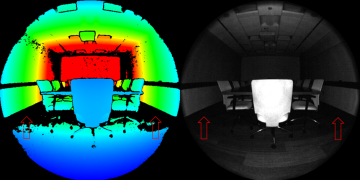
  • LiDAR (Light Detection and Ranging): LiDAR uses laser pulses to create 3D maps of the environment. This sensor is crucial for robots that need precise depth perception, such as self-driving cars and drones.
  • Radar: Radar is commonly used in autonomous vehicles and robots to detect objects in low visibility conditions, such as fog, rain, or at night.
  • Infrared Sensors: Infrared sensors help robots detect heat signatures, which can be used for thermal imaging in areas such as security, firefighting, and medical applications.
  • Proximity Sensors: These sensors detect nearby objects and are essential for collision avoidance in autonomous robots, particularly those navigating complex environments.

2. Decision-Making Algorithms

Once a robot has perceived its environment, it must reason through the available data and decide on an appropriate course of action. Decision-making algorithms are the mathematical models that enable robots to interpret sensory data and determine the best course of action.

  • Path Planning Algorithms: Path planning is essential for autonomous robots that need to navigate complex environments. Algorithms such as A* (A-star) and Rapidly-exploring Random Trees (RRT) help robots find the most efficient path while avoiding obstacles.
  • Markov Decision Processes (MDPs): MDPs are mathematical models used to describe decision-making in environments with uncertainty. They allow robots to make decisions based on probabilities, considering both immediate rewards and long-term outcomes.
  • Monte Carlo Tree Search (MCTS): MCTS is a decision-making algorithm used in robotics for planning and decision-making in uncertain environments. It simulates multiple possible actions and evaluates the best one based on future predictions.

3. Actuators and Motion Control

Once the robot has decided on an action, it must execute that decision through physical movement. Actuators, which convert energy into mechanical movement, play a critical role in this process. There are several types of actuators used in robots:

  • Electric Motors: Used for precise movement control in both mobile robots (e.g., wheeled robots) and manipulators (e.g., robotic arms).
  • Hydraulic Actuators: Common in robots that require high-force applications, such as industrial robots used in construction or automotive manufacturing.
  • Pneumatic Actuators: Pneumatic actuators use compressed air to generate movement and are often used in soft robots or applications requiring lighter movements.
  • Servos: These are small, precise actuators that are used in robots for tasks like controlling arms, fingers, or small moving parts.
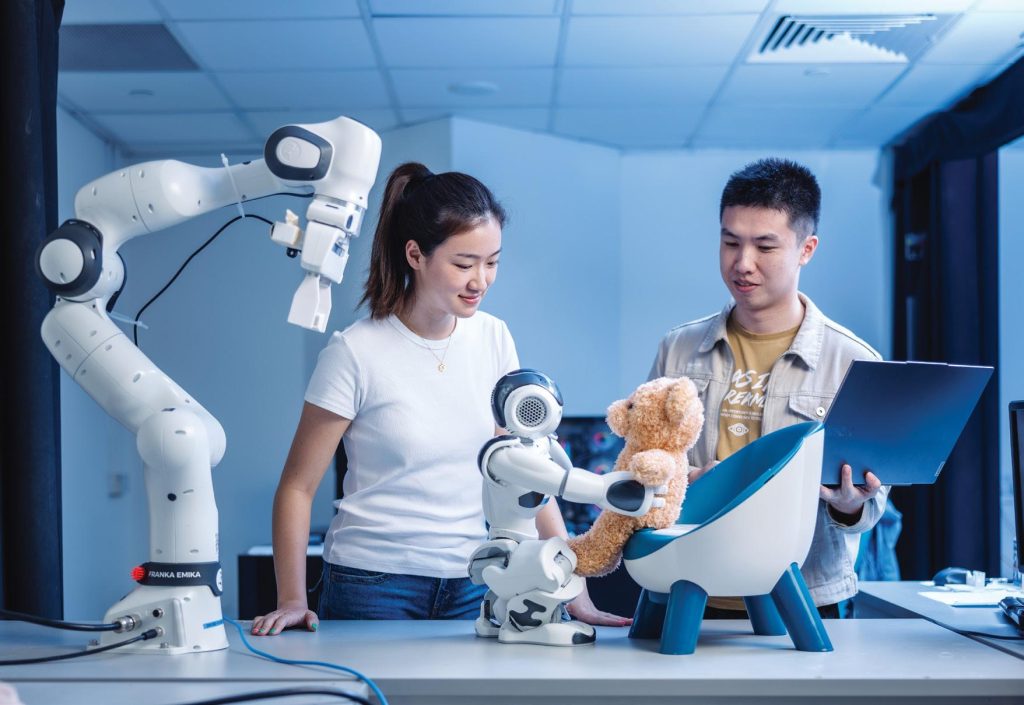
Real-World Applications of Autonomous Decision-Making in Robots

1. Autonomous Vehicles

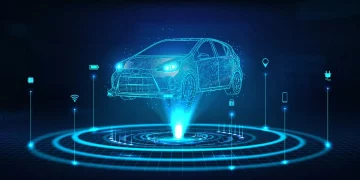
Autonomous vehicles (AVs) represent one of the most well-known applications of autonomous decision-making. These vehicles use a combination of sensors, AI, and decision-making algorithms to navigate roads without human input.

  • Perception: AVs use cameras, LiDAR, and radar to understand their surroundings and detect obstacles, other vehicles, pedestrians, and traffic signals.
  • Reasoning and Planning: AI algorithms predict the behavior of nearby objects and select an optimal driving path based on traffic conditions, road layout, and safety concerns.
  • Action: AVs use actuators to control the vehicle’s speed, steering, and braking systems, making decisions in real-time to ensure safety.

2. Robotic Process Automation (RPA) in Industry

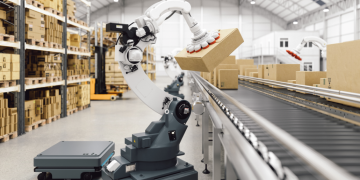
In industrial settings, robots make autonomous decisions to optimize manufacturing processes. Autonomous mobile robots (AMRs) are used in warehouses to transport goods, while industrial robots perform tasks like welding, painting, and assembly.

  • Perception: Sensors help AMRs detect obstacles and recognize objects.
  • Reasoning and Planning: AMRs use algorithms to calculate the most efficient route through the warehouse, avoiding other robots, people, and obstacles.
  • Action: The robots navigate the warehouse, pick up items, and deliver them to designated locations, performing tasks autonomously.

3. Healthcare Robots

In healthcare, autonomous robots are transforming surgical procedures, patient care, and diagnostics. Robotic surgery systems, like the da Vinci Surgical System, assist surgeons in performing precise operations, while robots like Pepper assist in elderly care by providing companionship and monitoring health.

  • Perception: Surgical robots use advanced imaging techniques to visualize the surgical area, while care robots use sensors to monitor patients’ conditions.
  • Reasoning and Planning: AI algorithms help medical robots plan the best course of action, such as determining how to perform a surgery or responding to a patient’s needs.
  • Action: Medical robots carry out complex tasks with high precision, reducing human error and improving patient outcomes.

Challenges in Autonomous Decision-Making for Robots

1. Dealing with Uncertainty and Ambiguity

The real world is inherently uncertain, and robots often encounter situations where they must make decisions based on incomplete or ambiguous information. This is a significant challenge, especially in dynamic environments like traffic or crowded public spaces. Developing algorithms that can handle uncertainty is a key focus of research in autonomous robotics.

2. Safety and Reliability

For robots to make decisions autonomously, they must be reliable and safe. In critical applications like healthcare or autonomous driving, a malfunction or incorrect decision could have severe consequences. Ensuring the safety of autonomous robots is a fundamental challenge that requires extensive testing, real-time monitoring, and redundant safety systems.

3. Ethical and Legal Issues

As robots take on more autonomous roles, ethical and legal questions arise. Who is responsible when a robot makes a mistake? How can we ensure that autonomous robots act in ways that align with human values? Addressing these questions is essential as robots become more integrated into society.

Conclusion

The ability of robots to make autonomous decisions is revolutionizing industries and shaping the future of technology. Through the use of AI, machine learning, sensors, and decision-making algorithms, robots can operate independently, adapt to dynamic environments, and perform complex tasks with high precision. While challenges related to uncertainty, safety, and ethics remain, the continued advancement of autonomous robotics promises to transform the way we live and work. As robots become more intelligent and capable, the possibilities for their applications are virtually limitless, making autonomous decision-making a key area of focus for future research and innovation.
Tags: Autonomous DecisionsResearchRobots
ShareTweetShare

Related Posts

Soft Robotics: Advancements in Bio-Inspired Flexible Systems
Research

Soft Robotics: Advancements in Bio-Inspired Flexible Systems

December 1, 2025
Autonomous Robots and Reinforcement Learning: Paving the Way for Intelligent Machines
Research

Autonomous Robots and Reinforcement Learning: Paving the Way for Intelligent Machines

November 30, 2025
Designing Adaptive User Interfaces: Enhancing Human-Computer Interaction through Dynamic Interfaces
Research

Designing Adaptive User Interfaces: Enhancing Human-Computer Interaction through Dynamic Interfaces

November 29, 2025
Human-Machine Interaction in Augmented Reality and Virtual Reality: A Comprehensive Exploration
Research

Human-Machine Interaction in Augmented Reality and Virtual Reality: A Comprehensive Exploration

November 28, 2025
Affective Computing and Human-Machine Emotional Interaction: The Future of Emotional AI
Research

Affective Computing and Human-Machine Emotional Interaction: The Future of Emotional AI

November 27, 2025
Researching How Machines Can Understand, Recognize, and Respond to Human Emotions
Research

Researching How Machines Can Understand, Recognize, and Respond to Human Emotions

November 26, 2025
Leave Comment
  • Trending
  • Comments
  • Latest
The Revolutionary Impact of Robotics on Disaster Rescue and Environmental Protection

The Revolutionary Impact of Robotics on Disaster Rescue and Environmental Protection

October 20, 2025
Defining the Relationship Between Humans and Robots

Defining the Relationship Between Humans and Robots

October 20, 2025
Biomimetics: A Multidisciplinary Approach to the Future of Robotics and Innovation

Biomimetics: A Multidisciplinary Approach to the Future of Robotics and Innovation

October 20, 2025
How Robots Understand, Respond to, and Simulate Human Emotions to Enhance Interaction Experience

How Robots Understand, Respond to, and Simulate Human Emotions to Enhance Interaction Experience

October 20, 2025
The Integration of Artificial Intelligence and Human-Computer Interaction

The Integration of Artificial Intelligence and Human-Computer Interaction

Researching How Machines Can Recognize and Understand Human Emotions to Improve the Naturalness of Human-Computer Interaction

Researching How Machines Can Recognize and Understand Human Emotions to Improve the Naturalness of Human-Computer Interaction

AI Can Recognize User Emotions Through Facial Expressions, Voice Tones, and Other Signals and Respond Accordingly

AI Can Recognize User Emotions Through Facial Expressions, Voice Tones, and Other Signals and Respond Accordingly

Voice Assistant Research Drives Breakthroughs in Speech Recognition and Natural Language Understanding

Voice Assistant Research Drives Breakthroughs in Speech Recognition and Natural Language Understanding

Robotics and Societal Change: Smart Cities and Digitalized Living

Robotics and Societal Change: Smart Cities and Digitalized Living

December 1, 2025
How to Improve Robot Flexibility While Ensuring Strength and Durability: A Major Technological Challenge

How to Improve Robot Flexibility While Ensuring Strength and Durability: A Major Technological Challenge

December 1, 2025
The Application of Robotics and Automated Logistics Systems in Supply Chain Management

The Application of Robotics and Automated Logistics Systems in Supply Chain Management

December 1, 2025
Edge Computing: A Key Technology for Real-Time Computer Vision Applications

Edge Computing: A Key Technology for Real-Time Computer Vision Applications

December 1, 2025
AnthroboticsLab

Through expert commentary and deep dives into industry trends and ethical considerations, we bridge the gap between academic research and real-world application, fostering a deeper understanding of our technological future.

© 2025 anthroboticslab.com. contacts:[email protected]

No Result
View All Result
  • Home
  • Research
  • Technology
  • Industry
  • Insights
  • Futures

© 2025 anthroboticslab.com. contacts:[email protected]

Welcome Back!

Login to your account below

Forgotten Password?

Retrieve your password

Please enter your username or email address to reset your password.

Log In