


AnthroboticsLab
  • Home
  • Research
    Soft Robotics: Advancements in Bio-Inspired Flexible Systems

    Soft Robotics: Advancements in Bio-Inspired Flexible Systems

    Autonomous Robots and Reinforcement Learning: Paving the Way for Intelligent Machines

    Autonomous Robots and Reinforcement Learning: Paving the Way for Intelligent Machines

    Designing Adaptive User Interfaces: Enhancing Human-Computer Interaction through Dynamic Interfaces

    Designing Adaptive User Interfaces: Enhancing Human-Computer Interaction through Dynamic Interfaces

    Human-Machine Interaction in Augmented Reality and Virtual Reality: A Comprehensive Exploration

    Human-Machine Interaction in Augmented Reality and Virtual Reality: A Comprehensive Exploration

    Affective Computing and Human-Machine Emotional Interaction: The Future of Emotional AI

    Affective Computing and Human-Machine Emotional Interaction: The Future of Emotional AI

    Researching How Machines Can Understand, Recognize, and Respond to Human Emotions

    Researching How Machines Can Understand, Recognize, and Respond to Human Emotions

  • Technology
    Edge Computing: A Key Technology for Real-Time Computer Vision Applications

    Edge Computing: A Key Technology for Real-Time Computer Vision Applications

    Image Fusion in Computer Vision: Enhancing Scene Understanding Through Multi-Sensor Integration

    Image Fusion in Computer Vision: Enhancing Scene Understanding Through Multi-Sensor Integration

    Sensor Fusion Technology: Achieving High-Precision Environmental Perception in Modern Robotics

    Sensor Fusion Technology: Achieving High-Precision Environmental Perception in Modern Robotics

    3D Vision Reconstruction and Depth Estimation: Foundations, Techniques, and Applications

    3D Vision Reconstruction and Depth Estimation: Foundations, Techniques, and Applications

    Computer Vision: The Foundation of Robotic Perception and Its Broad Applications in Autonomous Driving, Industrial Automation, and Medical Surgery

    Computer Vision: The Foundation of Robotic Perception and Its Broad Applications in Autonomous Driving, Industrial Automation, and Medical Surgery

    Ensuring Robots Do Not Harm Humans While Performing Tasks

    Ensuring Robots Do Not Harm Humans While Performing Tasks

  • Industry
    The Application of Robotics and Automated Logistics Systems in Supply Chain Management

    The Application of Robotics and Automated Logistics Systems in Supply Chain Management

    Collaborative Robots and Human Workers: Enhancing Productivity and Ensuring Worker Safety

    Collaborative Robots and Human Workers: Enhancing Productivity and Ensuring Worker Safety

    Modern Production Lines: Emphasizing Flexibility and Customization

    Modern Production Lines: Emphasizing Flexibility and Customization

    The Expanding Role of Robots in Manufacturing: Advancements, Applications, and Future Prospects

    The Expanding Role of Robots in Manufacturing: Advancements, Applications, and Future Prospects

    Industry 4.0: Revolutionizing Manufacturing with IoT, AI, Robotics, and Big Data

    Industry 4.0: Revolutionizing Manufacturing with IoT, AI, Robotics, and Big Data

    Smart Manufacturing and Industry 4.0: Revolutionizing the Future of Production

    Smart Manufacturing and Industry 4.0: Revolutionizing the Future of Production

  • Insights
    How to Improve Robot Flexibility While Ensuring Strength and Durability: A Major Technological Challenge

    How to Improve Robot Flexibility While Ensuring Strength and Durability: A Major Technological Challenge

    Expert Interview: The Future of Biomimicry in Technology and Innovation

    Expert Interview: The Future of Biomimicry in Technology and Innovation

    Biomimetic Robots: Drawing Inspiration from Nature to Simulate the Behavior and Structure of Plants and Animals

    Biomimetic Robots: Drawing Inspiration from Nature to Simulate the Behavior and Structure of Plants and Animals

    Recent Advances in Flexible Materials and Bionic Muscle Actuation Technologies

    Recent Advances in Flexible Materials and Bionic Muscle Actuation Technologies

    Integrating Artificial Intelligence and Biomimetics: How Bionic Robots in Healthcare Can Provide Personalized Treatment Plans

    Integrating Artificial Intelligence and Biomimetics: How Bionic Robots in Healthcare Can Provide Personalized Treatment Plans

    The Great Potential of Bionic Robots in Neurorehabilitation

    The Great Potential of Bionic Robots in Neurorehabilitation

  • Futures
    Robotics and Societal Change: Smart Cities and Digitalized Living

    Robotics and Societal Change: Smart Cities and Digitalized Living

    The Widespread Application of Robotics: Potential Impact on Traditional Jobs

    The Widespread Application of Robotics: Potential Impact on Traditional Jobs

    Smart Homes and Life Assistants: The Future of Everyday Living

    Smart Homes and Life Assistants: The Future of Everyday Living

    The Expanding Role of Robots in the Service Industry: From Customer Service to Personalized Healthcare

    The Expanding Role of Robots in the Service Industry: From Customer Service to Personalized Healthcare

    Fully Automated Production and Services: The Future of Industry and Innovation

    Fully Automated Production and Services: The Future of Industry and Innovation

    The Future of Robots: From Tools to Understanding, Learning, and Responding to Human Society

    The Future of Robots: From Tools to Understanding, Learning, and Responding to Human Society

AnthroboticsLab
  • Home
  • Research
    Soft Robotics: Advancements in Bio-Inspired Flexible Systems

    Soft Robotics: Advancements in Bio-Inspired Flexible Systems

    Autonomous Robots and Reinforcement Learning: Paving the Way for Intelligent Machines

    Autonomous Robots and Reinforcement Learning: Paving the Way for Intelligent Machines

    Designing Adaptive User Interfaces: Enhancing Human-Computer Interaction through Dynamic Interfaces

    Designing Adaptive User Interfaces: Enhancing Human-Computer Interaction through Dynamic Interfaces

    Human-Machine Interaction in Augmented Reality and Virtual Reality: A Comprehensive Exploration

    Human-Machine Interaction in Augmented Reality and Virtual Reality: A Comprehensive Exploration

    Affective Computing and Human-Machine Emotional Interaction: The Future of Emotional AI

    Affective Computing and Human-Machine Emotional Interaction: The Future of Emotional AI

    Researching How Machines Can Understand, Recognize, and Respond to Human Emotions

    Researching How Machines Can Understand, Recognize, and Respond to Human Emotions

  • Technology
    Edge Computing: A Key Technology for Real-Time Computer Vision Applications

    Edge Computing: A Key Technology for Real-Time Computer Vision Applications

    Image Fusion in Computer Vision: Enhancing Scene Understanding Through Multi-Sensor Integration

    Image Fusion in Computer Vision: Enhancing Scene Understanding Through Multi-Sensor Integration

    Sensor Fusion Technology: Achieving High-Precision Environmental Perception in Modern Robotics

    Sensor Fusion Technology: Achieving High-Precision Environmental Perception in Modern Robotics

    3D Vision Reconstruction and Depth Estimation: Foundations, Techniques, and Applications

    3D Vision Reconstruction and Depth Estimation: Foundations, Techniques, and Applications

    Computer Vision: The Foundation of Robotic Perception and Its Broad Applications in Autonomous Driving, Industrial Automation, and Medical Surgery

    Computer Vision: The Foundation of Robotic Perception and Its Broad Applications in Autonomous Driving, Industrial Automation, and Medical Surgery

    Ensuring Robots Do Not Harm Humans While Performing Tasks

    Ensuring Robots Do Not Harm Humans While Performing Tasks

  • Industry
    The Application of Robotics and Automated Logistics Systems in Supply Chain Management

    The Application of Robotics and Automated Logistics Systems in Supply Chain Management

    Collaborative Robots and Human Workers: Enhancing Productivity and Ensuring Worker Safety

    Collaborative Robots and Human Workers: Enhancing Productivity and Ensuring Worker Safety

    Modern Production Lines: Emphasizing Flexibility and Customization

    Modern Production Lines: Emphasizing Flexibility and Customization

    The Expanding Role of Robots in Manufacturing: Advancements, Applications, and Future Prospects

    The Expanding Role of Robots in Manufacturing: Advancements, Applications, and Future Prospects

    Industry 4.0: Revolutionizing Manufacturing with IoT, AI, Robotics, and Big Data

    Industry 4.0: Revolutionizing Manufacturing with IoT, AI, Robotics, and Big Data

    Smart Manufacturing and Industry 4.0: Revolutionizing the Future of Production

    Smart Manufacturing and Industry 4.0: Revolutionizing the Future of Production

  • Insights
    How to Improve Robot Flexibility While Ensuring Strength and Durability: A Major Technological Challenge

    How to Improve Robot Flexibility While Ensuring Strength and Durability: A Major Technological Challenge

    Expert Interview: The Future of Biomimicry in Technology and Innovation

    Expert Interview: The Future of Biomimicry in Technology and Innovation

    Biomimetic Robots: Drawing Inspiration from Nature to Simulate the Behavior and Structure of Plants and Animals

    Biomimetic Robots: Drawing Inspiration from Nature to Simulate the Behavior and Structure of Plants and Animals

    Recent Advances in Flexible Materials and Bionic Muscle Actuation Technologies

    Recent Advances in Flexible Materials and Bionic Muscle Actuation Technologies

    Integrating Artificial Intelligence and Biomimetics: How Bionic Robots in Healthcare Can Provide Personalized Treatment Plans

    Integrating Artificial Intelligence and Biomimetics: How Bionic Robots in Healthcare Can Provide Personalized Treatment Plans

    The Great Potential of Bionic Robots in Neurorehabilitation

    The Great Potential of Bionic Robots in Neurorehabilitation

  • Futures
    Robotics and Societal Change: Smart Cities and Digitalized Living

    Robotics and Societal Change: Smart Cities and Digitalized Living

    The Widespread Application of Robotics: Potential Impact on Traditional Jobs

    The Widespread Application of Robotics: Potential Impact on Traditional Jobs

    Smart Homes and Life Assistants: The Future of Everyday Living

    Smart Homes and Life Assistants: The Future of Everyday Living

    The Expanding Role of Robots in the Service Industry: From Customer Service to Personalized Healthcare

    The Expanding Role of Robots in the Service Industry: From Customer Service to Personalized Healthcare

    Fully Automated Production and Services: The Future of Industry and Innovation

    Fully Automated Production and Services: The Future of Industry and Innovation

    The Future of Robots: From Tools to Understanding, Learning, and Responding to Human Society

    The Future of Robots: From Tools to Understanding, Learning, and Responding to Human Society

AnthroboticsLab
No Result
View All Result
Home Technology

With the Increase in the Number of Sensors, the Amount of Data Processed by Robots is Becoming Enormous

October 16, 2025
in Technology
With the Increase in the Number of Sensors, the Amount of Data Processed by Robots is Becoming Enormous

Introduction

In the ever-evolving field of robotics, one of the most significant advancements has been the increasing number of sensors integrated into robotic systems. These sensors, ranging from LiDAR (Light Detection and Ranging) to cameras, accelerometers, and microphones, provide robots with the ability to understand and interact with their environment in a highly detailed manner. As robots are equipped with more sensors to enhance their autonomy, precision, and decision-making capabilities, the amount of data generated has skyrocketed. While this influx of information offers tremendous potential, it also presents significant challenges in terms of data processing, storage, and real-time decision-making.

The rapid increase in the number of sensors on robots means that the volume of data to be processed is growing at an exponential rate. This article will explore the ways in which robots manage this overwhelming influx of data, the associated challenges, and the emerging solutions that are shaping the future of robotics in data-heavy environments.

The Role of Sensors in Robotics

Sensors are at the core of robot perception and decision-making. They enable robots to gather information about their surroundings and their own internal state, which is essential for tasks such as navigation, manipulation, and human-robot interaction. In robotics, sensors are used to measure a wide range of physical properties, including distance, force, temperature, and orientation.

The most common sensors found in robotic systems include:

  • LiDAR: A remote sensing technology that measures distances by bouncing laser light off objects and calculating the time it takes for the light to return. LiDAR is commonly used for creating detailed 3D maps of environments and is essential for tasks like autonomous navigation and obstacle avoidance.
  • Cameras: Visual sensors capture information in the form of images or video, which is crucial for tasks such as object recognition, facial recognition, and visual inspection. Cameras can be used in combination with other sensors to enhance environmental perception.
  • IMUs (Inertial Measurement Units): IMUs provide data about a robot’s motion, including acceleration, rotation, and orientation. They are often used in conjunction with other sensors to help robots maintain balance and stability.
  • Force/Torque Sensors: These sensors measure the force or torque applied to a robot’s limbs or grippers, which is critical for tasks requiring precision and feedback control, such as in robotic arms or manufacturing robots.
  • Ultrasonic Sensors: Often used for distance measurement, these sensors emit sound waves and measure the time it takes for the sound to return after bouncing off an object.
  • Microphones and Acoustic Sensors: These sensors enable robots to hear and process environmental sounds, which is crucial for tasks such as speech recognition and localizing noise sources.

Together, these sensors provide a robot with a multifaceted understanding of its environment. However, as robots become more sophisticated and incorporate more sensors, the amount of data they generate and need to process increases exponentially.

The Explosion of Data in Robotics

As the number of sensors on robots increases, so too does the volume of data they must handle. In a typical robotic system, each sensor generates large amounts of data, and when multiple sensors are used simultaneously, this data becomes enormous. For example:

  • LiDAR sensors generate millions of data points per scan, each representing a 3D coordinate in space.
  • Cameras produce high-resolution images or video streams, which can amount to gigabytes of data per second, especially when capturing in high-definition (HD) or 4K resolution.
  • IMUs generate continuous time-series data that measures the robot’s movements and orientation.
  • Force/Torque sensors continuously measure force, producing data in real-time to ensure the robot’s interactions with its environment are controlled and stable.

The sheer volume of data generated by these sensors requires specialized systems to process, store, and analyze the information effectively. Robots need to make decisions quickly based on this data, meaning that the data processing pipeline must be fast and efficient.
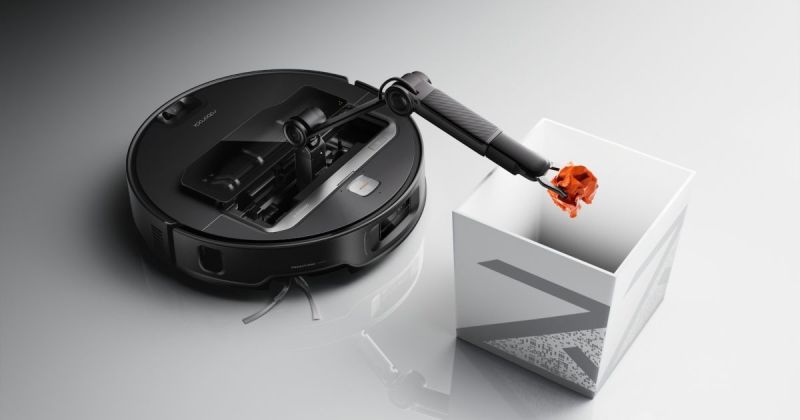
Challenges of Handling Large Volumes of Data

As robots incorporate more sensors and generate more data, several significant challenges arise, including:

1. Real-Time Data Processing

Real-time processing is one of the most pressing challenges. Many robotic applications, such as autonomous vehicles or drones, require that decisions be made in real-time based on sensor data. For example, an autonomous vehicle must be able to process data from LiDAR, cameras, and radar to detect obstacles, plan a path, and make driving decisions, all within fractions of a second.

Challenges:

  • Latency: The time delay between collecting sensor data and making a decision can have serious consequences. In autonomous systems, high latency can result in accidents or inefficient operation.
  • Computational Demand: Real-time processing of massive amounts of sensor data requires immense computational resources. Many robots are constrained by the processing power available on their embedded systems, which limits the speed at which data can be processed.

Solutions:

  • Edge Computing: One solution is to perform data processing at the robot’s edge, rather than sending raw data to the cloud. This reduces latency and ensures that the robot can process information quickly and autonomously.
  • Parallel Processing: Using advanced multi-core processors or GPUs (Graphics Processing Units) allows robots to process large amounts of data in parallel, improving processing speed and efficiency.

2. Data Fusion and Integration

One of the most complex aspects of robotics is combining data from different sensors to create a unified representation of the robot’s environment. This process, known as sensor fusion, is critical for tasks such as obstacle avoidance, navigation, and object recognition.

Challenges:

  • Data Alignment: Sensors operate at different frequencies and from different perspectives. LiDAR and cameras, for example, capture data at different rates and from different viewpoints, making it difficult to align the data in a way that is meaningful.
  • Sensor Calibration: Inaccurate sensor calibration can lead to errors in data fusion, affecting the robot’s ability to interpret its surroundings.

Solutions:

  • Kalman Filters: These probabilistic filters are commonly used to combine noisy sensor data, such as from IMUs and cameras, to estimate the robot’s position and orientation in space accurately.
  • Deep Learning for Fusion: Machine learning algorithms, especially deep neural networks (DNNs), are increasingly being used to automate sensor fusion. These algorithms can learn to combine data from multiple sensors to generate a more accurate and robust understanding of the environment.

3. Data Storage and Bandwidth

With large volumes of data being generated, data storage and management become significant concerns. For many robots, particularly mobile robots, onboard storage is limited. Storing massive datasets, such as high-definition video from cameras or dense point clouds from LiDAR, can quickly fill up available storage.

Challenges:

  • Data Overload: Robots with numerous sensors may produce more data than can be effectively stored or processed onboard. This creates bottlenecks in data handling and can reduce the robot’s operational efficiency.
  • Network Constraints: For robots that rely on remote data processing or cloud-based systems, sending large amounts of data over a network can introduce delays and strain bandwidth.

Solutions:

  • Data Compression: Advanced data compression techniques can help reduce the storage requirements of sensor data, without significant loss of information.
  • Cloud Robotics: Cloud robotics allows robots to offload heavy data processing tasks to powerful cloud servers, where vast amounts of data can be stored and analyzed in real-time. This reduces the burden on the robot’s local processing and storage.

4. Energy Efficiency

Processing large amounts of data requires substantial computational power, which translates into increased energy consumption. For autonomous robots, particularly those operating in the field or mobile robots with limited battery capacity, energy efficiency is a critical concern.

Challenges:

  • Power Consumption: High-performance processors, necessary for processing large sensor data in real-time, can consume significant amounts of power, limiting the robot’s operational time.
  • Thermal Management: Intensive data processing generates heat, which must be managed to prevent system overheating and failure.

Solutions:

  • Low-Power Computing: Energy-efficient processors and specialized hardware, such as ARM-based chips, neuromorphic computing, or FPGA-based systems, are being developed to process large datasets with lower energy consumption.
  • Efficient Power Management: Robotic systems are increasingly using dynamic power management strategies that adjust the energy consumption of sensors and processors based on the robot’s activity level.

Solutions to Address the Data Overload

Several approaches and technological advancements are helping robots manage the ever-increasing data generated by sensors:

  1. Edge Computing: This involves performing data processing locally on the robot rather than transmitting large datasets to a remote cloud server. Edge computing reduces latency and allows robots to make quick decisions autonomously, without relying on cloud-based systems.
  2. Data Compression: Reducing the size of the data before transmitting it or storing it is essential. Compression techniques, such as lossy and lossless compression, allow robots to store and transmit more data without overwhelming their storage or bandwidth limitations.
  3. Cloud Robotics: For tasks that do not require real-time decision-making, robots can offload complex data processing tasks to cloud servers. These servers can handle the heavy lifting of analyzing and storing large datasets, while the robot remains focused on its core tasks.
  4. Artificial Intelligence and Machine Learning: AI and ML algorithms are being used to optimize sensor data processing. These algorithms can filter out irrelevant data, identify important patterns, and make decisions based on learned behavior, reducing the amount of data that needs to be processed.

Conclusion

As robots continue to incorporate more sensors, the amount of data they generate grows exponentially. This explosion of data presents significant challenges in terms of real-time processing, data fusion, storage, energy consumption, and network constraints. However, advancements in edge computing, data compression, cloud robotics, and artificial intelligence are helping robots manage this data overload more efficiently. The future of robotics lies in creating systems that can seamlessly process vast amounts of sensory data while maintaining real-time performance, reliability, and energy efficiency. These technological advancements will not only enable more autonomous and intelligent robots but will also unlock new possibilities across industries ranging from healthcare to manufacturing to autonomous vehicles.
Tags: RobotsSensorsTechnology
ShareTweetShare

Related Posts

Edge Computing: A Key Technology for Real-Time Computer Vision Applications
Technology

Edge Computing: A Key Technology for Real-Time Computer Vision Applications

December 1, 2025
Image Fusion in Computer Vision: Enhancing Scene Understanding Through Multi-Sensor Integration
Technology

Image Fusion in Computer Vision: Enhancing Scene Understanding Through Multi-Sensor Integration

November 30, 2025
Sensor Fusion Technology: Achieving High-Precision Environmental Perception in Modern Robotics
Technology

Sensor Fusion Technology: Achieving High-Precision Environmental Perception in Modern Robotics

November 29, 2025
3D Vision Reconstruction and Depth Estimation: Foundations, Techniques, and Applications
Technology

3D Vision Reconstruction and Depth Estimation: Foundations, Techniques, and Applications

November 28, 2025
Computer Vision: The Foundation of Robotic Perception and Its Broad Applications in Autonomous Driving, Industrial Automation, and Medical Surgery
Technology

Computer Vision: The Foundation of Robotic Perception and Its Broad Applications in Autonomous Driving, Industrial Automation, and Medical Surgery

November 27, 2025
Ensuring Robots Do Not Harm Humans While Performing Tasks
Technology

Ensuring Robots Do Not Harm Humans While Performing Tasks

November 26, 2025
Leave Comment
  • Trending
  • Comments
  • Latest
The Revolutionary Impact of Robotics on Disaster Rescue and Environmental Protection

The Revolutionary Impact of Robotics on Disaster Rescue and Environmental Protection

October 20, 2025
Defining the Relationship Between Humans and Robots

Defining the Relationship Between Humans and Robots

October 20, 2025
Biomimetics: A Multidisciplinary Approach to the Future of Robotics and Innovation

Biomimetics: A Multidisciplinary Approach to the Future of Robotics and Innovation

October 20, 2025
How Robots Understand, Respond to, and Simulate Human Emotions to Enhance Interaction Experience

How Robots Understand, Respond to, and Simulate Human Emotions to Enhance Interaction Experience

October 20, 2025
The Integration of Artificial Intelligence and Human-Computer Interaction

The Integration of Artificial Intelligence and Human-Computer Interaction

Researching How Machines Can Recognize and Understand Human Emotions to Improve the Naturalness of Human-Computer Interaction

Researching How Machines Can Recognize and Understand Human Emotions to Improve the Naturalness of Human-Computer Interaction

AI Can Recognize User Emotions Through Facial Expressions, Voice Tones, and Other Signals and Respond Accordingly

AI Can Recognize User Emotions Through Facial Expressions, Voice Tones, and Other Signals and Respond Accordingly

Voice Assistant Research Drives Breakthroughs in Speech Recognition and Natural Language Understanding

Voice Assistant Research Drives Breakthroughs in Speech Recognition and Natural Language Understanding

Robotics and Societal Change: Smart Cities and Digitalized Living

Robotics and Societal Change: Smart Cities and Digitalized Living

December 1, 2025
How to Improve Robot Flexibility While Ensuring Strength and Durability: A Major Technological Challenge

How to Improve Robot Flexibility While Ensuring Strength and Durability: A Major Technological Challenge

December 1, 2025
The Application of Robotics and Automated Logistics Systems in Supply Chain Management

The Application of Robotics and Automated Logistics Systems in Supply Chain Management

December 1, 2025
Edge Computing: A Key Technology for Real-Time Computer Vision Applications

Edge Computing: A Key Technology for Real-Time Computer Vision Applications

December 1, 2025
AnthroboticsLab

Through expert commentary and deep dives into industry trends and ethical considerations, we bridge the gap between academic research and real-world application, fostering a deeper understanding of our technological future.

© 2025 anthroboticslab.com. contacts:[email protected]

No Result
View All Result
  • Home
  • Research
  • Technology
  • Industry
  • Insights
  • Futures

© 2025 anthroboticslab.com. contacts:[email protected]

Welcome Back!

Login to your account below

Forgotten Password?

Retrieve your password

Please enter your username or email address to reset your password.

Log In