






AnthroboticsLab
  • Home
  • Research
    Soft Robotics: Advancements in Bio-Inspired Flexible Systems

    Soft Robotics: Advancements in Bio-Inspired Flexible Systems

    Autonomous Robots and Reinforcement Learning: Paving the Way for Intelligent Machines

    Autonomous Robots and Reinforcement Learning: Paving the Way for Intelligent Machines

    Designing Adaptive User Interfaces: Enhancing Human-Computer Interaction through Dynamic Interfaces

    Designing Adaptive User Interfaces: Enhancing Human-Computer Interaction through Dynamic Interfaces

    Human-Machine Interaction in Augmented Reality and Virtual Reality: A Comprehensive Exploration

    Human-Machine Interaction in Augmented Reality and Virtual Reality: A Comprehensive Exploration

    Affective Computing and Human-Machine Emotional Interaction: The Future of Emotional AI

    Affective Computing and Human-Machine Emotional Interaction: The Future of Emotional AI

    Researching How Machines Can Understand, Recognize, and Respond to Human Emotions

    Researching How Machines Can Understand, Recognize, and Respond to Human Emotions

  • Technology
    Edge Computing: A Key Technology for Real-Time Computer Vision Applications

    Edge Computing: A Key Technology for Real-Time Computer Vision Applications

    Image Fusion in Computer Vision: Enhancing Scene Understanding Through Multi-Sensor Integration

    Image Fusion in Computer Vision: Enhancing Scene Understanding Through Multi-Sensor Integration

    Sensor Fusion Technology: Achieving High-Precision Environmental Perception in Modern Robotics

    Sensor Fusion Technology: Achieving High-Precision Environmental Perception in Modern Robotics

    3D Vision Reconstruction and Depth Estimation: Foundations, Techniques, and Applications

    3D Vision Reconstruction and Depth Estimation: Foundations, Techniques, and Applications

    Computer Vision: The Foundation of Robotic Perception and Its Broad Applications in Autonomous Driving, Industrial Automation, and Medical Surgery

    Computer Vision: The Foundation of Robotic Perception and Its Broad Applications in Autonomous Driving, Industrial Automation, and Medical Surgery

    Ensuring Robots Do Not Harm Humans While Performing Tasks

    Ensuring Robots Do Not Harm Humans While Performing Tasks

  • Industry
    The Application of Robotics and Automated Logistics Systems in Supply Chain Management

    The Application of Robotics and Automated Logistics Systems in Supply Chain Management

    Collaborative Robots and Human Workers: Enhancing Productivity and Ensuring Worker Safety

    Collaborative Robots and Human Workers: Enhancing Productivity and Ensuring Worker Safety

    Modern Production Lines: Emphasizing Flexibility and Customization

    Modern Production Lines: Emphasizing Flexibility and Customization

    The Expanding Role of Robots in Manufacturing: Advancements, Applications, and Future Prospects

    The Expanding Role of Robots in Manufacturing: Advancements, Applications, and Future Prospects

    Industry 4.0: Revolutionizing Manufacturing with IoT, AI, Robotics, and Big Data

    Industry 4.0: Revolutionizing Manufacturing with IoT, AI, Robotics, and Big Data

    Smart Manufacturing and Industry 4.0: Revolutionizing the Future of Production

    Smart Manufacturing and Industry 4.0: Revolutionizing the Future of Production

  • Insights
    How to Improve Robot Flexibility While Ensuring Strength and Durability: A Major Technological Challenge

    How to Improve Robot Flexibility While Ensuring Strength and Durability: A Major Technological Challenge

    Expert Interview: The Future of Biomimicry in Technology and Innovation

    Expert Interview: The Future of Biomimicry in Technology and Innovation

    Biomimetic Robots: Drawing Inspiration from Nature to Simulate the Behavior and Structure of Plants and Animals

    Biomimetic Robots: Drawing Inspiration from Nature to Simulate the Behavior and Structure of Plants and Animals

    Recent Advances in Flexible Materials and Bionic Muscle Actuation Technologies

    Recent Advances in Flexible Materials and Bionic Muscle Actuation Technologies

    Integrating Artificial Intelligence and Biomimetics: How Bionic Robots in Healthcare Can Provide Personalized Treatment Plans

    Integrating Artificial Intelligence and Biomimetics: How Bionic Robots in Healthcare Can Provide Personalized Treatment Plans

    The Great Potential of Bionic Robots in Neurorehabilitation

    The Great Potential of Bionic Robots in Neurorehabilitation

  • Futures
    Robotics and Societal Change: Smart Cities and Digitalized Living

    Robotics and Societal Change: Smart Cities and Digitalized Living

    The Widespread Application of Robotics: Potential Impact on Traditional Jobs

    The Widespread Application of Robotics: Potential Impact on Traditional Jobs

    Smart Homes and Life Assistants: The Future of Everyday Living

    Smart Homes and Life Assistants: The Future of Everyday Living

    The Expanding Role of Robots in the Service Industry: From Customer Service to Personalized Healthcare

    The Expanding Role of Robots in the Service Industry: From Customer Service to Personalized Healthcare

    Fully Automated Production and Services: The Future of Industry and Innovation

    Fully Automated Production and Services: The Future of Industry and Innovation

    The Future of Robots: From Tools to Understanding, Learning, and Responding to Human Society

    The Future of Robots: From Tools to Understanding, Learning, and Responding to Human Society

AnthroboticsLab
  • Home
  • Research
    Soft Robotics: Advancements in Bio-Inspired Flexible Systems

    Soft Robotics: Advancements in Bio-Inspired Flexible Systems

    Autonomous Robots and Reinforcement Learning: Paving the Way for Intelligent Machines

    Autonomous Robots and Reinforcement Learning: Paving the Way for Intelligent Machines

    Designing Adaptive User Interfaces: Enhancing Human-Computer Interaction through Dynamic Interfaces

    Designing Adaptive User Interfaces: Enhancing Human-Computer Interaction through Dynamic Interfaces

    Human-Machine Interaction in Augmented Reality and Virtual Reality: A Comprehensive Exploration

    Human-Machine Interaction in Augmented Reality and Virtual Reality: A Comprehensive Exploration

    Affective Computing and Human-Machine Emotional Interaction: The Future of Emotional AI

    Affective Computing and Human-Machine Emotional Interaction: The Future of Emotional AI

    Researching How Machines Can Understand, Recognize, and Respond to Human Emotions

    Researching How Machines Can Understand, Recognize, and Respond to Human Emotions

  • Technology
    Edge Computing: A Key Technology for Real-Time Computer Vision Applications

    Edge Computing: A Key Technology for Real-Time Computer Vision Applications

    Image Fusion in Computer Vision: Enhancing Scene Understanding Through Multi-Sensor Integration

    Image Fusion in Computer Vision: Enhancing Scene Understanding Through Multi-Sensor Integration

    Sensor Fusion Technology: Achieving High-Precision Environmental Perception in Modern Robotics

    Sensor Fusion Technology: Achieving High-Precision Environmental Perception in Modern Robotics

    3D Vision Reconstruction and Depth Estimation: Foundations, Techniques, and Applications

    3D Vision Reconstruction and Depth Estimation: Foundations, Techniques, and Applications

    Computer Vision: The Foundation of Robotic Perception and Its Broad Applications in Autonomous Driving, Industrial Automation, and Medical Surgery

    Computer Vision: The Foundation of Robotic Perception and Its Broad Applications in Autonomous Driving, Industrial Automation, and Medical Surgery

    Ensuring Robots Do Not Harm Humans While Performing Tasks

    Ensuring Robots Do Not Harm Humans While Performing Tasks

  • Industry
    The Application of Robotics and Automated Logistics Systems in Supply Chain Management

    The Application of Robotics and Automated Logistics Systems in Supply Chain Management

    Collaborative Robots and Human Workers: Enhancing Productivity and Ensuring Worker Safety

    Collaborative Robots and Human Workers: Enhancing Productivity and Ensuring Worker Safety

    Modern Production Lines: Emphasizing Flexibility and Customization

    Modern Production Lines: Emphasizing Flexibility and Customization

    The Expanding Role of Robots in Manufacturing: Advancements, Applications, and Future Prospects

    The Expanding Role of Robots in Manufacturing: Advancements, Applications, and Future Prospects

    Industry 4.0: Revolutionizing Manufacturing with IoT, AI, Robotics, and Big Data

    Industry 4.0: Revolutionizing Manufacturing with IoT, AI, Robotics, and Big Data

    Smart Manufacturing and Industry 4.0: Revolutionizing the Future of Production

    Smart Manufacturing and Industry 4.0: Revolutionizing the Future of Production

  • Insights
    How to Improve Robot Flexibility While Ensuring Strength and Durability: A Major Technological Challenge

    How to Improve Robot Flexibility While Ensuring Strength and Durability: A Major Technological Challenge

    Expert Interview: The Future of Biomimicry in Technology and Innovation

    Expert Interview: The Future of Biomimicry in Technology and Innovation

    Biomimetic Robots: Drawing Inspiration from Nature to Simulate the Behavior and Structure of Plants and Animals

    Biomimetic Robots: Drawing Inspiration from Nature to Simulate the Behavior and Structure of Plants and Animals

    Recent Advances in Flexible Materials and Bionic Muscle Actuation Technologies

    Recent Advances in Flexible Materials and Bionic Muscle Actuation Technologies

    Integrating Artificial Intelligence and Biomimetics: How Bionic Robots in Healthcare Can Provide Personalized Treatment Plans

    Integrating Artificial Intelligence and Biomimetics: How Bionic Robots in Healthcare Can Provide Personalized Treatment Plans

    The Great Potential of Bionic Robots in Neurorehabilitation

    The Great Potential of Bionic Robots in Neurorehabilitation

  • Futures
    Robotics and Societal Change: Smart Cities and Digitalized Living

    Robotics and Societal Change: Smart Cities and Digitalized Living

    The Widespread Application of Robotics: Potential Impact on Traditional Jobs

    The Widespread Application of Robotics: Potential Impact on Traditional Jobs

    Smart Homes and Life Assistants: The Future of Everyday Living

    Smart Homes and Life Assistants: The Future of Everyday Living

    The Expanding Role of Robots in the Service Industry: From Customer Service to Personalized Healthcare

    The Expanding Role of Robots in the Service Industry: From Customer Service to Personalized Healthcare

    Fully Automated Production and Services: The Future of Industry and Innovation

    Fully Automated Production and Services: The Future of Industry and Innovation

    The Future of Robots: From Tools to Understanding, Learning, and Responding to Human Society

    The Future of Robots: From Tools to Understanding, Learning, and Responding to Human Society

AnthroboticsLab
No Result
View All Result
Home Technology

Deep Learning Techniques, Particularly Convolutional Neural Networks, in Computer Vision

October 15, 2025
in Technology
Deep Learning Techniques, Particularly Convolutional Neural Networks, in Computer Vision

Introduction

The field of computer vision has undergone significant transformations in recent years, largely due to the advent of deep learning techniques. Among the many advances in this domain, Convolutional Neural Networks (CNNs) have emerged as one of the most powerful tools for solving complex visual perception tasks. CNNs, a class of deep learning algorithms specifically designed for processing grid-like data (such as images), have revolutionized the way machines perceive and understand visual information.

In this article, we explore how deep learning techniques, especially CNNs, have been widely applied in computer vision, transforming industries such as healthcare, automotive, security, entertainment, and retail. We will examine the fundamental principles behind CNNs, their applications, challenges, and the future direction of this ever-evolving field.


1. The Rise of Deep Learning in Computer Vision

1.1 From Traditional Image Processing to Deep Learning

Traditionally, computer vision relied on hand-crafted features and classical machine learning techniques for object detection, recognition, and segmentation. Methods like edge detection, Haar cascades, and histogram of oriented gradients (HOG) were used to extract relevant features from images. These features were then processed by classical algorithms such as support vector machines (SVMs) or decision trees.

However, these methods had their limitations. The performance was highly dependent on the quality of feature extraction and was often inefficient when dealing with complex and large datasets. As the field of machine learning advanced, researchers started exploring neural networks, and more specifically, deep learning models, which could automatically learn features from raw image data without the need for manual feature engineering.

The breakthrough came in 2012 when AlexNet, a deep CNN, won the ImageNet Large Scale Visual Recognition Challenge (ILSVRC). The performance of AlexNet on a variety of image classification tasks far surpassed that of previous algorithms, demonstrating the power of deep learning for computer vision tasks.

1.2 Key Components of Convolutional Neural Networks

CNNs are designed to mimic the way the human visual system processes images. They consist of multiple layers, each with specific functions, which allows them to learn increasingly abstract representations of images.

The primary components of CNNs include:

  • Convolutional Layers: These layers apply convolutional filters (kernels) to the input image. Each filter detects a specific feature, such as an edge, corner, or texture. These features are then combined in higher layers to detect more complex patterns like shapes and objects.
  • Pooling Layers: These layers perform down-sampling by reducing the spatial dimensions of the image, retaining the most important information while reducing computational load. Max pooling, for example, takes the maximum value from a set of neighboring pixels, helping to preserve the dominant features.
  • Fully Connected Layers: These layers interpret the high-level features extracted by the previous layers and map them to the final output, such as class labels in image classification tasks.
  • Activation Functions: Non-linear functions such as ReLU (Rectified Linear Unit) are applied to the output of each layer to introduce non-linearity, which is crucial for the network to learn complex patterns.

1.3 Training CNNs: The Backpropagation Algorithm

CNNs are trained using a process called backpropagation, where the network learns from its mistakes by adjusting its weights based on the error it makes in the prediction. During training, the input image is passed through the network, and a predicted output is generated. The difference between the predicted output and the actual output (ground truth) is calculated using a loss function. The error is then propagated backward through the network, adjusting the weights to minimize the loss and improve the network’s performance.

This iterative process continues over many epochs, with the network refining its parameters to achieve accurate predictions on unseen data.


2. Applications of CNNs in Computer Vision

The applications of CNNs in computer vision are vast and diverse, covering many industries where visual data needs to be interpreted and analyzed. Some of the most notable applications include:

2.1 Object Detection and Recognition

CNNs have become the backbone of modern object detection algorithms. In object detection, the task is to locate and classify multiple objects within an image. CNNs are able to identify complex objects in images by learning hierarchical features at different levels of abstraction.

  • YOLO (You Only Look Once) and SSD (Single Shot MultiBox Detector) are popular real-time object detection algorithms that use CNNs to perform end-to-end object detection. These models can detect multiple objects in an image and classify them with high accuracy.
  • Faster R-CNN is another powerful model that combines region proposals with CNNs for high-quality object detection. It has been used extensively in applications such as facial recognition, autonomous vehicles, and surveillance systems.

2.2 Image Classification

One of the most fundamental tasks in computer vision is image classification, where the goal is to assign a label to an image based on its content. CNNs excel at this task, outperforming traditional methods in accuracy and efficiency.

  • AlexNet, VGGNet, and ResNet are some of the most well-known CNN architectures for image classification. These networks have achieved state-of-the-art performance in various benchmark datasets, including ImageNet.
  • CNNs have been applied in fields such as medical imaging, where they can classify diseases from X-ray images, MRI scans, and CT scans. For example, deep learning models have been used for detecting tumors, lesions, and abnormalities in medical images.

2.3 Semantic Segmentation

Semantic segmentation is a task where each pixel in an image is assigned a label corresponding to a particular class. This is crucial in applications such as self-driving cars, where understanding the road, pedestrians, and other vehicles at the pixel level is essential for navigation.

  • Fully Convolutional Networks (FCNs) are a type of CNN specifically designed for semantic segmentation. These models replace the fully connected layers with convolutional layers to produce output maps that represent pixel-level classification.
  • U-Net is another popular architecture for medical image segmentation. It has been used to segment organs, tissues, and abnormalities in various medical imaging tasks, such as tumor segmentation in CT and MRI scans.

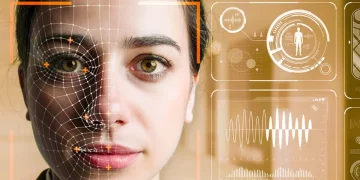
2.4 Facial Recognition

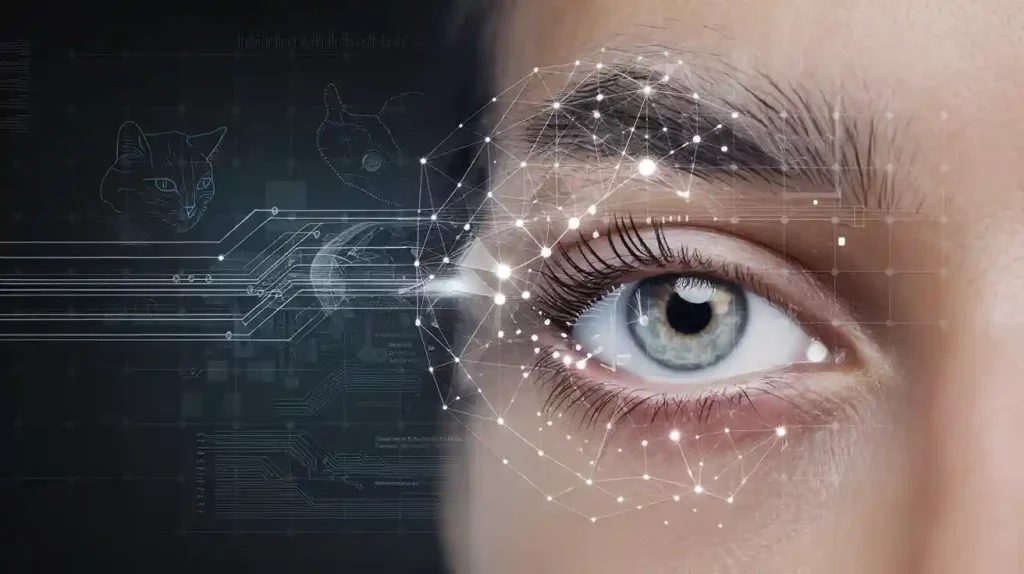
Facial recognition technology has become a widespread application of CNNs, enabling systems to recognize and verify individuals based on their facial features. CNNs have shown remarkable success in this area, as they can capture complex patterns in facial images.

  • DeepFace, developed by Facebook, and FaceNet, developed by Google, are deep learning-based facial recognition systems that utilize CNNs to identify individuals with high accuracy, even in challenging conditions such as varying lighting and facial expressions.
  • Facial recognition is used in security systems, personal devices (e.g., unlocking smartphones), and even law enforcement for identifying suspects in surveillance footage.

2.5 Autonomous Vehicles

Autonomous vehicles rely heavily on computer vision for environment perception, which involves understanding and interpreting the surroundings to make decisions about driving.

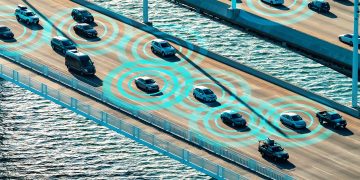
  • CNNs are used for various tasks in autonomous vehicles, including object detection, lane detection, and semantic segmentation. By processing images from cameras, LIDAR, and other sensors, CNNs enable vehicles to detect pedestrians, other vehicles, traffic signs, and road conditions.
  • Tesla, Waymo, and other companies in the autonomous driving space leverage CNNs to build systems that can drive safely in dynamic environments.

2.6 Medical Imaging and Diagnostics

CNNs have become increasingly important in the field of medical imaging, where they are used for tasks such as disease detection, diagnosis, and treatment planning.

  • In radiology, CNNs are used to analyze medical scans like X-rays, CT scans, and MRI images to detect conditions such as pneumonia, tumors, and fractures. Deep learning models have shown to outperform human radiologists in some cases, especially when detecting rare or subtle diseases.
  • In ophthalmology, CNNs have been used to analyze retinal images to detect diabetic retinopathy, macular degeneration, and other eye conditions.

2.7 Retail and E-commerce

In the retail industry, CNNs are used to enhance the customer experience and streamline operations.

  • Visual Search: E-commerce platforms like Amazon and eBay use CNNs for visual search, allowing customers to upload an image and find similar products.
  • Automated Checkout: CNNs can be used in combination with computer vision to recognize products in a customer’s cart, allowing for cashier-less checkout systems, such as Amazon Go.
3. Challenges and Limitations of CNNs in Computer Vision

Despite the significant advances made possible by CNNs, there are still several challenges and limitations that need to be addressed:

3.1 Data and Computational Requirements

CNNs require large amounts of labeled data to achieve high performance. Collecting and annotating data can be time-consuming and expensive, especially in specialized domains like medical imaging.

  • Data Augmentation and Transfer Learning are techniques used to mitigate the need for massive datasets. Augmentation artificially expands the dataset by applying transformations (e.g., rotations, scaling), while transfer learning leverages pre-trained models to apply knowledge learned from one task to another.

3.2 Interpretability

Deep learning models, including CNNs, are often viewed as black boxes because it can be difficult to understand how they make decisions. This lack of transparency is a challenge, especially in applications like healthcare and autonomous vehicles, where interpretability is crucial.

  • Efforts are being made to improve the interpretability of CNNs, such as using saliency maps to highlight the parts of the image that influence the model’s decisions.

3.3 Generalization and Overfitting

CNNs can sometimes struggle to generalize well to new, unseen data, especially when trained on small datasets. Overfitting can occur when the model becomes too specialized to the training data, resulting in poor performance on real-world data.

  • Techniques like regularization, dropout, and cross-validation are commonly used to address overfitting and improve the generalization of CNNs.

Conclusion

Convolutional Neural Networks (CNNs) have revolutionized the field of computer vision by enabling machines to perceive, understand, and interact with the world in ways that were previously unimaginable. Their ability to automatically learn features from raw data has made them the go-to solution for tasks like image classification, object detection, and semantic segmentation. With applications across industries ranging from healthcare and autonomous vehicles to retail and security, CNNs are transforming the way we live and work.

As we look ahead, the potential for CNNs in computer vision will continue to grow, with advances in model efficiency, interpretability, and generalization paving the way for more sophisticated systems. With the continuous expansion of deep learning research, the future of computer vision is incredibly promising, with even more exciting possibilities on the horizon.

Tags: Deep Learning TechniquesNeural NetworksTechnology
ShareTweetShare

Related Posts

Edge Computing: A Key Technology for Real-Time Computer Vision Applications
Technology

Edge Computing: A Key Technology for Real-Time Computer Vision Applications

December 1, 2025
Image Fusion in Computer Vision: Enhancing Scene Understanding Through Multi-Sensor Integration
Technology

Image Fusion in Computer Vision: Enhancing Scene Understanding Through Multi-Sensor Integration

November 30, 2025
Sensor Fusion Technology: Achieving High-Precision Environmental Perception in Modern Robotics
Technology

Sensor Fusion Technology: Achieving High-Precision Environmental Perception in Modern Robotics

November 29, 2025
3D Vision Reconstruction and Depth Estimation: Foundations, Techniques, and Applications
Technology

3D Vision Reconstruction and Depth Estimation: Foundations, Techniques, and Applications

November 28, 2025
Computer Vision: The Foundation of Robotic Perception and Its Broad Applications in Autonomous Driving, Industrial Automation, and Medical Surgery
Technology

Computer Vision: The Foundation of Robotic Perception and Its Broad Applications in Autonomous Driving, Industrial Automation, and Medical Surgery

November 27, 2025
Ensuring Robots Do Not Harm Humans While Performing Tasks
Technology

Ensuring Robots Do Not Harm Humans While Performing Tasks

November 26, 2025
Leave Comment
  • Trending
  • Comments
  • Latest
The Revolutionary Impact of Robotics on Disaster Rescue and Environmental Protection

The Revolutionary Impact of Robotics on Disaster Rescue and Environmental Protection

October 20, 2025
Defining the Relationship Between Humans and Robots

Defining the Relationship Between Humans and Robots

October 20, 2025
Biomimetics: A Multidisciplinary Approach to the Future of Robotics and Innovation

Biomimetics: A Multidisciplinary Approach to the Future of Robotics and Innovation

October 20, 2025
How Robots Understand, Respond to, and Simulate Human Emotions to Enhance Interaction Experience

How Robots Understand, Respond to, and Simulate Human Emotions to Enhance Interaction Experience

October 20, 2025
The Integration of Artificial Intelligence and Human-Computer Interaction

The Integration of Artificial Intelligence and Human-Computer Interaction

Researching How Machines Can Recognize and Understand Human Emotions to Improve the Naturalness of Human-Computer Interaction

Researching How Machines Can Recognize and Understand Human Emotions to Improve the Naturalness of Human-Computer Interaction

AI Can Recognize User Emotions Through Facial Expressions, Voice Tones, and Other Signals and Respond Accordingly

AI Can Recognize User Emotions Through Facial Expressions, Voice Tones, and Other Signals and Respond Accordingly

Voice Assistant Research Drives Breakthroughs in Speech Recognition and Natural Language Understanding

Voice Assistant Research Drives Breakthroughs in Speech Recognition and Natural Language Understanding

Robotics and Societal Change: Smart Cities and Digitalized Living

Robotics and Societal Change: Smart Cities and Digitalized Living

December 1, 2025
How to Improve Robot Flexibility While Ensuring Strength and Durability: A Major Technological Challenge

How to Improve Robot Flexibility While Ensuring Strength and Durability: A Major Technological Challenge

December 1, 2025
The Application of Robotics and Automated Logistics Systems in Supply Chain Management

The Application of Robotics and Automated Logistics Systems in Supply Chain Management

December 1, 2025
Edge Computing: A Key Technology for Real-Time Computer Vision Applications

Edge Computing: A Key Technology for Real-Time Computer Vision Applications

December 1, 2025
AnthroboticsLab

Through expert commentary and deep dives into industry trends and ethical considerations, we bridge the gap between academic research and real-world application, fostering a deeper understanding of our technological future.

© 2025 anthroboticslab.com. contacts:[email protected]

No Result
View All Result
  • Home
  • Research
  • Technology
  • Industry
  • Insights
  • Futures

© 2025 anthroboticslab.com. contacts:[email protected]

Welcome Back!

Login to your account below

Forgotten Password?

Retrieve your password

Please enter your username or email address to reset your password.

Log In