


AnthroboticsLab
  • Home
  • Research
    Soft Robotics: Advancements in Bio-Inspired Flexible Systems

    Soft Robotics: Advancements in Bio-Inspired Flexible Systems

    Autonomous Robots and Reinforcement Learning: Paving the Way for Intelligent Machines

    Autonomous Robots and Reinforcement Learning: Paving the Way for Intelligent Machines

    Designing Adaptive User Interfaces: Enhancing Human-Computer Interaction through Dynamic Interfaces

    Designing Adaptive User Interfaces: Enhancing Human-Computer Interaction through Dynamic Interfaces

    Human-Machine Interaction in Augmented Reality and Virtual Reality: A Comprehensive Exploration

    Human-Machine Interaction in Augmented Reality and Virtual Reality: A Comprehensive Exploration

    Affective Computing and Human-Machine Emotional Interaction: The Future of Emotional AI

    Affective Computing and Human-Machine Emotional Interaction: The Future of Emotional AI

    Researching How Machines Can Understand, Recognize, and Respond to Human Emotions

    Researching How Machines Can Understand, Recognize, and Respond to Human Emotions

  • Technology
    Edge Computing: A Key Technology for Real-Time Computer Vision Applications

    Edge Computing: A Key Technology for Real-Time Computer Vision Applications

    Image Fusion in Computer Vision: Enhancing Scene Understanding Through Multi-Sensor Integration

    Image Fusion in Computer Vision: Enhancing Scene Understanding Through Multi-Sensor Integration

    Sensor Fusion Technology: Achieving High-Precision Environmental Perception in Modern Robotics

    Sensor Fusion Technology: Achieving High-Precision Environmental Perception in Modern Robotics

    3D Vision Reconstruction and Depth Estimation: Foundations, Techniques, and Applications

    3D Vision Reconstruction and Depth Estimation: Foundations, Techniques, and Applications

    Computer Vision: The Foundation of Robotic Perception and Its Broad Applications in Autonomous Driving, Industrial Automation, and Medical Surgery

    Computer Vision: The Foundation of Robotic Perception and Its Broad Applications in Autonomous Driving, Industrial Automation, and Medical Surgery

    Ensuring Robots Do Not Harm Humans While Performing Tasks

    Ensuring Robots Do Not Harm Humans While Performing Tasks

  • Industry
    The Application of Robotics and Automated Logistics Systems in Supply Chain Management

    The Application of Robotics and Automated Logistics Systems in Supply Chain Management

    Collaborative Robots and Human Workers: Enhancing Productivity and Ensuring Worker Safety

    Collaborative Robots and Human Workers: Enhancing Productivity and Ensuring Worker Safety

    Modern Production Lines: Emphasizing Flexibility and Customization

    Modern Production Lines: Emphasizing Flexibility and Customization

    The Expanding Role of Robots in Manufacturing: Advancements, Applications, and Future Prospects

    The Expanding Role of Robots in Manufacturing: Advancements, Applications, and Future Prospects

    Industry 4.0: Revolutionizing Manufacturing with IoT, AI, Robotics, and Big Data

    Industry 4.0: Revolutionizing Manufacturing with IoT, AI, Robotics, and Big Data

    Smart Manufacturing and Industry 4.0: Revolutionizing the Future of Production

    Smart Manufacturing and Industry 4.0: Revolutionizing the Future of Production

  • Insights
    How to Improve Robot Flexibility While Ensuring Strength and Durability: A Major Technological Challenge

    How to Improve Robot Flexibility While Ensuring Strength and Durability: A Major Technological Challenge

    Expert Interview: The Future of Biomimicry in Technology and Innovation

    Expert Interview: The Future of Biomimicry in Technology and Innovation

    Biomimetic Robots: Drawing Inspiration from Nature to Simulate the Behavior and Structure of Plants and Animals

    Biomimetic Robots: Drawing Inspiration from Nature to Simulate the Behavior and Structure of Plants and Animals

    Recent Advances in Flexible Materials and Bionic Muscle Actuation Technologies

    Recent Advances in Flexible Materials and Bionic Muscle Actuation Technologies

    Integrating Artificial Intelligence and Biomimetics: How Bionic Robots in Healthcare Can Provide Personalized Treatment Plans

    Integrating Artificial Intelligence and Biomimetics: How Bionic Robots in Healthcare Can Provide Personalized Treatment Plans

    The Great Potential of Bionic Robots in Neurorehabilitation

    The Great Potential of Bionic Robots in Neurorehabilitation

  • Futures
    Robotics and Societal Change: Smart Cities and Digitalized Living

    Robotics and Societal Change: Smart Cities and Digitalized Living

    The Widespread Application of Robotics: Potential Impact on Traditional Jobs

    The Widespread Application of Robotics: Potential Impact on Traditional Jobs

    Smart Homes and Life Assistants: The Future of Everyday Living

    Smart Homes and Life Assistants: The Future of Everyday Living

    The Expanding Role of Robots in the Service Industry: From Customer Service to Personalized Healthcare

    The Expanding Role of Robots in the Service Industry: From Customer Service to Personalized Healthcare

    Fully Automated Production and Services: The Future of Industry and Innovation

    Fully Automated Production and Services: The Future of Industry and Innovation

    The Future of Robots: From Tools to Understanding, Learning, and Responding to Human Society

    The Future of Robots: From Tools to Understanding, Learning, and Responding to Human Society

AnthroboticsLab
  • Home
  • Research
    Soft Robotics: Advancements in Bio-Inspired Flexible Systems

    Soft Robotics: Advancements in Bio-Inspired Flexible Systems

    Autonomous Robots and Reinforcement Learning: Paving the Way for Intelligent Machines

    Autonomous Robots and Reinforcement Learning: Paving the Way for Intelligent Machines

    Designing Adaptive User Interfaces: Enhancing Human-Computer Interaction through Dynamic Interfaces

    Designing Adaptive User Interfaces: Enhancing Human-Computer Interaction through Dynamic Interfaces

    Human-Machine Interaction in Augmented Reality and Virtual Reality: A Comprehensive Exploration

    Human-Machine Interaction in Augmented Reality and Virtual Reality: A Comprehensive Exploration

    Affective Computing and Human-Machine Emotional Interaction: The Future of Emotional AI

    Affective Computing and Human-Machine Emotional Interaction: The Future of Emotional AI

    Researching How Machines Can Understand, Recognize, and Respond to Human Emotions

    Researching How Machines Can Understand, Recognize, and Respond to Human Emotions

  • Technology
    Edge Computing: A Key Technology for Real-Time Computer Vision Applications

    Edge Computing: A Key Technology for Real-Time Computer Vision Applications

    Image Fusion in Computer Vision: Enhancing Scene Understanding Through Multi-Sensor Integration

    Image Fusion in Computer Vision: Enhancing Scene Understanding Through Multi-Sensor Integration

    Sensor Fusion Technology: Achieving High-Precision Environmental Perception in Modern Robotics

    Sensor Fusion Technology: Achieving High-Precision Environmental Perception in Modern Robotics

    3D Vision Reconstruction and Depth Estimation: Foundations, Techniques, and Applications

    3D Vision Reconstruction and Depth Estimation: Foundations, Techniques, and Applications

    Computer Vision: The Foundation of Robotic Perception and Its Broad Applications in Autonomous Driving, Industrial Automation, and Medical Surgery

    Computer Vision: The Foundation of Robotic Perception and Its Broad Applications in Autonomous Driving, Industrial Automation, and Medical Surgery

    Ensuring Robots Do Not Harm Humans While Performing Tasks

    Ensuring Robots Do Not Harm Humans While Performing Tasks

  • Industry
    The Application of Robotics and Automated Logistics Systems in Supply Chain Management

    The Application of Robotics and Automated Logistics Systems in Supply Chain Management

    Collaborative Robots and Human Workers: Enhancing Productivity and Ensuring Worker Safety

    Collaborative Robots and Human Workers: Enhancing Productivity and Ensuring Worker Safety

    Modern Production Lines: Emphasizing Flexibility and Customization

    Modern Production Lines: Emphasizing Flexibility and Customization

    The Expanding Role of Robots in Manufacturing: Advancements, Applications, and Future Prospects

    The Expanding Role of Robots in Manufacturing: Advancements, Applications, and Future Prospects

    Industry 4.0: Revolutionizing Manufacturing with IoT, AI, Robotics, and Big Data

    Industry 4.0: Revolutionizing Manufacturing with IoT, AI, Robotics, and Big Data

    Smart Manufacturing and Industry 4.0: Revolutionizing the Future of Production

    Smart Manufacturing and Industry 4.0: Revolutionizing the Future of Production

  • Insights
    How to Improve Robot Flexibility While Ensuring Strength and Durability: A Major Technological Challenge

    How to Improve Robot Flexibility While Ensuring Strength and Durability: A Major Technological Challenge

    Expert Interview: The Future of Biomimicry in Technology and Innovation

    Expert Interview: The Future of Biomimicry in Technology and Innovation

    Biomimetic Robots: Drawing Inspiration from Nature to Simulate the Behavior and Structure of Plants and Animals

    Biomimetic Robots: Drawing Inspiration from Nature to Simulate the Behavior and Structure of Plants and Animals

    Recent Advances in Flexible Materials and Bionic Muscle Actuation Technologies

    Recent Advances in Flexible Materials and Bionic Muscle Actuation Technologies

    Integrating Artificial Intelligence and Biomimetics: How Bionic Robots in Healthcare Can Provide Personalized Treatment Plans

    Integrating Artificial Intelligence and Biomimetics: How Bionic Robots in Healthcare Can Provide Personalized Treatment Plans

    The Great Potential of Bionic Robots in Neurorehabilitation

    The Great Potential of Bionic Robots in Neurorehabilitation

  • Futures
    Robotics and Societal Change: Smart Cities and Digitalized Living

    Robotics and Societal Change: Smart Cities and Digitalized Living

    The Widespread Application of Robotics: Potential Impact on Traditional Jobs

    The Widespread Application of Robotics: Potential Impact on Traditional Jobs

    Smart Homes and Life Assistants: The Future of Everyday Living

    Smart Homes and Life Assistants: The Future of Everyday Living

    The Expanding Role of Robots in the Service Industry: From Customer Service to Personalized Healthcare

    The Expanding Role of Robots in the Service Industry: From Customer Service to Personalized Healthcare

    Fully Automated Production and Services: The Future of Industry and Innovation

    Fully Automated Production and Services: The Future of Industry and Innovation

    The Future of Robots: From Tools to Understanding, Learning, and Responding to Human Society

    The Future of Robots: From Tools to Understanding, Learning, and Responding to Human Society

AnthroboticsLab
No Result
View All Result
Home Technology

Sensor Fusion Technology: The Key to Ensuring Efficient and Precise Task Execution in Robots

October 15, 2025
in Technology
Sensor Fusion Technology: The Key to Ensuring Efficient and Precise Task Execution in Robots

1. Introduction

In recent years, the field of robotics has seen rapid advancements, particularly in areas like autonomous navigation, object recognition, and task automation. Central to these developments is the integration of sensor fusion technology, which allows robots to combine data from multiple types of sensors to better understand and interact with their environment. By fusing information from various sources—such as cameras, LiDAR, radar, ultrasonic sensors, and IMUs—robots can overcome challenges posed by noise, sensor limitations, and environmental complexity.

Sensor fusion is especially critical for achieving precision and efficiency in tasks such as path planning, object manipulation, and human-robot interaction (HRI). It enables robots to create more accurate, reliable models of the world around them, which in turn facilitates improved decision-making and task execution. This article provides an in-depth examination of sensor fusion in robotics, detailing its key components, methodologies, applications, and challenges.


2. What is Sensor Fusion?

Sensor fusion refers to the process of combining data from multiple sensors to create a unified, more accurate representation of the environment. In robotics, this process involves integrating data from various sensor modalities—such as visual, auditory, thermal, and motion sensors—to provide a more comprehensive understanding of the robot’s surroundings.

For example, a robot equipped with both a camera and a LiDAR sensor can use camera images to detect objects visually and LiDAR data to measure the distance and shape of those objects in 3D space. By combining these inputs, the robot can gain a more precise understanding of object locations and environments that may be challenging for either sensor to interpret alone.

The primary goals of sensor fusion are:

  1. Enhancing accuracy: By combining data from different sources, robots can improve the precision of their measurements.
  2. Increasing reliability: Sensor fusion helps robots make decisions based on redundant information, which can mitigate the impact of faulty or noisy sensors.
  3. Improving robustness: Robots can perform better in diverse, dynamic environments by leveraging complementary sensors with different strengths and weaknesses.

3. Types of Sensors Used in Robotics

The types of sensors used in robotics vary depending on the application, but they can be broadly categorized into the following types:

3.1 Visual Sensors

  • Cameras (RGB, depth cameras, stereo vision) are the most common visual sensors used in robots. These sensors provide real-time images and can be used for object recognition, scene segmentation, and navigation tasks.
  • Stereo Vision systems use two cameras to mimic human depth perception. These systems help robots understand the distance to objects and can be crucial in autonomous navigation.
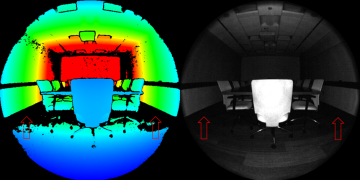
  • Depth Sensors (e.g., structured light or Time-of-Flight sensors) are used to capture the depth information of objects in 3D space.

3.2 Proximity Sensors

  • Ultrasonic Sensors emit sound waves to detect objects and measure their distance. They are commonly used in navigation and collision avoidance, especially in indoor environments.
  • Infrared Sensors can measure proximity and detect objects by measuring the reflected infrared light from the objects.

3.3 LiDAR (Light Detection and Ranging)

LiDAR sensors provide highly accurate distance measurements by using laser beams. This technology is widely used for creating 3D maps of environments, particularly in autonomous vehicles and robotic mapping applications. LiDAR’s ability to create detailed 3D representations of surroundings makes it an essential tool in sensor fusion for robotics.

3.4 IMUs (Inertial Measurement Units)

IMUs are used to measure a robot’s acceleration, orientation, and angular velocity. They typically consist of accelerometers, gyroscopes, and magnetometers. IMUs help robots understand their motion in space and are particularly useful in robotics for localization and motion tracking.

3.5 Radar

Radar sensors are often used in robotics, particularly in autonomous vehicles, because they are reliable in low-visibility conditions (e.g., fog, rain, or darkness). Radar can detect objects and obstacles by emitting radio waves and measuring their reflection.

4. How Sensor Fusion Works

The process of sensor fusion in robotics involves integrating data from multiple sensors, preprocessing that data to eliminate noise or inconsistencies, and then using algorithms and mathematical models to synthesize the information. The goal is to create a more complete, accurate representation of the robot’s environment and to improve its ability to make informed decisions.

4.1 Data Preprocessing

Before fusion, sensor data often needs to be preprocessed. This step may include:

  • Noise filtering: Removing random variations in the data that could lead to incorrect conclusions.
  • Data normalization: Standardizing sensor outputs to ensure that data from different sensors can be meaningfully compared or combined.
  • Outlier detection: Identifying and removing data points that don’t fit the expected pattern (which might indicate sensor malfunctions or poor environmental conditions).

4.2 Sensor Fusion Algorithms

Once the data is cleaned and preprocessed, sensor fusion algorithms combine the information. Common approaches include:

  1. Kalman Filtering: A mathematical method for estimating the state of a dynamic system from a series of noisy measurements. Kalman filters are widely used for tasks such as robot localization, navigation, and motion estimation.
  2. Particle Filtering: A technique used in cases where the state space is non-linear and non-Gaussian. It is often used for simultaneous localization and mapping (SLAM) in robotics, where a robot maps its environment while simultaneously determining its position within that environment.
  3. Bayesian Inference: This approach uses probability theory to combine sensor data and infer the most likely state of the system. It’s particularly useful when the robot has uncertain or incomplete information.
  4. Deep Learning Models: Modern approaches often involve using deep neural networks to learn optimal sensor fusion strategies directly from data. These models can learn complex patterns from raw sensor inputs and dynamically adjust to environmental changes.

5. Applications of Sensor Fusion in Robotics

5.1 Autonomous Vehicles

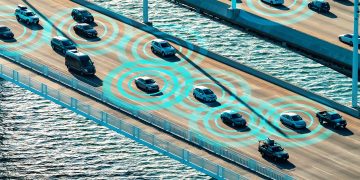
In autonomous driving, sensor fusion plays a crucial role in enabling the vehicle to perceive its environment accurately. Autonomous cars rely on a combination of LiDAR, cameras, radar, and IMUs to detect obstacles, pedestrians, other vehicles, and road signs. By fusing these different sensor modalities, the vehicle can create a robust map of its environment and make safe driving decisions.

For instance, LiDAR may provide highly accurate 3D spatial information, while cameras provide color and texture data, allowing the vehicle to recognize road signs, traffic lights, and other vehicles. Radar sensors help detect objects at long range, even in poor visibility conditions, and IMUs ensure precise vehicle motion tracking.

5.2 Industrial Robotics

Industrial robots, such as those used in manufacturing or warehouse automation, rely on sensor fusion to accurately perform complex tasks like pick-and-place, assembly, or quality control. These robots may use a combination of vision systems, force sensors, and proximity sensors to accurately locate objects, handle delicate items, or assemble components with high precision.

For example, a robot arm may use visual sensors to identify the object it needs to manipulate, force sensors to ensure that it applies the correct amount of pressure, and proximity sensors to avoid collisions with other objects in the workspace.

5.3 Healthcare Robotics

In healthcare, robotic systems such as surgical robots and rehabilitation robots benefit from sensor fusion to achieve high precision and safety. Surgical robots use a combination of cameras, force sensors, and position tracking systems to perform minimally invasive procedures. Sensor fusion allows the robot to track both the patient’s anatomy and the tools being used, ensuring precise operations and avoiding complications.

In rehabilitation, robots use sensors to detect patients’ movements and adapt their actions accordingly, providing tailored physical therapy.

5.4 Service Robots

Service robots, such as those used in hospitality or customer service, also rely on sensor fusion to navigate their environments and interact with people. These robots use cameras, LiDAR, and ultrasonic sensors to understand their surroundings and move through complex, cluttered spaces. Sensor fusion ensures they can avoid obstacles, detect objects, and communicate effectively with humans.


6. Challenges and Limitations

While sensor fusion offers significant advantages, there are several challenges and limitations:

  • Sensor Calibration: Ensuring that sensors are accurately calibrated is crucial for successful sensor fusion. Misaligned sensors can lead to inaccurate data and erroneous conclusions.
  • Computational Load: Sensor fusion often requires significant computational power, especially when processing data from high-resolution cameras or LiDAR sensors. Robots with limited processing capabilities may struggle to perform real-time fusion in complex environments.
  • Data Synchronization: Ensuring that sensor data from different modalities is synchronized in time is essential for accurate fusion. Sensor data with different timestamps can lead to inconsistencies in understanding the environment.

7. Future Directions

The future of sensor fusion in robotics looks promising, driven by advancements in machine learning and AI. As robots continue to evolve, sensor fusion techniques will become more sophisticated, allowing robots to operate more autonomously and efficiently in even more dynamic and unpredictable environments. In particular:

  • AI and Deep Learning will enable robots to learn optimal fusion strategies directly from large datasets, improving their ability to adapt to new environments and tasks.
  • 5G Networks may provide high-bandwidth, low-latency connections that enable remote robots to rely on real-time sensor fusion, enabling better performance in teleoperation and multi-robot systems.
  • Quantum Sensors could dramatically improve sensor accuracy and capabilities, allowing for more precise and reliable fusion in the future.

8. Conclusion

Sensor fusion technology is at the heart of many modern robotic systems, enabling them to perform tasks with high precision and reliability. By combining data from multiple sensors, robots can form more accurate models of their environment and make better decisions. As sensor technology continues to advance, the integration of diverse sensors in robots will only become more refined, unlocking new possibilities across industries ranging from healthcare and transportation to industrial automation and beyond. The future of robotics lies in further advancing sensor fusion techniques, enhancing robot autonomy, and improving task execution in increasingly complex and dynamic environments.
Tags: AI and Sensor IntegrationSensor Fusion TechnologyTechnology
ShareTweetShare

Related Posts

Edge Computing: A Key Technology for Real-Time Computer Vision Applications
Technology

Edge Computing: A Key Technology for Real-Time Computer Vision Applications

December 1, 2025
Image Fusion in Computer Vision: Enhancing Scene Understanding Through Multi-Sensor Integration
Technology

Image Fusion in Computer Vision: Enhancing Scene Understanding Through Multi-Sensor Integration

November 30, 2025
Sensor Fusion Technology: Achieving High-Precision Environmental Perception in Modern Robotics
Technology

Sensor Fusion Technology: Achieving High-Precision Environmental Perception in Modern Robotics

November 29, 2025
3D Vision Reconstruction and Depth Estimation: Foundations, Techniques, and Applications
Technology

3D Vision Reconstruction and Depth Estimation: Foundations, Techniques, and Applications

November 28, 2025
Computer Vision: The Foundation of Robotic Perception and Its Broad Applications in Autonomous Driving, Industrial Automation, and Medical Surgery
Technology

Computer Vision: The Foundation of Robotic Perception and Its Broad Applications in Autonomous Driving, Industrial Automation, and Medical Surgery

November 27, 2025
Ensuring Robots Do Not Harm Humans While Performing Tasks
Technology

Ensuring Robots Do Not Harm Humans While Performing Tasks

November 26, 2025
Leave Comment
  • Trending
  • Comments
  • Latest
The Revolutionary Impact of Robotics on Disaster Rescue and Environmental Protection

The Revolutionary Impact of Robotics on Disaster Rescue and Environmental Protection

October 20, 2025
Defining the Relationship Between Humans and Robots

Defining the Relationship Between Humans and Robots

October 20, 2025
Biomimetics: A Multidisciplinary Approach to the Future of Robotics and Innovation

Biomimetics: A Multidisciplinary Approach to the Future of Robotics and Innovation

October 20, 2025
How Robots Understand, Respond to, and Simulate Human Emotions to Enhance Interaction Experience

How Robots Understand, Respond to, and Simulate Human Emotions to Enhance Interaction Experience

October 20, 2025
The Integration of Artificial Intelligence and Human-Computer Interaction

The Integration of Artificial Intelligence and Human-Computer Interaction

Researching How Machines Can Recognize and Understand Human Emotions to Improve the Naturalness of Human-Computer Interaction

Researching How Machines Can Recognize and Understand Human Emotions to Improve the Naturalness of Human-Computer Interaction

AI Can Recognize User Emotions Through Facial Expressions, Voice Tones, and Other Signals and Respond Accordingly

AI Can Recognize User Emotions Through Facial Expressions, Voice Tones, and Other Signals and Respond Accordingly

Voice Assistant Research Drives Breakthroughs in Speech Recognition and Natural Language Understanding

Voice Assistant Research Drives Breakthroughs in Speech Recognition and Natural Language Understanding

Robotics and Societal Change: Smart Cities and Digitalized Living

Robotics and Societal Change: Smart Cities and Digitalized Living

December 1, 2025
How to Improve Robot Flexibility While Ensuring Strength and Durability: A Major Technological Challenge

How to Improve Robot Flexibility While Ensuring Strength and Durability: A Major Technological Challenge

December 1, 2025
The Application of Robotics and Automated Logistics Systems in Supply Chain Management

The Application of Robotics and Automated Logistics Systems in Supply Chain Management

December 1, 2025
Edge Computing: A Key Technology for Real-Time Computer Vision Applications

Edge Computing: A Key Technology for Real-Time Computer Vision Applications

December 1, 2025
AnthroboticsLab

Through expert commentary and deep dives into industry trends and ethical considerations, we bridge the gap between academic research and real-world application, fostering a deeper understanding of our technological future.

© 2025 anthroboticslab.com. contacts:[email protected]

No Result
View All Result
  • Home
  • Research
  • Technology
  • Industry
  • Insights
  • Futures

© 2025 anthroboticslab.com. contacts:[email protected]

Welcome Back!

Login to your account below

Forgotten Password?

Retrieve your password

Please enter your username or email address to reset your password.

Log In