





AnthroboticsLab
  • Home
  • Research
    Soft Robotics: Advancements in Bio-Inspired Flexible Systems

    Soft Robotics: Advancements in Bio-Inspired Flexible Systems

    Autonomous Robots and Reinforcement Learning: Paving the Way for Intelligent Machines

    Autonomous Robots and Reinforcement Learning: Paving the Way for Intelligent Machines

    Designing Adaptive User Interfaces: Enhancing Human-Computer Interaction through Dynamic Interfaces

    Designing Adaptive User Interfaces: Enhancing Human-Computer Interaction through Dynamic Interfaces

    Human-Machine Interaction in Augmented Reality and Virtual Reality: A Comprehensive Exploration

    Human-Machine Interaction in Augmented Reality and Virtual Reality: A Comprehensive Exploration

    Affective Computing and Human-Machine Emotional Interaction: The Future of Emotional AI

    Affective Computing and Human-Machine Emotional Interaction: The Future of Emotional AI

    Researching How Machines Can Understand, Recognize, and Respond to Human Emotions

    Researching How Machines Can Understand, Recognize, and Respond to Human Emotions

  • Technology
    Edge Computing: A Key Technology for Real-Time Computer Vision Applications

    Edge Computing: A Key Technology for Real-Time Computer Vision Applications

    Image Fusion in Computer Vision: Enhancing Scene Understanding Through Multi-Sensor Integration

    Image Fusion in Computer Vision: Enhancing Scene Understanding Through Multi-Sensor Integration

    Sensor Fusion Technology: Achieving High-Precision Environmental Perception in Modern Robotics

    Sensor Fusion Technology: Achieving High-Precision Environmental Perception in Modern Robotics

    3D Vision Reconstruction and Depth Estimation: Foundations, Techniques, and Applications

    3D Vision Reconstruction and Depth Estimation: Foundations, Techniques, and Applications

    Computer Vision: The Foundation of Robotic Perception and Its Broad Applications in Autonomous Driving, Industrial Automation, and Medical Surgery

    Computer Vision: The Foundation of Robotic Perception and Its Broad Applications in Autonomous Driving, Industrial Automation, and Medical Surgery

    Ensuring Robots Do Not Harm Humans While Performing Tasks

    Ensuring Robots Do Not Harm Humans While Performing Tasks

  • Industry
    The Application of Robotics and Automated Logistics Systems in Supply Chain Management

    The Application of Robotics and Automated Logistics Systems in Supply Chain Management

    Collaborative Robots and Human Workers: Enhancing Productivity and Ensuring Worker Safety

    Collaborative Robots and Human Workers: Enhancing Productivity and Ensuring Worker Safety

    Modern Production Lines: Emphasizing Flexibility and Customization

    Modern Production Lines: Emphasizing Flexibility and Customization

    The Expanding Role of Robots in Manufacturing: Advancements, Applications, and Future Prospects

    The Expanding Role of Robots in Manufacturing: Advancements, Applications, and Future Prospects

    Industry 4.0: Revolutionizing Manufacturing with IoT, AI, Robotics, and Big Data

    Industry 4.0: Revolutionizing Manufacturing with IoT, AI, Robotics, and Big Data

    Smart Manufacturing and Industry 4.0: Revolutionizing the Future of Production

    Smart Manufacturing and Industry 4.0: Revolutionizing the Future of Production

  • Insights
    How to Improve Robot Flexibility While Ensuring Strength and Durability: A Major Technological Challenge

    How to Improve Robot Flexibility While Ensuring Strength and Durability: A Major Technological Challenge

    Expert Interview: The Future of Biomimicry in Technology and Innovation

    Expert Interview: The Future of Biomimicry in Technology and Innovation

    Biomimetic Robots: Drawing Inspiration from Nature to Simulate the Behavior and Structure of Plants and Animals

    Biomimetic Robots: Drawing Inspiration from Nature to Simulate the Behavior and Structure of Plants and Animals

    Recent Advances in Flexible Materials and Bionic Muscle Actuation Technologies

    Recent Advances in Flexible Materials and Bionic Muscle Actuation Technologies

    Integrating Artificial Intelligence and Biomimetics: How Bionic Robots in Healthcare Can Provide Personalized Treatment Plans

    Integrating Artificial Intelligence and Biomimetics: How Bionic Robots in Healthcare Can Provide Personalized Treatment Plans

    The Great Potential of Bionic Robots in Neurorehabilitation

    The Great Potential of Bionic Robots in Neurorehabilitation

  • Futures
    Robotics and Societal Change: Smart Cities and Digitalized Living

    Robotics and Societal Change: Smart Cities and Digitalized Living

    The Widespread Application of Robotics: Potential Impact on Traditional Jobs

    The Widespread Application of Robotics: Potential Impact on Traditional Jobs

    Smart Homes and Life Assistants: The Future of Everyday Living

    Smart Homes and Life Assistants: The Future of Everyday Living

    The Expanding Role of Robots in the Service Industry: From Customer Service to Personalized Healthcare

    The Expanding Role of Robots in the Service Industry: From Customer Service to Personalized Healthcare

    Fully Automated Production and Services: The Future of Industry and Innovation

    Fully Automated Production and Services: The Future of Industry and Innovation

    The Future of Robots: From Tools to Understanding, Learning, and Responding to Human Society

    The Future of Robots: From Tools to Understanding, Learning, and Responding to Human Society

AnthroboticsLab
  • Home
  • Research
    Soft Robotics: Advancements in Bio-Inspired Flexible Systems

    Soft Robotics: Advancements in Bio-Inspired Flexible Systems

    Autonomous Robots and Reinforcement Learning: Paving the Way for Intelligent Machines

    Autonomous Robots and Reinforcement Learning: Paving the Way for Intelligent Machines

    Designing Adaptive User Interfaces: Enhancing Human-Computer Interaction through Dynamic Interfaces

    Designing Adaptive User Interfaces: Enhancing Human-Computer Interaction through Dynamic Interfaces

    Human-Machine Interaction in Augmented Reality and Virtual Reality: A Comprehensive Exploration

    Human-Machine Interaction in Augmented Reality and Virtual Reality: A Comprehensive Exploration

    Affective Computing and Human-Machine Emotional Interaction: The Future of Emotional AI

    Affective Computing and Human-Machine Emotional Interaction: The Future of Emotional AI

    Researching How Machines Can Understand, Recognize, and Respond to Human Emotions

    Researching How Machines Can Understand, Recognize, and Respond to Human Emotions

  • Technology
    Edge Computing: A Key Technology for Real-Time Computer Vision Applications

    Edge Computing: A Key Technology for Real-Time Computer Vision Applications

    Image Fusion in Computer Vision: Enhancing Scene Understanding Through Multi-Sensor Integration

    Image Fusion in Computer Vision: Enhancing Scene Understanding Through Multi-Sensor Integration

    Sensor Fusion Technology: Achieving High-Precision Environmental Perception in Modern Robotics

    Sensor Fusion Technology: Achieving High-Precision Environmental Perception in Modern Robotics

    3D Vision Reconstruction and Depth Estimation: Foundations, Techniques, and Applications

    3D Vision Reconstruction and Depth Estimation: Foundations, Techniques, and Applications

    Computer Vision: The Foundation of Robotic Perception and Its Broad Applications in Autonomous Driving, Industrial Automation, and Medical Surgery

    Computer Vision: The Foundation of Robotic Perception and Its Broad Applications in Autonomous Driving, Industrial Automation, and Medical Surgery

    Ensuring Robots Do Not Harm Humans While Performing Tasks

    Ensuring Robots Do Not Harm Humans While Performing Tasks

  • Industry
    The Application of Robotics and Automated Logistics Systems in Supply Chain Management

    The Application of Robotics and Automated Logistics Systems in Supply Chain Management

    Collaborative Robots and Human Workers: Enhancing Productivity and Ensuring Worker Safety

    Collaborative Robots and Human Workers: Enhancing Productivity and Ensuring Worker Safety

    Modern Production Lines: Emphasizing Flexibility and Customization

    Modern Production Lines: Emphasizing Flexibility and Customization

    The Expanding Role of Robots in Manufacturing: Advancements, Applications, and Future Prospects

    The Expanding Role of Robots in Manufacturing: Advancements, Applications, and Future Prospects

    Industry 4.0: Revolutionizing Manufacturing with IoT, AI, Robotics, and Big Data

    Industry 4.0: Revolutionizing Manufacturing with IoT, AI, Robotics, and Big Data

    Smart Manufacturing and Industry 4.0: Revolutionizing the Future of Production

    Smart Manufacturing and Industry 4.0: Revolutionizing the Future of Production

  • Insights
    How to Improve Robot Flexibility While Ensuring Strength and Durability: A Major Technological Challenge

    How to Improve Robot Flexibility While Ensuring Strength and Durability: A Major Technological Challenge

    Expert Interview: The Future of Biomimicry in Technology and Innovation

    Expert Interview: The Future of Biomimicry in Technology and Innovation

    Biomimetic Robots: Drawing Inspiration from Nature to Simulate the Behavior and Structure of Plants and Animals

    Biomimetic Robots: Drawing Inspiration from Nature to Simulate the Behavior and Structure of Plants and Animals

    Recent Advances in Flexible Materials and Bionic Muscle Actuation Technologies

    Recent Advances in Flexible Materials and Bionic Muscle Actuation Technologies

    Integrating Artificial Intelligence and Biomimetics: How Bionic Robots in Healthcare Can Provide Personalized Treatment Plans

    Integrating Artificial Intelligence and Biomimetics: How Bionic Robots in Healthcare Can Provide Personalized Treatment Plans

    The Great Potential of Bionic Robots in Neurorehabilitation

    The Great Potential of Bionic Robots in Neurorehabilitation

  • Futures
    Robotics and Societal Change: Smart Cities and Digitalized Living

    Robotics and Societal Change: Smart Cities and Digitalized Living

    The Widespread Application of Robotics: Potential Impact on Traditional Jobs

    The Widespread Application of Robotics: Potential Impact on Traditional Jobs

    Smart Homes and Life Assistants: The Future of Everyday Living

    Smart Homes and Life Assistants: The Future of Everyday Living

    The Expanding Role of Robots in the Service Industry: From Customer Service to Personalized Healthcare

    The Expanding Role of Robots in the Service Industry: From Customer Service to Personalized Healthcare

    Fully Automated Production and Services: The Future of Industry and Innovation

    Fully Automated Production and Services: The Future of Industry and Innovation

    The Future of Robots: From Tools to Understanding, Learning, and Responding to Human Society

    The Future of Robots: From Tools to Understanding, Learning, and Responding to Human Society

AnthroboticsLab
No Result
View All Result
Home Futures

Future Robots Will Collaborate More with Humans Rather Than Replacing Jobs

October 15, 2025
in Futures
Future Robots Will Collaborate More with Humans Rather Than Replacing Jobs

1. Introduction

For decades, the idea of robots entering the workforce has sparked significant debate. The Industrial Revolution introduced automation to manual labor, and now, with the advent of AI and advanced robotics, the question arises: will robots take over human jobs? The answer is not a simple one, and it is likely that the future of work will look vastly different from what we know today.

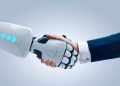
Rather than robots solely replacing human roles, the future of robotics will involve humans and robots working side by side to enhance productivity, creativity, and problem-solving. By leveraging the strengths of both parties, robots will complement human capabilities, creating synergy that pushes the boundaries of what is possible in the workplace.

This shift is already happening. From collaborative robots, or cobots, working alongside humans in manufacturing plants to AI-driven tools aiding medical professionals, the role of robots is becoming more integrated into human-led teams. This collaborative approach fosters a more inclusive, productive, and innovative work environment, ensuring that human dignity and job satisfaction are preserved even as technology evolves.

In this article, we will examine how robots will move from being seen as replacements for humans to becoming powerful tools that augment human capabilities, driving growth in diverse industries and creating a future of work based on collaboration rather than replacement.


2. The Evolution of Robotics in the Workforce

2.1 Historical Context: Early Automation and the Fear of Job Loss

The idea that robots might replace human workers has deep roots in history. From the first automated machines in the early 20th century to the robotic arms that revolutionized the automobile industry in the 1960s, the integration of robotics into manufacturing and production processes has consistently raised concerns about mass unemployment. Technological unemployment—the idea that machines and automation would make human workers obsolete—has been a recurring theme in the history of industrial progress.

In the past, automation was limited to repetitive, physically demanding tasks. Machines could take over jobs like assembly line work, but they lacked the ability to perform tasks requiring creativity, critical thinking, or emotional intelligence. However, as robotics technology advanced, machines began to take on more complex functions. Now, robots are capable of performing not only physical tasks but also tasks that require some level of cognitive processing, such as data analysis, decision-making, and even artificial empathy in certain applications like healthcare.

2.2 The Shift from Replacement to Collaboration

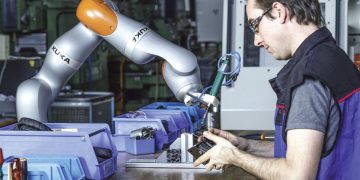
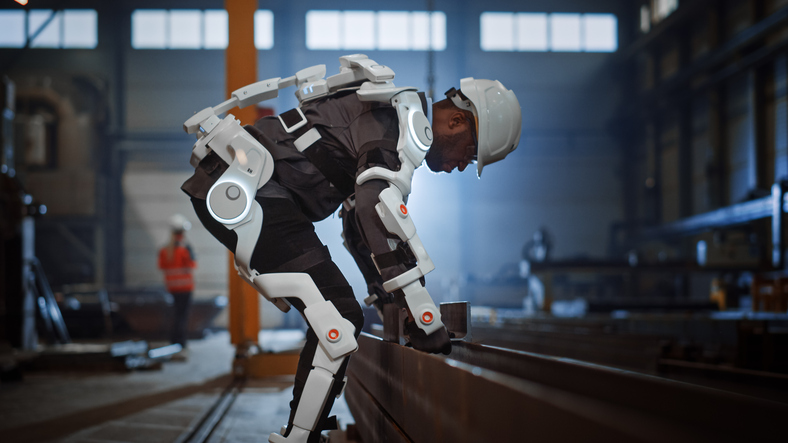
As we move further into the 21st century, robotics has started to transform from a tool of replacement to one of collaboration. Collaborative robots (cobots) are designed to work alongside humans in shared spaces, interacting with human workers to achieve tasks that are difficult or dangerous for humans to do alone.

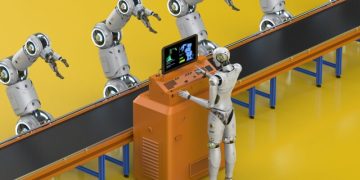
These cobots are typically programmed to perform repetitive or strenuous tasks—such as lifting, sorting, or moving objects—while humans handle more complex, creative, or judgment-based tasks. The future of robotics will involve co-working environments where robots and humans enhance each other’s capabilities rather than competing against each other.

By focusing on collaboration instead of replacement, the robotics industry is embracing a vision where robots are seen as assistants that augment human abilities, rather than as competitors for jobs. This collaborative approach ensures that robots can handle tasks that may be repetitive or physically demanding, while humans focus on tasks that require problem-solving, creativity, and emotionally intelligent interactions.

3. Key Advantages of Human-Robot Collaboration

3.1 Increased Efficiency and Productivity

One of the most immediate benefits of human-robot collaboration is increased efficiency. Robots are designed to perform tasks quickly and accurately, without the need for rest. For instance, in a manufacturing environment, robots can handle repetitive tasks like assembling components or packaging products. At the same time, human workers can focus on more intricate or nuanced tasks, such as supervision, quality control, and designing solutions to problems that robots cannot solve.

By automating the monotonous and physically demanding tasks, robots can free up human workers to engage in higher-level thinking and problem-solving. In industries like healthcare, robots can handle tasks such as surgical assistance, medication delivery, or patient monitoring, while human professionals can concentrate on making critical decisions, providing emotional support, and offering expert care.

3.2 Improved Workplace Safety

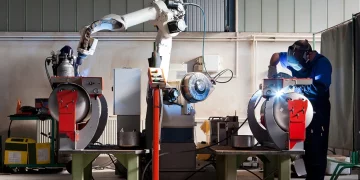
In environments where dangerous tasks are commonplace, robots can take over risky work to reduce the potential for workplace injuries. For example, in industries like construction, mining, or hazardous material handling, robots can be used to perform tasks in high-risk environments, such as clearing debris, lifting heavy loads, or handling toxic substances. This helps minimize harm to human workers, leading to safer working conditions.

In the healthcare sector, robots can assist in surgical procedures, ensuring greater precision and control. By using robotic systems in surgeries, medical professionals can perform minimally invasive procedures with enhanced accuracy, resulting in faster recovery times and less pain for patients.

3.3 Enhanced Creativity and Problem-Solving

While robots are excellent at performing repetitive tasks, human creativity remains irreplaceable. The future of work will involve humans using robots as tools to expand their creative potential. Robots can handle tasks such as data collection, analysis, and trend forecasting, allowing human workers to focus on the strategic aspects of their work, such as brainstorming, decision-making, and innovating new solutions.

In the arts, AI-powered robots are already helping artists generate new forms of art and music, collaborating with human creators to explore new frontiers of expression. By eliminating routine work, robots allow humans to focus on higher-level cognitive tasks—the very essence of creativity.

3.4 Better Adaptation to Changing Needs

As technology rapidly evolves, industries must be agile enough to adapt to new demands and innovations. Robots that collaborate with humans can quickly be re-programmed or retrained to meet the changing needs of the workplace. In agile manufacturing, robots can be integrated into new workflows with minimal disruption, allowing companies to stay competitive in an ever-changing market.

This flexibility will also be critical in responding to societal challenges, such as aging populations, pandemics, or environmental disasters. Robots can be designed to assist in various emergency response scenarios or work alongside human caregivers to support an aging population in need of long-term care.


4. Industries Leading the Way in Human-Robot Collaboration

4.1 Manufacturing

Manufacturing has long been at the forefront of robotic adoption. Today, collaborative robots are taking center stage, allowing humans to work more efficiently and safely alongside machines. Robotic arms that work in close proximity to human workers are used for assembly, material handling, and quality inspection. Unlike traditional robots that are confined to separate workspaces, cobots interact directly with human workers, handling repetitive tasks while workers manage more intricate or decision-based activities.

4.2 Healthcare

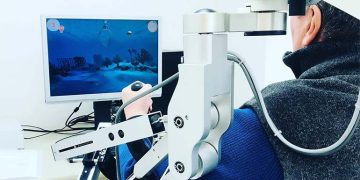
Robots in healthcare have proven particularly valuable when it comes to enhancing patient care. In surgical settings, robots like the Da Vinci Surgical System assist surgeons in performing minimally invasive procedures, ensuring greater precision and reducing recovery times. Meanwhile, in eldercare, robots are being used to assist with mobility and monitoring.

In the future, robots could play an even greater role in diagnostic tasks or assist with mental health care through AI-based therapy. Human workers will remain essential in delivering emotional support, while robots handle routine tasks, thereby improving the overall quality of care.

4.3 Logistics and Delivery

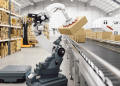
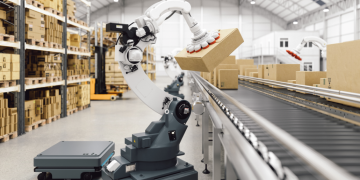
In logistics, automated warehouses and delivery robots are already reshaping the way goods are processed and distributed. While robots are efficient in organizing, sorting, and transporting goods within warehouses, human workers will still oversee operations, handle complex customer inquiries, and perform tasks requiring judgment and critical thinking.

The rise of autonomous delivery robots also promises to streamline the delivery process. These robots can navigate complex urban environments, delivering packages safely and efficiently, freeing up human workers to handle customer service and route optimization.


5. Ethical and Social Considerations of Human-Robot Collaboration

While human-robot collaboration offers numerous benefits, it also raises ethical and social questions that must be addressed. One concern is the potential for job displacement in certain sectors. While robots may assist workers rather than replace them, there will still be areas where automation leads to shifts in employment patterns.

Another challenge is ensuring that robots are designed ethically, with safeguards against biases in AI and data processing. As robots play a larger role in decision-making, it will be crucial to ensure that they function transparently, fairly, and without discrimination.


6. Conclusion

The future of work will not be defined by robots replacing humans, but rather by human-robot collaboration. Robots are not here to take away jobs; they are here to help us be more productive, creative, and efficient. By complementing human abilities, robots will unlock new possibilities for industries, from manufacturing to healthcare, logistics, and beyond. As we look toward this future, we must work to ensure that robots are integrated ethically and that the workforce remains adaptable, capable, and prepared to thrive alongside their robotic counterparts. The next frontier in automation will not be about machines replacing humans, but about humans and robots working together for a better future.

Tags: CollaborateFuturesRobots
ShareTweetShare

Related Posts

Robotics and Societal Change: Smart Cities and Digitalized Living
Futures

Robotics and Societal Change: Smart Cities and Digitalized Living

December 1, 2025
The Widespread Application of Robotics: Potential Impact on Traditional Jobs
Futures

The Widespread Application of Robotics: Potential Impact on Traditional Jobs

November 30, 2025
Smart Homes and Life Assistants: The Future of Everyday Living
Futures

Smart Homes and Life Assistants: The Future of Everyday Living

November 29, 2025
The Expanding Role of Robots in the Service Industry: From Customer Service to Personalized Healthcare
Futures

The Expanding Role of Robots in the Service Industry: From Customer Service to Personalized Healthcare

November 28, 2025
Fully Automated Production and Services: The Future of Industry and Innovation
Futures

Fully Automated Production and Services: The Future of Industry and Innovation

November 27, 2025
The Future of Robots: From Tools to Understanding, Learning, and Responding to Human Society
Futures

The Future of Robots: From Tools to Understanding, Learning, and Responding to Human Society

November 26, 2025
Leave Comment
  • Trending
  • Comments
  • Latest
The Revolutionary Impact of Robotics on Disaster Rescue and Environmental Protection

The Revolutionary Impact of Robotics on Disaster Rescue and Environmental Protection

October 20, 2025
Defining the Relationship Between Humans and Robots

Defining the Relationship Between Humans and Robots

October 20, 2025
Biomimetics: A Multidisciplinary Approach to the Future of Robotics and Innovation

Biomimetics: A Multidisciplinary Approach to the Future of Robotics and Innovation

October 20, 2025
How Robots Understand, Respond to, and Simulate Human Emotions to Enhance Interaction Experience

How Robots Understand, Respond to, and Simulate Human Emotions to Enhance Interaction Experience

October 20, 2025
The Integration of Artificial Intelligence and Human-Computer Interaction

The Integration of Artificial Intelligence and Human-Computer Interaction

Researching How Machines Can Recognize and Understand Human Emotions to Improve the Naturalness of Human-Computer Interaction

Researching How Machines Can Recognize and Understand Human Emotions to Improve the Naturalness of Human-Computer Interaction

AI Can Recognize User Emotions Through Facial Expressions, Voice Tones, and Other Signals and Respond Accordingly

AI Can Recognize User Emotions Through Facial Expressions, Voice Tones, and Other Signals and Respond Accordingly

Voice Assistant Research Drives Breakthroughs in Speech Recognition and Natural Language Understanding

Voice Assistant Research Drives Breakthroughs in Speech Recognition and Natural Language Understanding

Robotics and Societal Change: Smart Cities and Digitalized Living

Robotics and Societal Change: Smart Cities and Digitalized Living

December 1, 2025
How to Improve Robot Flexibility While Ensuring Strength and Durability: A Major Technological Challenge

How to Improve Robot Flexibility While Ensuring Strength and Durability: A Major Technological Challenge

December 1, 2025
The Application of Robotics and Automated Logistics Systems in Supply Chain Management

The Application of Robotics and Automated Logistics Systems in Supply Chain Management

December 1, 2025
Edge Computing: A Key Technology for Real-Time Computer Vision Applications

Edge Computing: A Key Technology for Real-Time Computer Vision Applications

December 1, 2025
AnthroboticsLab

Through expert commentary and deep dives into industry trends and ethical considerations, we bridge the gap between academic research and real-world application, fostering a deeper understanding of our technological future.

© 2025 anthroboticslab.com. contacts:[email protected]

No Result
View All Result
  • Home
  • Research
  • Technology
  • Industry
  • Insights
  • Futures

© 2025 anthroboticslab.com. contacts:[email protected]

Welcome Back!

Login to your account below

Forgotten Password?

Retrieve your password

Please enter your username or email address to reset your password.

Log In