



AnthroboticsLab
  • Home
  • Research
    Soft Robotics: Advancements in Bio-Inspired Flexible Systems

    Soft Robotics: Advancements in Bio-Inspired Flexible Systems

    Autonomous Robots and Reinforcement Learning: Paving the Way for Intelligent Machines

    Autonomous Robots and Reinforcement Learning: Paving the Way for Intelligent Machines

    Designing Adaptive User Interfaces: Enhancing Human-Computer Interaction through Dynamic Interfaces

    Designing Adaptive User Interfaces: Enhancing Human-Computer Interaction through Dynamic Interfaces

    Human-Machine Interaction in Augmented Reality and Virtual Reality: A Comprehensive Exploration

    Human-Machine Interaction in Augmented Reality and Virtual Reality: A Comprehensive Exploration

    Affective Computing and Human-Machine Emotional Interaction: The Future of Emotional AI

    Affective Computing and Human-Machine Emotional Interaction: The Future of Emotional AI

    Researching How Machines Can Understand, Recognize, and Respond to Human Emotions

    Researching How Machines Can Understand, Recognize, and Respond to Human Emotions

  • Technology
    Edge Computing: A Key Technology for Real-Time Computer Vision Applications

    Edge Computing: A Key Technology for Real-Time Computer Vision Applications

    Image Fusion in Computer Vision: Enhancing Scene Understanding Through Multi-Sensor Integration

    Image Fusion in Computer Vision: Enhancing Scene Understanding Through Multi-Sensor Integration

    Sensor Fusion Technology: Achieving High-Precision Environmental Perception in Modern Robotics

    Sensor Fusion Technology: Achieving High-Precision Environmental Perception in Modern Robotics

    3D Vision Reconstruction and Depth Estimation: Foundations, Techniques, and Applications

    3D Vision Reconstruction and Depth Estimation: Foundations, Techniques, and Applications

    Computer Vision: The Foundation of Robotic Perception and Its Broad Applications in Autonomous Driving, Industrial Automation, and Medical Surgery

    Computer Vision: The Foundation of Robotic Perception and Its Broad Applications in Autonomous Driving, Industrial Automation, and Medical Surgery

    Ensuring Robots Do Not Harm Humans While Performing Tasks

    Ensuring Robots Do Not Harm Humans While Performing Tasks

  • Industry
    The Application of Robotics and Automated Logistics Systems in Supply Chain Management

    The Application of Robotics and Automated Logistics Systems in Supply Chain Management

    Collaborative Robots and Human Workers: Enhancing Productivity and Ensuring Worker Safety

    Collaborative Robots and Human Workers: Enhancing Productivity and Ensuring Worker Safety

    Modern Production Lines: Emphasizing Flexibility and Customization

    Modern Production Lines: Emphasizing Flexibility and Customization

    The Expanding Role of Robots in Manufacturing: Advancements, Applications, and Future Prospects

    The Expanding Role of Robots in Manufacturing: Advancements, Applications, and Future Prospects

    Industry 4.0: Revolutionizing Manufacturing with IoT, AI, Robotics, and Big Data

    Industry 4.0: Revolutionizing Manufacturing with IoT, AI, Robotics, and Big Data

    Smart Manufacturing and Industry 4.0: Revolutionizing the Future of Production

    Smart Manufacturing and Industry 4.0: Revolutionizing the Future of Production

  • Insights
    How to Improve Robot Flexibility While Ensuring Strength and Durability: A Major Technological Challenge

    How to Improve Robot Flexibility While Ensuring Strength and Durability: A Major Technological Challenge

    Expert Interview: The Future of Biomimicry in Technology and Innovation

    Expert Interview: The Future of Biomimicry in Technology and Innovation

    Biomimetic Robots: Drawing Inspiration from Nature to Simulate the Behavior and Structure of Plants and Animals

    Biomimetic Robots: Drawing Inspiration from Nature to Simulate the Behavior and Structure of Plants and Animals

    Recent Advances in Flexible Materials and Bionic Muscle Actuation Technologies

    Recent Advances in Flexible Materials and Bionic Muscle Actuation Technologies

    Integrating Artificial Intelligence and Biomimetics: How Bionic Robots in Healthcare Can Provide Personalized Treatment Plans

    Integrating Artificial Intelligence and Biomimetics: How Bionic Robots in Healthcare Can Provide Personalized Treatment Plans

    The Great Potential of Bionic Robots in Neurorehabilitation

    The Great Potential of Bionic Robots in Neurorehabilitation

  • Futures
    Robotics and Societal Change: Smart Cities and Digitalized Living

    Robotics and Societal Change: Smart Cities and Digitalized Living

    The Widespread Application of Robotics: Potential Impact on Traditional Jobs

    The Widespread Application of Robotics: Potential Impact on Traditional Jobs

    Smart Homes and Life Assistants: The Future of Everyday Living

    Smart Homes and Life Assistants: The Future of Everyday Living

    The Expanding Role of Robots in the Service Industry: From Customer Service to Personalized Healthcare

    The Expanding Role of Robots in the Service Industry: From Customer Service to Personalized Healthcare

    Fully Automated Production and Services: The Future of Industry and Innovation

    Fully Automated Production and Services: The Future of Industry and Innovation

    The Future of Robots: From Tools to Understanding, Learning, and Responding to Human Society

    The Future of Robots: From Tools to Understanding, Learning, and Responding to Human Society

AnthroboticsLab
  • Home
  • Research
    Soft Robotics: Advancements in Bio-Inspired Flexible Systems

    Soft Robotics: Advancements in Bio-Inspired Flexible Systems

    Autonomous Robots and Reinforcement Learning: Paving the Way for Intelligent Machines

    Autonomous Robots and Reinforcement Learning: Paving the Way for Intelligent Machines

    Designing Adaptive User Interfaces: Enhancing Human-Computer Interaction through Dynamic Interfaces

    Designing Adaptive User Interfaces: Enhancing Human-Computer Interaction through Dynamic Interfaces

    Human-Machine Interaction in Augmented Reality and Virtual Reality: A Comprehensive Exploration

    Human-Machine Interaction in Augmented Reality and Virtual Reality: A Comprehensive Exploration

    Affective Computing and Human-Machine Emotional Interaction: The Future of Emotional AI

    Affective Computing and Human-Machine Emotional Interaction: The Future of Emotional AI

    Researching How Machines Can Understand, Recognize, and Respond to Human Emotions

    Researching How Machines Can Understand, Recognize, and Respond to Human Emotions

  • Technology
    Edge Computing: A Key Technology for Real-Time Computer Vision Applications

    Edge Computing: A Key Technology for Real-Time Computer Vision Applications

    Image Fusion in Computer Vision: Enhancing Scene Understanding Through Multi-Sensor Integration

    Image Fusion in Computer Vision: Enhancing Scene Understanding Through Multi-Sensor Integration

    Sensor Fusion Technology: Achieving High-Precision Environmental Perception in Modern Robotics

    Sensor Fusion Technology: Achieving High-Precision Environmental Perception in Modern Robotics

    3D Vision Reconstruction and Depth Estimation: Foundations, Techniques, and Applications

    3D Vision Reconstruction and Depth Estimation: Foundations, Techniques, and Applications

    Computer Vision: The Foundation of Robotic Perception and Its Broad Applications in Autonomous Driving, Industrial Automation, and Medical Surgery

    Computer Vision: The Foundation of Robotic Perception and Its Broad Applications in Autonomous Driving, Industrial Automation, and Medical Surgery

    Ensuring Robots Do Not Harm Humans While Performing Tasks

    Ensuring Robots Do Not Harm Humans While Performing Tasks

  • Industry
    The Application of Robotics and Automated Logistics Systems in Supply Chain Management

    The Application of Robotics and Automated Logistics Systems in Supply Chain Management

    Collaborative Robots and Human Workers: Enhancing Productivity and Ensuring Worker Safety

    Collaborative Robots and Human Workers: Enhancing Productivity and Ensuring Worker Safety

    Modern Production Lines: Emphasizing Flexibility and Customization

    Modern Production Lines: Emphasizing Flexibility and Customization

    The Expanding Role of Robots in Manufacturing: Advancements, Applications, and Future Prospects

    The Expanding Role of Robots in Manufacturing: Advancements, Applications, and Future Prospects

    Industry 4.0: Revolutionizing Manufacturing with IoT, AI, Robotics, and Big Data

    Industry 4.0: Revolutionizing Manufacturing with IoT, AI, Robotics, and Big Data

    Smart Manufacturing and Industry 4.0: Revolutionizing the Future of Production

    Smart Manufacturing and Industry 4.0: Revolutionizing the Future of Production

  • Insights
    How to Improve Robot Flexibility While Ensuring Strength and Durability: A Major Technological Challenge

    How to Improve Robot Flexibility While Ensuring Strength and Durability: A Major Technological Challenge

    Expert Interview: The Future of Biomimicry in Technology and Innovation

    Expert Interview: The Future of Biomimicry in Technology and Innovation

    Biomimetic Robots: Drawing Inspiration from Nature to Simulate the Behavior and Structure of Plants and Animals

    Biomimetic Robots: Drawing Inspiration from Nature to Simulate the Behavior and Structure of Plants and Animals

    Recent Advances in Flexible Materials and Bionic Muscle Actuation Technologies

    Recent Advances in Flexible Materials and Bionic Muscle Actuation Technologies

    Integrating Artificial Intelligence and Biomimetics: How Bionic Robots in Healthcare Can Provide Personalized Treatment Plans

    Integrating Artificial Intelligence and Biomimetics: How Bionic Robots in Healthcare Can Provide Personalized Treatment Plans

    The Great Potential of Bionic Robots in Neurorehabilitation

    The Great Potential of Bionic Robots in Neurorehabilitation

  • Futures
    Robotics and Societal Change: Smart Cities and Digitalized Living

    Robotics and Societal Change: Smart Cities and Digitalized Living

    The Widespread Application of Robotics: Potential Impact on Traditional Jobs

    The Widespread Application of Robotics: Potential Impact on Traditional Jobs

    Smart Homes and Life Assistants: The Future of Everyday Living

    Smart Homes and Life Assistants: The Future of Everyday Living

    The Expanding Role of Robots in the Service Industry: From Customer Service to Personalized Healthcare

    The Expanding Role of Robots in the Service Industry: From Customer Service to Personalized Healthcare

    Fully Automated Production and Services: The Future of Industry and Innovation

    Fully Automated Production and Services: The Future of Industry and Innovation

    The Future of Robots: From Tools to Understanding, Learning, and Responding to Human Society

    The Future of Robots: From Tools to Understanding, Learning, and Responding to Human Society

AnthroboticsLab
No Result
View All Result
Home Futures

Through Brain-Computer Interface Technology, Humans Can Connect Directly to Machines for More Efficient Communication and Operation

October 17, 2025
in Futures
Through Brain-Computer Interface Technology, Humans Can Connect Directly to Machines for More Efficient Communication and Operation

Introduction

The advent of Brain-Computer Interface (BCI) technology has opened new frontiers in the way humans interact with machines. By enabling direct communication between the brain and external devices, BCIs have the potential to revolutionize numerous fields, including medicine, communication, entertainment, and even everyday tasks. With the ability to bypass traditional forms of communication, such as speech or physical gestures, BCI technology could lead to more efficient and intuitive human-machine interactions.

This article explores the various aspects of BCI technology, from its origins to its current state and future potential. It delves into how BCIs are reshaping industries, enhancing human capabilities, and solving complex problems. Additionally, the article addresses the ethical and societal challenges that accompany these groundbreaking advancements.


1. Understanding Brain-Computer Interface Technology

1.1 What is a Brain-Computer Interface (BCI)?

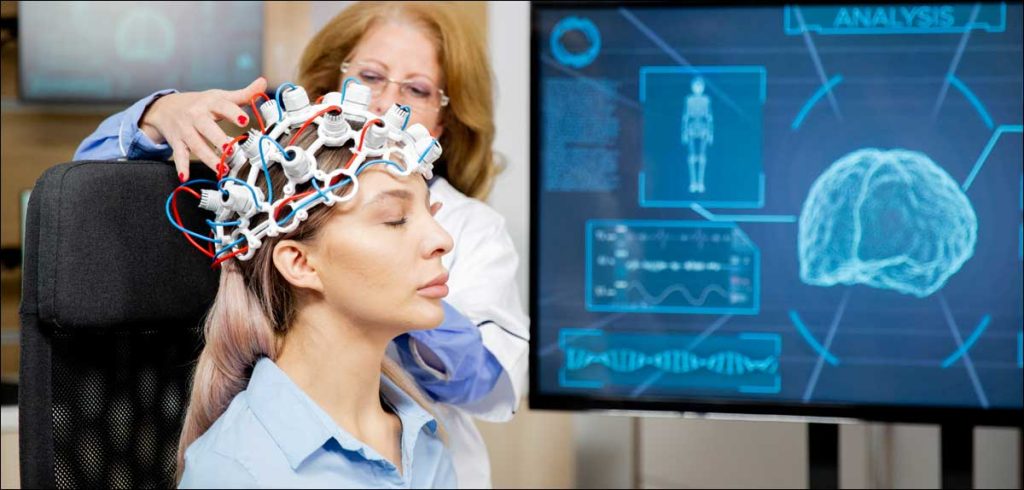
A Brain-Computer Interface is a direct communication pathway between the brain and external devices. BCIs work by reading electrical signals generated by the brain and translating them into commands that control machines, computers, or other devices. These interfaces bypass traditional input methods, such as keyboards, mice, or speech, and enable users to interact with technology using only their thoughts.

There are two primary types of BCIs:

  • Invasive BCIs: These require surgery to implant electrodes directly into the brain. Invasive BCIs offer high levels of precision and are often used for medical purposes, such as helping individuals with severe disabilities regain motor functions or communicate.
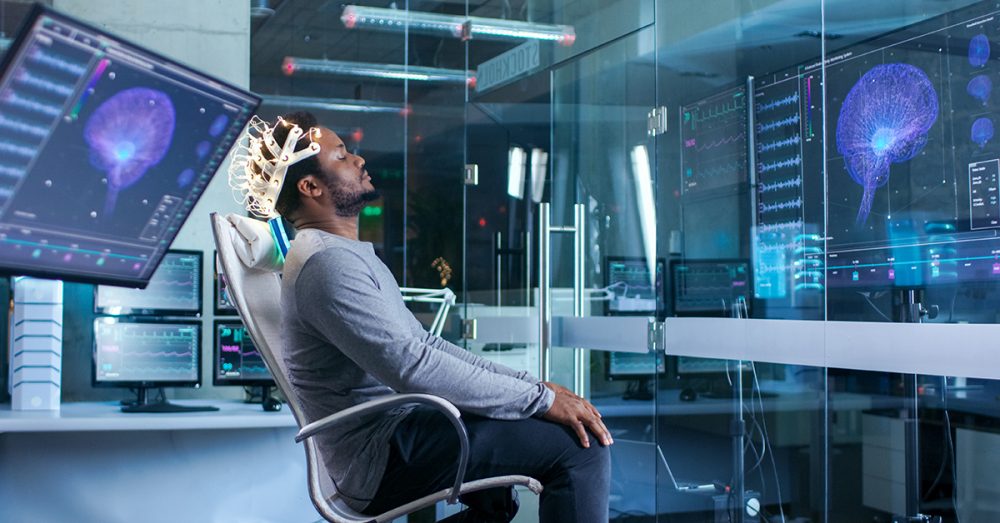
  • Non-invasive BCIs: These do not require surgery and instead use external sensors placed on the scalp to detect brain waves. While non-invasive BCIs are generally less precise than invasive ones, they are more accessible and safer for general use.

1.2 The Science Behind BCIs

The technology behind BCIs is rooted in the brain’s electrical activity. Neurons in the brain communicate through electrical impulses, and these signals can be detected by electrodes placed on the scalp (in the case of non-invasive BCIs) or within the brain itself (in the case of invasive BCIs). When a person thinks about performing an action—such as moving a limb, speaking, or even imagining a specific thought—distinct patterns of brain activity are generated.

The BCI system captures these patterns and processes them using algorithms and machine learning techniques to convert them into commands that can be understood by external devices. This real-time processing enables users to control everything from prosthetics and robotic arms to computers and even video games, simply by thinking.


2. Applications of Brain-Computer Interface Technology

2.1 Revolutionizing Medicine: Restoring Lost Functions

One of the most promising applications of BCI technology lies in the medical field, where it holds the potential to restore lost functions for individuals with physical disabilities. BCIs can enable patients with spinal cord injuries, neurological disorders, or amputations to regain control over their bodies or communicate in ways previously thought impossible.

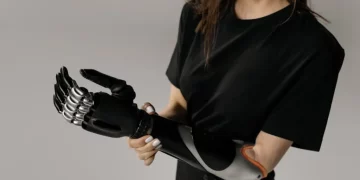
  • Restoring Mobility with Prosthetics: BCIs are already being used to control prosthetic limbs, allowing users to perform fine motor tasks, such as writing or holding objects. The brain signals are transmitted to the prosthetic, mimicking the natural movement of a real limb.
  • Neuroprosthetics and Spinal Cord Injuries: Individuals with spinal cord injuries often lose the ability to move or feel below the site of injury. By using BCIs, researchers have been able to bypass the damaged spinal cord and send signals directly from the brain to muscles, enabling limited movement or even the restoration of sensation in some cases.
  • Communication for the Paralyzed: For individuals suffering from conditions such as ALS (Amyotrophic Lateral Sclerosis) or severe strokes, BCI technology has enabled communication through thought alone. With the help of BCIs, patients can control computer cursors or even “speak” using text-to-speech systems, significantly improving their quality of life.

2.2 Enhancing Human-Machine Interaction in Everyday Life

While BCI technology is transforming healthcare, its applications in everyday life are equally exciting. As the technology advances, BCIs could become part of daily routines, allowing people to control devices and interact with the digital world using only their thoughts.

  • Smart Homes and IoT: BCIs could enable users to control smart home devices such as lights, thermostats, or security systems through thought alone. With seamless integration into the Internet of Things (IoT), people could interact with their homes more efficiently, without the need for physical gestures or voice commands.
  • Virtual and Augmented Reality (VR/AR): BCIs could provide a more immersive experience in virtual and augmented reality environments. Rather than relying on controllers or gestures, users could control avatars, objects, or entire virtual worlds simply by thinking. This could revolutionize entertainment, gaming, and training simulations by providing more natural and intuitive interfaces.
  • Enhanced Human-Computer Interaction: With BCIs, people could interact with computers and smartphones without needing keyboards, touchscreens, or mice. This would allow for hands-free computing, faster communication, and more efficient operations. In work environments, this could increase productivity and reduce the physical strain associated with traditional input devices.

2.3 Advancing Scientific Research and Neuroscience

BCIs have significant potential in scientific research, particularly in the study of the brain and neuroscience. By using BCIs to monitor and decode brain activity, researchers can gain deeper insights into brain functions, cognition, and neural disorders.

  • Brain Mapping: BCIs allow scientists to monitor brain activity in real-time, providing valuable data for understanding how different areas of the brain control motor functions, emotions, and thoughts. This information is vital for developing treatments for neurological diseases such as Parkinson’s, Alzheimer’s, and epilepsy.
  • Neurofeedback and Cognitive Enhancement: BCIs can also be used for neurofeedback, a process that trains individuals to regulate their own brain activity. This has potential applications in treating conditions like ADHD, anxiety, and depression, as well as enhancing cognitive abilities such as memory and focus.
3. Challenges and Limitations of Brain-Computer Interface Technology

While the potential benefits of BCIs are vast, the technology is not without its challenges. Both technical and ethical issues must be addressed before BCIs can become mainstream.

3.1 Technical Challenges: Precision and Scalability

Despite significant progress, there are still several technical hurdles to overcome before BCIs can be widely used. One of the primary challenges is achieving high precision in interpreting brain signals. Invasive BCIs tend to provide more accurate results, but they require surgery and come with associated risks, such as infection or rejection by the body. On the other hand, non-invasive BCIs, while safer, often struggle with signal clarity, leading to lower accuracy and slower response times.

Moreover, the scalability of BCI systems is an ongoing challenge. Current systems require users to be trained to control their brain signals effectively, and the interfaces can be cumbersome and expensive to develop and maintain.

3.2 Privacy and Security Concerns

BCI technology raises serious privacy and security issues. Since BCIs have the capability to access and decode brain activity, there is a risk that this sensitive data could be misused. Unauthorized access to a person’s thoughts or memories could have severe implications for personal privacy. Furthermore, as BCIs become more integrated with external devices and networks, they could become targets for cyberattacks, leading to the manipulation or theft of thought data.

Ensuring robust security measures, including encryption and user consent protocols, will be essential to protect users’ mental privacy and prevent malicious use of BCI systems.

3.3 Ethical and Philosophical Implications

BCI technology also presents numerous ethical and philosophical challenges. One major concern is the potential for BCI systems to alter a person’s sense of self or their relationship with their own mind. If BCIs allow individuals to control machines with their thoughts, what happens to personal autonomy and free will? Could BCI technology create new forms of dependency or control?

Additionally, there are concerns about the potential for social inequality. BCIs could be expensive, and if access is limited to only certain segments of society, it could exacerbate existing divides in wealth and opportunity. Further, the ability to enhance cognitive functions or physical abilities through BCIs might lead to questions of fairness, particularly in competitive environments such as education or employment.


4. The Future of Brain-Computer Interfaces

4.1 The Potential for a Fully Integrated Future

Looking ahead, the future of BCI technology holds tremendous promise. As research continues and new breakthroughs are made, BCIs could become more refined, accessible, and integrated into daily life. The dream of a seamless connection between humans and machines, where thoughts and actions are communicated instantaneously, could become a reality.

Imagine a world where people with disabilities can regain full mobility, where individuals can communicate with others without speaking, and where work is performed more efficiently through direct brain-to-machine interaction. The possibilities for BCIs are vast, spanning across healthcare, education, entertainment, and beyond.

4.2 Ethical Guidelines and Regulations

To ensure the responsible use of BCI technology, it will be essential to establish ethical guidelines and regulatory frameworks. Governments, researchers, and industries must collaborate to create standards that protect users’ rights, privacy, and safety while promoting the positive aspects of BCI development.

These regulations will help mitigate the risks associated with BCIs, such as data misuse, security breaches, and unintended consequences of brain-machine integration. As the technology continues to evolve, ongoing discussions will be needed to address the ethical challenges that arise.


Conclusion

Brain-Computer Interface technology has the potential to transform the way humans interact with machines and the world around them. From medical breakthroughs to enhanced everyday experiences, BCIs offer unprecedented opportunities for improving lives and reshaping industries. However, as with all transformative technologies, careful consideration must be given to the technical, ethical, and societal challenges they present. The future of BCI technology promises a world where human-machine communication is direct, efficient, and intuitive, but it also requires us to approach these advancements with responsibility and foresight.

As we continue to push the boundaries of what’s possible with BCIs, one thing is certain: the potential for a future where humans and machines collaborate in perfect harmony is closer than ever before.

Tags: BCIBrain-ComputerFutures
ShareTweetShare

Related Posts

Robotics and Societal Change: Smart Cities and Digitalized Living
Futures

Robotics and Societal Change: Smart Cities and Digitalized Living

December 1, 2025
The Widespread Application of Robotics: Potential Impact on Traditional Jobs
Futures

The Widespread Application of Robotics: Potential Impact on Traditional Jobs

November 30, 2025
Smart Homes and Life Assistants: The Future of Everyday Living
Futures

Smart Homes and Life Assistants: The Future of Everyday Living

November 29, 2025
The Expanding Role of Robots in the Service Industry: From Customer Service to Personalized Healthcare
Futures

The Expanding Role of Robots in the Service Industry: From Customer Service to Personalized Healthcare

November 28, 2025
Fully Automated Production and Services: The Future of Industry and Innovation
Futures

Fully Automated Production and Services: The Future of Industry and Innovation

November 27, 2025
The Future of Robots: From Tools to Understanding, Learning, and Responding to Human Society
Futures

The Future of Robots: From Tools to Understanding, Learning, and Responding to Human Society

November 26, 2025
Leave Comment
  • Trending
  • Comments
  • Latest
The Revolutionary Impact of Robotics on Disaster Rescue and Environmental Protection

The Revolutionary Impact of Robotics on Disaster Rescue and Environmental Protection

October 20, 2025
Defining the Relationship Between Humans and Robots

Defining the Relationship Between Humans and Robots

October 20, 2025
Biomimetics: A Multidisciplinary Approach to the Future of Robotics and Innovation

Biomimetics: A Multidisciplinary Approach to the Future of Robotics and Innovation

October 20, 2025
How Robots Understand, Respond to, and Simulate Human Emotions to Enhance Interaction Experience

How Robots Understand, Respond to, and Simulate Human Emotions to Enhance Interaction Experience

October 20, 2025
The Integration of Artificial Intelligence and Human-Computer Interaction

The Integration of Artificial Intelligence and Human-Computer Interaction

Researching How Machines Can Recognize and Understand Human Emotions to Improve the Naturalness of Human-Computer Interaction

Researching How Machines Can Recognize and Understand Human Emotions to Improve the Naturalness of Human-Computer Interaction

AI Can Recognize User Emotions Through Facial Expressions, Voice Tones, and Other Signals and Respond Accordingly

AI Can Recognize User Emotions Through Facial Expressions, Voice Tones, and Other Signals and Respond Accordingly

Voice Assistant Research Drives Breakthroughs in Speech Recognition and Natural Language Understanding

Voice Assistant Research Drives Breakthroughs in Speech Recognition and Natural Language Understanding

Robotics and Societal Change: Smart Cities and Digitalized Living

Robotics and Societal Change: Smart Cities and Digitalized Living

December 1, 2025
How to Improve Robot Flexibility While Ensuring Strength and Durability: A Major Technological Challenge

How to Improve Robot Flexibility While Ensuring Strength and Durability: A Major Technological Challenge

December 1, 2025
The Application of Robotics and Automated Logistics Systems in Supply Chain Management

The Application of Robotics and Automated Logistics Systems in Supply Chain Management

December 1, 2025
Edge Computing: A Key Technology for Real-Time Computer Vision Applications

Edge Computing: A Key Technology for Real-Time Computer Vision Applications

December 1, 2025
AnthroboticsLab

Through expert commentary and deep dives into industry trends and ethical considerations, we bridge the gap between academic research and real-world application, fostering a deeper understanding of our technological future.

© 2025 anthroboticslab.com. contacts:[email protected]

No Result
View All Result
  • Home
  • Research
  • Technology
  • Industry
  • Insights
  • Futures

© 2025 anthroboticslab.com. contacts:[email protected]

Welcome Back!

Login to your account below

Forgotten Password?

Retrieve your password

Please enter your username or email address to reset your password.

Log In