




AnthroboticsLab
  • Home
  • Research
    Soft Robotics: Advancements in Bio-Inspired Flexible Systems

    Soft Robotics: Advancements in Bio-Inspired Flexible Systems

    Autonomous Robots and Reinforcement Learning: Paving the Way for Intelligent Machines

    Autonomous Robots and Reinforcement Learning: Paving the Way for Intelligent Machines

    Designing Adaptive User Interfaces: Enhancing Human-Computer Interaction through Dynamic Interfaces

    Designing Adaptive User Interfaces: Enhancing Human-Computer Interaction through Dynamic Interfaces

    Human-Machine Interaction in Augmented Reality and Virtual Reality: A Comprehensive Exploration

    Human-Machine Interaction in Augmented Reality and Virtual Reality: A Comprehensive Exploration

    Affective Computing and Human-Machine Emotional Interaction: The Future of Emotional AI

    Affective Computing and Human-Machine Emotional Interaction: The Future of Emotional AI

    Researching How Machines Can Understand, Recognize, and Respond to Human Emotions

    Researching How Machines Can Understand, Recognize, and Respond to Human Emotions

  • Technology
    Edge Computing: A Key Technology for Real-Time Computer Vision Applications

    Edge Computing: A Key Technology for Real-Time Computer Vision Applications

    Image Fusion in Computer Vision: Enhancing Scene Understanding Through Multi-Sensor Integration

    Image Fusion in Computer Vision: Enhancing Scene Understanding Through Multi-Sensor Integration

    Sensor Fusion Technology: Achieving High-Precision Environmental Perception in Modern Robotics

    Sensor Fusion Technology: Achieving High-Precision Environmental Perception in Modern Robotics

    3D Vision Reconstruction and Depth Estimation: Foundations, Techniques, and Applications

    3D Vision Reconstruction and Depth Estimation: Foundations, Techniques, and Applications

    Computer Vision: The Foundation of Robotic Perception and Its Broad Applications in Autonomous Driving, Industrial Automation, and Medical Surgery

    Computer Vision: The Foundation of Robotic Perception and Its Broad Applications in Autonomous Driving, Industrial Automation, and Medical Surgery

    Ensuring Robots Do Not Harm Humans While Performing Tasks

    Ensuring Robots Do Not Harm Humans While Performing Tasks

  • Industry
    The Application of Robotics and Automated Logistics Systems in Supply Chain Management

    The Application of Robotics and Automated Logistics Systems in Supply Chain Management

    Collaborative Robots and Human Workers: Enhancing Productivity and Ensuring Worker Safety

    Collaborative Robots and Human Workers: Enhancing Productivity and Ensuring Worker Safety

    Modern Production Lines: Emphasizing Flexibility and Customization

    Modern Production Lines: Emphasizing Flexibility and Customization

    The Expanding Role of Robots in Manufacturing: Advancements, Applications, and Future Prospects

    The Expanding Role of Robots in Manufacturing: Advancements, Applications, and Future Prospects

    Industry 4.0: Revolutionizing Manufacturing with IoT, AI, Robotics, and Big Data

    Industry 4.0: Revolutionizing Manufacturing with IoT, AI, Robotics, and Big Data

    Smart Manufacturing and Industry 4.0: Revolutionizing the Future of Production

    Smart Manufacturing and Industry 4.0: Revolutionizing the Future of Production

  • Insights
    How to Improve Robot Flexibility While Ensuring Strength and Durability: A Major Technological Challenge

    How to Improve Robot Flexibility While Ensuring Strength and Durability: A Major Technological Challenge

    Expert Interview: The Future of Biomimicry in Technology and Innovation

    Expert Interview: The Future of Biomimicry in Technology and Innovation

    Biomimetic Robots: Drawing Inspiration from Nature to Simulate the Behavior and Structure of Plants and Animals

    Biomimetic Robots: Drawing Inspiration from Nature to Simulate the Behavior and Structure of Plants and Animals

    Recent Advances in Flexible Materials and Bionic Muscle Actuation Technologies

    Recent Advances in Flexible Materials and Bionic Muscle Actuation Technologies

    Integrating Artificial Intelligence and Biomimetics: How Bionic Robots in Healthcare Can Provide Personalized Treatment Plans

    Integrating Artificial Intelligence and Biomimetics: How Bionic Robots in Healthcare Can Provide Personalized Treatment Plans

    The Great Potential of Bionic Robots in Neurorehabilitation

    The Great Potential of Bionic Robots in Neurorehabilitation

  • Futures
    Robotics and Societal Change: Smart Cities and Digitalized Living

    Robotics and Societal Change: Smart Cities and Digitalized Living

    The Widespread Application of Robotics: Potential Impact on Traditional Jobs

    The Widespread Application of Robotics: Potential Impact on Traditional Jobs

    Smart Homes and Life Assistants: The Future of Everyday Living

    Smart Homes and Life Assistants: The Future of Everyday Living

    The Expanding Role of Robots in the Service Industry: From Customer Service to Personalized Healthcare

    The Expanding Role of Robots in the Service Industry: From Customer Service to Personalized Healthcare

    Fully Automated Production and Services: The Future of Industry and Innovation

    Fully Automated Production and Services: The Future of Industry and Innovation

    The Future of Robots: From Tools to Understanding, Learning, and Responding to Human Society

    The Future of Robots: From Tools to Understanding, Learning, and Responding to Human Society

AnthroboticsLab
  • Home
  • Research
    Soft Robotics: Advancements in Bio-Inspired Flexible Systems

    Soft Robotics: Advancements in Bio-Inspired Flexible Systems

    Autonomous Robots and Reinforcement Learning: Paving the Way for Intelligent Machines

    Autonomous Robots and Reinforcement Learning: Paving the Way for Intelligent Machines

    Designing Adaptive User Interfaces: Enhancing Human-Computer Interaction through Dynamic Interfaces

    Designing Adaptive User Interfaces: Enhancing Human-Computer Interaction through Dynamic Interfaces

    Human-Machine Interaction in Augmented Reality and Virtual Reality: A Comprehensive Exploration

    Human-Machine Interaction in Augmented Reality and Virtual Reality: A Comprehensive Exploration

    Affective Computing and Human-Machine Emotional Interaction: The Future of Emotional AI

    Affective Computing and Human-Machine Emotional Interaction: The Future of Emotional AI

    Researching How Machines Can Understand, Recognize, and Respond to Human Emotions

    Researching How Machines Can Understand, Recognize, and Respond to Human Emotions

  • Technology
    Edge Computing: A Key Technology for Real-Time Computer Vision Applications

    Edge Computing: A Key Technology for Real-Time Computer Vision Applications

    Image Fusion in Computer Vision: Enhancing Scene Understanding Through Multi-Sensor Integration

    Image Fusion in Computer Vision: Enhancing Scene Understanding Through Multi-Sensor Integration

    Sensor Fusion Technology: Achieving High-Precision Environmental Perception in Modern Robotics

    Sensor Fusion Technology: Achieving High-Precision Environmental Perception in Modern Robotics

    3D Vision Reconstruction and Depth Estimation: Foundations, Techniques, and Applications

    3D Vision Reconstruction and Depth Estimation: Foundations, Techniques, and Applications

    Computer Vision: The Foundation of Robotic Perception and Its Broad Applications in Autonomous Driving, Industrial Automation, and Medical Surgery

    Computer Vision: The Foundation of Robotic Perception and Its Broad Applications in Autonomous Driving, Industrial Automation, and Medical Surgery

    Ensuring Robots Do Not Harm Humans While Performing Tasks

    Ensuring Robots Do Not Harm Humans While Performing Tasks

  • Industry
    The Application of Robotics and Automated Logistics Systems in Supply Chain Management

    The Application of Robotics and Automated Logistics Systems in Supply Chain Management

    Collaborative Robots and Human Workers: Enhancing Productivity and Ensuring Worker Safety

    Collaborative Robots and Human Workers: Enhancing Productivity and Ensuring Worker Safety

    Modern Production Lines: Emphasizing Flexibility and Customization

    Modern Production Lines: Emphasizing Flexibility and Customization

    The Expanding Role of Robots in Manufacturing: Advancements, Applications, and Future Prospects

    The Expanding Role of Robots in Manufacturing: Advancements, Applications, and Future Prospects

    Industry 4.0: Revolutionizing Manufacturing with IoT, AI, Robotics, and Big Data

    Industry 4.0: Revolutionizing Manufacturing with IoT, AI, Robotics, and Big Data

    Smart Manufacturing and Industry 4.0: Revolutionizing the Future of Production

    Smart Manufacturing and Industry 4.0: Revolutionizing the Future of Production

  • Insights
    How to Improve Robot Flexibility While Ensuring Strength and Durability: A Major Technological Challenge

    How to Improve Robot Flexibility While Ensuring Strength and Durability: A Major Technological Challenge

    Expert Interview: The Future of Biomimicry in Technology and Innovation

    Expert Interview: The Future of Biomimicry in Technology and Innovation

    Biomimetic Robots: Drawing Inspiration from Nature to Simulate the Behavior and Structure of Plants and Animals

    Biomimetic Robots: Drawing Inspiration from Nature to Simulate the Behavior and Structure of Plants and Animals

    Recent Advances in Flexible Materials and Bionic Muscle Actuation Technologies

    Recent Advances in Flexible Materials and Bionic Muscle Actuation Technologies

    Integrating Artificial Intelligence and Biomimetics: How Bionic Robots in Healthcare Can Provide Personalized Treatment Plans

    Integrating Artificial Intelligence and Biomimetics: How Bionic Robots in Healthcare Can Provide Personalized Treatment Plans

    The Great Potential of Bionic Robots in Neurorehabilitation

    The Great Potential of Bionic Robots in Neurorehabilitation

  • Futures
    Robotics and Societal Change: Smart Cities and Digitalized Living

    Robotics and Societal Change: Smart Cities and Digitalized Living

    The Widespread Application of Robotics: Potential Impact on Traditional Jobs

    The Widespread Application of Robotics: Potential Impact on Traditional Jobs

    Smart Homes and Life Assistants: The Future of Everyday Living

    Smart Homes and Life Assistants: The Future of Everyday Living

    The Expanding Role of Robots in the Service Industry: From Customer Service to Personalized Healthcare

    The Expanding Role of Robots in the Service Industry: From Customer Service to Personalized Healthcare

    Fully Automated Production and Services: The Future of Industry and Innovation

    Fully Automated Production and Services: The Future of Industry and Innovation

    The Future of Robots: From Tools to Understanding, Learning, and Responding to Human Society

    The Future of Robots: From Tools to Understanding, Learning, and Responding to Human Society

AnthroboticsLab
No Result
View All Result
Home Insights

Swarm Robotics: A Hotspot in Biomimetic Robot Research

October 16, 2025
in Insights
Swarm Robotics: A Hotspot in Biomimetic Robot Research

Introduction: Swarm Robotics – Mimicking Nature’s Collective Intelligence

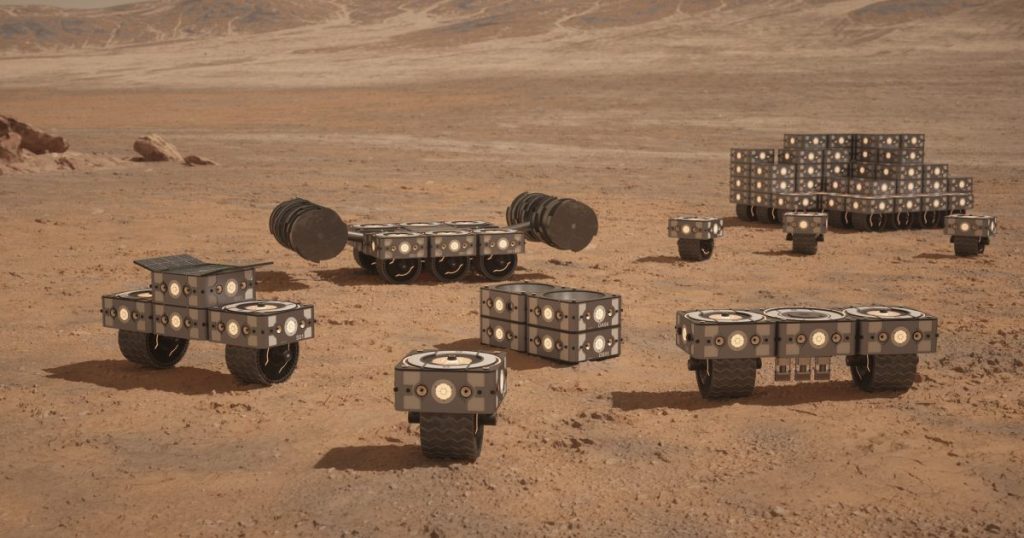
Swarm robotics is an exciting and rapidly evolving field in robotics research, drawing significant inspiration from nature, particularly the behavior of social animals. These robots are designed to work together in large groups, mimicking the cooperative behaviors observed in species such as ants, bees, and birds. The idea behind swarm robotics is that the collective behavior of a large group of simple robots can achieve complex tasks that would be impossible for a single robot to perform alone.

The appeal of swarm robotics lies in its potential for scalability, flexibility, and robustness. Like how a colony of ants works in harmony to gather food, defend their nest, or explore new territories, a swarm of robots can accomplish intricate, large-scale missions such as environmental monitoring, search and rescue, and large-scale construction projects. With these robots working autonomously, the result is often a coordinated effort that requires minimal human intervention.

In this article, we will explore swarm robotics in the context of biomimetic research, examining the concept of swarm intelligence, the capabilities and potential applications of these robots, the challenges they face, and the future outlook of this emerging field.


1. Understanding Swarm Robotics

Swarm robotics refers to the use of multiple, relatively simple robots that interact with each other and their environment to achieve collective goals. These robots communicate and collaborate to perform tasks that go beyond the capabilities of any individual robot. While each robot operates autonomously, the collective behavior of the swarm can mimic complex systems seen in nature.

1.1. Inspiration from Nature: Biomimicry in Swarm Robotics

The core idea behind swarm robotics is inspired by biomimicry, the imitation of natural systems and behaviors to solve human engineering problems. Swarm intelligence refers to the collective behavior of decentralized systems, like insect colonies, bird flocks, and fish schools, which achieve sophisticated tasks through simple rules and local interactions. These behaviors are driven by self-organization and emerge without any centralized control or external guidance.

In the natural world, animals like ants, bees, and termites operate in large groups where each individual is relatively simple but collectively contributes to the success of the colony. For instance, ants communicate via pheromones to establish paths to food sources, while bees work together to build hives or collect nectar. Swarm robotics attempts to replicate these behaviors, allowing robots to work together in a similar decentralized fashion.


2. Key Features of Swarm Robots

Swarm robots have several key features that set them apart from traditional robotics. These features allow them to work effectively in a variety of environments, particularly in large-scale, unpredictable, or hazardous situations.

2.1. Autonomy and Decentralization

Each robot in a swarm operates autonomously, making local decisions based on sensory input and communication with other robots. There is no central control, and the robots rely on distributed decision-making. This decentralized approach makes the swarm resilient to failures; if one robot breaks down, the others can continue to function and adapt.

2.2. Scalability

One of the main advantages of swarm robotics is scalability. Unlike traditional robotic systems, which may be designed to perform specific tasks, swarm robots can operate as a group, with their capabilities expanding or contracting based on the number of robots involved. Adding more robots to the swarm can increase efficiency and performance without requiring substantial changes to the system.

This scalability makes swarm robots suitable for applications where the number of robots can be dynamically adjusted to suit the complexity of the task. For example, in a disaster relief mission, the number of robots deployed can be scaled depending on the severity of the situation.

2.3. Flexibility and Adaptability

Swarm robots exhibit a high level of flexibility in their operation. They can adapt to changing environments and tasks by leveraging their collective intelligence. This is particularly useful in environments where conditions are dynamic or unpredictable, such as during search and rescue missions in post-disaster zones, or in agricultural fields where the terrain may vary.

2.4. Communication and Coordination

Effective communication is crucial for the success of swarm robotics. Swarm robots communicate using local communication protocols, which allow them to exchange information about their surroundings, position, and status. This interaction helps robots coordinate their actions and perform tasks in a synchronized manner.

For example, if a robot detects an obstacle, it can inform nearby robots to avoid that path or to work together to overcome the obstacle. By sharing information, robots can coordinate their movements, adjust their collective actions, and solve problems that would be difficult for individual robots.

3. Applications of Swarm Robotics

Swarm robotics is a versatile technology with a wide range of applications. By mimicking the behaviors of natural organisms, swarm robots can perform tasks that require cooperation, scalability, and robustness. Below are some notable examples of swarm robotics applications:

3.1. Search and Rescue Missions

Swarm robots are particularly useful in search and rescue missions following natural disasters such as earthquakes, floods, and fires. These robots can navigate dangerous, debris-filled environments and search for survivors without risking human lives.

In this scenario, ground robots can explore collapsed buildings, while aerial drones can fly over large areas to survey the situation. The collective intelligence of the swarm enables these robots to cover a wide area, coordinate their movements, and relay critical information to human rescuers. Swarm robots can also provide real-time feedback, allowing search teams to make informed decisions based on the data collected.

3.2. Environmental Monitoring

Swarm robots can be deployed in environmental monitoring applications to track changes in ecosystems, gather data on pollution levels, and assess the health of habitats. For instance, in a large-scale wildlife survey, a swarm of robots could be used to track animal populations, monitor vegetation growth, and measure environmental conditions over time.

Similarly, in ocean exploration, underwater swarm robots can explore coral reefs or survey marine environments for scientific research, all while coordinating their efforts to cover vast areas.

3.3. Agriculture

In agriculture, swarm robots can revolutionize tasks such as crop monitoring, pest control, and precision farming. A swarm of autonomous robots equipped with sensors and cameras can monitor crops across large fields, detect diseases, and apply fertilizers or pesticides with precision. This approach improves the efficiency of farming operations while reducing the environmental impact of traditional farming methods.

By using local communication and coordinated movements, the robots can cover large areas without overlap or gaps, ensuring a uniform application of resources.

3.4. Infrastructure Inspection and Maintenance

Swarm robots are also being explored for infrastructure inspection and maintenance tasks. For example, a swarm of robots could be used to inspect bridges, tunnels, or power lines for signs of wear and tear. By working together, these robots can provide real-time feedback on the condition of infrastructure, detect faults early, and even perform repairs or maintenance tasks autonomously.

This application is particularly valuable for critical infrastructure that requires regular monitoring but may be difficult or dangerous for human inspectors to access.

3.5. Military and Defense

Swarm robotics is also being explored in military and defense applications. In autonomous reconnaissance missions, swarms of drones or ground robots can be used to scout enemy territory, gather intelligence, and perform tactical maneuvers. Swarm robots could also be used for disposal of explosives or other dangerous materials, where coordinated efforts help ensure safety.

In addition, swarm robotics could play a significant role in logistics, assisting with the transport of materials and supplies to remote or hostile areas.


4. Challenges in Swarm Robotics

Despite the promising potential of swarm robotics, there are several challenges that need to be addressed before this technology can be fully realized.

4.1. Complex Coordination and Communication

One of the most significant challenges in swarm robotics is achieving efficient coordination among robots. While individual robots may be simple, coordinating a large number of robots to perform tasks in a synchronized manner is complex. Researchers need to develop advanced algorithms to ensure that robots can communicate effectively, adapt to changing environments, and resolve conflicts when they arise.

4.2. Robustness and Fault Tolerance

Another challenge is making sure that the swarm remains robust and fault-tolerant. In nature, even if a few individuals in a swarm fail, the group can continue to function. Achieving this in robots requires the development of mechanisms that allow the swarm to continue operating even if individual robots break down or become inoperative.

4.3. Scalability Issues

While swarm robotics can scale well in theory, practical applications face challenges related to the scalability of systems. As the number of robots in a swarm increases, managing their communication, navigation, and coordination becomes more complex. Researchers are working on improving distributed algorithms and hardware architectures to ensure that swarms of robots can operate at scale without becoming inefficient or chaotic.


5. The Future of Swarm Robotics

The future of swarm robotics looks promising, with numerous advancements on the horizon. As artificial intelligence, machine learning, and sensor technologies continue to evolve, swarm robots will become more intelligent, autonomous, and capable of solving more complex problems.

In particular, the integration of AI-driven algorithms, real-time decision-making, and advanced communication protocols will enable swarm robots to operate in even more dynamic environments, such as urban settings, space exploration, and underwater missions.

Furthermore, as the hardware for swarm robots becomes more affordable and efficient, we can expect widespread adoption in industries ranging from logistics and agriculture to healthcare and disaster response.


Conclusion: A New Era in Collaborative Robotics

Swarm robotics, inspired by nature’s complex systems, is set to revolutionize many fields, offering scalable, robust, and flexible solutions to challenges that traditional robotics cannot address. By emulating the cooperation seen in biological systems, swarm robots will be able to perform intricate, large-scale tasks with remarkable precision and adaptability.

As research continues, the collaboration between biomimicry, robotics, and artificial intelligence will pave the way for a future where swarm robots work seamlessly together, making significant contributions to industries, humanitarian efforts, and everyday life.
Tags: InsightsRobot ResearchSwarm Robotics
ShareTweetShare

Related Posts

How to Improve Robot Flexibility While Ensuring Strength and Durability: A Major Technological Challenge
Insights

How to Improve Robot Flexibility While Ensuring Strength and Durability: A Major Technological Challenge

December 1, 2025
Expert Interview: The Future of Biomimicry in Technology and Innovation
Insights

Expert Interview: The Future of Biomimicry in Technology and Innovation

November 30, 2025
Biomimetic Robots: Drawing Inspiration from Nature to Simulate the Behavior and Structure of Plants and Animals
Insights

Biomimetic Robots: Drawing Inspiration from Nature to Simulate the Behavior and Structure of Plants and Animals

November 29, 2025
Recent Advances in Flexible Materials and Bionic Muscle Actuation Technologies
Insights

Recent Advances in Flexible Materials and Bionic Muscle Actuation Technologies

November 28, 2025
Integrating Artificial Intelligence and Biomimetics: How Bionic Robots in Healthcare Can Provide Personalized Treatment Plans
Insights

Integrating Artificial Intelligence and Biomimetics: How Bionic Robots in Healthcare Can Provide Personalized Treatment Plans

November 27, 2025
The Great Potential of Bionic Robots in Neurorehabilitation
Insights

The Great Potential of Bionic Robots in Neurorehabilitation

November 26, 2025
Leave Comment
  • Trending
  • Comments
  • Latest
The Revolutionary Impact of Robotics on Disaster Rescue and Environmental Protection

The Revolutionary Impact of Robotics on Disaster Rescue and Environmental Protection

October 20, 2025
Defining the Relationship Between Humans and Robots

Defining the Relationship Between Humans and Robots

October 20, 2025
Biomimetics: A Multidisciplinary Approach to the Future of Robotics and Innovation

Biomimetics: A Multidisciplinary Approach to the Future of Robotics and Innovation

October 20, 2025
The Continuous Evolution of Bionic Robot Technology: A Catalyst for Applications in Complex Environments

The Continuous Evolution of Bionic Robot Technology: A Catalyst for Applications in Complex Environments

October 20, 2025
The Integration of Artificial Intelligence and Human-Computer Interaction

The Integration of Artificial Intelligence and Human-Computer Interaction

Researching How Machines Can Recognize and Understand Human Emotions to Improve the Naturalness of Human-Computer Interaction

Researching How Machines Can Recognize and Understand Human Emotions to Improve the Naturalness of Human-Computer Interaction

AI Can Recognize User Emotions Through Facial Expressions, Voice Tones, and Other Signals and Respond Accordingly

AI Can Recognize User Emotions Through Facial Expressions, Voice Tones, and Other Signals and Respond Accordingly

Voice Assistant Research Drives Breakthroughs in Speech Recognition and Natural Language Understanding

Voice Assistant Research Drives Breakthroughs in Speech Recognition and Natural Language Understanding

Robotics and Societal Change: Smart Cities and Digitalized Living

Robotics and Societal Change: Smart Cities and Digitalized Living

December 1, 2025
How to Improve Robot Flexibility While Ensuring Strength and Durability: A Major Technological Challenge

How to Improve Robot Flexibility While Ensuring Strength and Durability: A Major Technological Challenge

December 1, 2025
The Application of Robotics and Automated Logistics Systems in Supply Chain Management

The Application of Robotics and Automated Logistics Systems in Supply Chain Management

December 1, 2025
Edge Computing: A Key Technology for Real-Time Computer Vision Applications

Edge Computing: A Key Technology for Real-Time Computer Vision Applications

December 1, 2025
AnthroboticsLab

Through expert commentary and deep dives into industry trends and ethical considerations, we bridge the gap between academic research and real-world application, fostering a deeper understanding of our technological future.

© 2025 anthroboticslab.com. contacts:[email protected]

No Result
View All Result
  • Home
  • Research
  • Technology
  • Industry
  • Insights
  • Futures

© 2025 anthroboticslab.com. contacts:[email protected]

Welcome Back!

Login to your account below

Forgotten Password?

Retrieve your password

Please enter your username or email address to reset your password.

Log In