

AnthroboticsLab
  • Home
  • Research
    Soft Robotics: Advancements in Bio-Inspired Flexible Systems

    Soft Robotics: Advancements in Bio-Inspired Flexible Systems

    Autonomous Robots and Reinforcement Learning: Paving the Way for Intelligent Machines

    Autonomous Robots and Reinforcement Learning: Paving the Way for Intelligent Machines

    Designing Adaptive User Interfaces: Enhancing Human-Computer Interaction through Dynamic Interfaces

    Designing Adaptive User Interfaces: Enhancing Human-Computer Interaction through Dynamic Interfaces

    Human-Machine Interaction in Augmented Reality and Virtual Reality: A Comprehensive Exploration

    Human-Machine Interaction in Augmented Reality and Virtual Reality: A Comprehensive Exploration

    Affective Computing and Human-Machine Emotional Interaction: The Future of Emotional AI

    Affective Computing and Human-Machine Emotional Interaction: The Future of Emotional AI

    Researching How Machines Can Understand, Recognize, and Respond to Human Emotions

    Researching How Machines Can Understand, Recognize, and Respond to Human Emotions

  • Technology
    Edge Computing: A Key Technology for Real-Time Computer Vision Applications

    Edge Computing: A Key Technology for Real-Time Computer Vision Applications

    Image Fusion in Computer Vision: Enhancing Scene Understanding Through Multi-Sensor Integration

    Image Fusion in Computer Vision: Enhancing Scene Understanding Through Multi-Sensor Integration

    Sensor Fusion Technology: Achieving High-Precision Environmental Perception in Modern Robotics

    Sensor Fusion Technology: Achieving High-Precision Environmental Perception in Modern Robotics

    3D Vision Reconstruction and Depth Estimation: Foundations, Techniques, and Applications

    3D Vision Reconstruction and Depth Estimation: Foundations, Techniques, and Applications

    Computer Vision: The Foundation of Robotic Perception and Its Broad Applications in Autonomous Driving, Industrial Automation, and Medical Surgery

    Computer Vision: The Foundation of Robotic Perception and Its Broad Applications in Autonomous Driving, Industrial Automation, and Medical Surgery

    Ensuring Robots Do Not Harm Humans While Performing Tasks

    Ensuring Robots Do Not Harm Humans While Performing Tasks

  • Industry
    The Application of Robotics and Automated Logistics Systems in Supply Chain Management

    The Application of Robotics and Automated Logistics Systems in Supply Chain Management

    Collaborative Robots and Human Workers: Enhancing Productivity and Ensuring Worker Safety

    Collaborative Robots and Human Workers: Enhancing Productivity and Ensuring Worker Safety

    Modern Production Lines: Emphasizing Flexibility and Customization

    Modern Production Lines: Emphasizing Flexibility and Customization

    The Expanding Role of Robots in Manufacturing: Advancements, Applications, and Future Prospects

    The Expanding Role of Robots in Manufacturing: Advancements, Applications, and Future Prospects

    Industry 4.0: Revolutionizing Manufacturing with IoT, AI, Robotics, and Big Data

    Industry 4.0: Revolutionizing Manufacturing with IoT, AI, Robotics, and Big Data

    Smart Manufacturing and Industry 4.0: Revolutionizing the Future of Production

    Smart Manufacturing and Industry 4.0: Revolutionizing the Future of Production

  • Insights
    How to Improve Robot Flexibility While Ensuring Strength and Durability: A Major Technological Challenge

    How to Improve Robot Flexibility While Ensuring Strength and Durability: A Major Technological Challenge

    Expert Interview: The Future of Biomimicry in Technology and Innovation

    Expert Interview: The Future of Biomimicry in Technology and Innovation

    Biomimetic Robots: Drawing Inspiration from Nature to Simulate the Behavior and Structure of Plants and Animals

    Biomimetic Robots: Drawing Inspiration from Nature to Simulate the Behavior and Structure of Plants and Animals

    Recent Advances in Flexible Materials and Bionic Muscle Actuation Technologies

    Recent Advances in Flexible Materials and Bionic Muscle Actuation Technologies

    Integrating Artificial Intelligence and Biomimetics: How Bionic Robots in Healthcare Can Provide Personalized Treatment Plans

    Integrating Artificial Intelligence and Biomimetics: How Bionic Robots in Healthcare Can Provide Personalized Treatment Plans

    The Great Potential of Bionic Robots in Neurorehabilitation

    The Great Potential of Bionic Robots in Neurorehabilitation

  • Futures
    Robotics and Societal Change: Smart Cities and Digitalized Living

    Robotics and Societal Change: Smart Cities and Digitalized Living

    The Widespread Application of Robotics: Potential Impact on Traditional Jobs

    The Widespread Application of Robotics: Potential Impact on Traditional Jobs

    Smart Homes and Life Assistants: The Future of Everyday Living

    Smart Homes and Life Assistants: The Future of Everyday Living

    The Expanding Role of Robots in the Service Industry: From Customer Service to Personalized Healthcare

    The Expanding Role of Robots in the Service Industry: From Customer Service to Personalized Healthcare

    Fully Automated Production and Services: The Future of Industry and Innovation

    Fully Automated Production and Services: The Future of Industry and Innovation

    The Future of Robots: From Tools to Understanding, Learning, and Responding to Human Society

    The Future of Robots: From Tools to Understanding, Learning, and Responding to Human Society

AnthroboticsLab
  • Home
  • Research
    Soft Robotics: Advancements in Bio-Inspired Flexible Systems

    Soft Robotics: Advancements in Bio-Inspired Flexible Systems

    Autonomous Robots and Reinforcement Learning: Paving the Way for Intelligent Machines

    Autonomous Robots and Reinforcement Learning: Paving the Way for Intelligent Machines

    Designing Adaptive User Interfaces: Enhancing Human-Computer Interaction through Dynamic Interfaces

    Designing Adaptive User Interfaces: Enhancing Human-Computer Interaction through Dynamic Interfaces

    Human-Machine Interaction in Augmented Reality and Virtual Reality: A Comprehensive Exploration

    Human-Machine Interaction in Augmented Reality and Virtual Reality: A Comprehensive Exploration

    Affective Computing and Human-Machine Emotional Interaction: The Future of Emotional AI

    Affective Computing and Human-Machine Emotional Interaction: The Future of Emotional AI

    Researching How Machines Can Understand, Recognize, and Respond to Human Emotions

    Researching How Machines Can Understand, Recognize, and Respond to Human Emotions

  • Technology
    Edge Computing: A Key Technology for Real-Time Computer Vision Applications

    Edge Computing: A Key Technology for Real-Time Computer Vision Applications

    Image Fusion in Computer Vision: Enhancing Scene Understanding Through Multi-Sensor Integration

    Image Fusion in Computer Vision: Enhancing Scene Understanding Through Multi-Sensor Integration

    Sensor Fusion Technology: Achieving High-Precision Environmental Perception in Modern Robotics

    Sensor Fusion Technology: Achieving High-Precision Environmental Perception in Modern Robotics

    3D Vision Reconstruction and Depth Estimation: Foundations, Techniques, and Applications

    3D Vision Reconstruction and Depth Estimation: Foundations, Techniques, and Applications

    Computer Vision: The Foundation of Robotic Perception and Its Broad Applications in Autonomous Driving, Industrial Automation, and Medical Surgery

    Computer Vision: The Foundation of Robotic Perception and Its Broad Applications in Autonomous Driving, Industrial Automation, and Medical Surgery

    Ensuring Robots Do Not Harm Humans While Performing Tasks

    Ensuring Robots Do Not Harm Humans While Performing Tasks

  • Industry
    The Application of Robotics and Automated Logistics Systems in Supply Chain Management

    The Application of Robotics and Automated Logistics Systems in Supply Chain Management

    Collaborative Robots and Human Workers: Enhancing Productivity and Ensuring Worker Safety

    Collaborative Robots and Human Workers: Enhancing Productivity and Ensuring Worker Safety

    Modern Production Lines: Emphasizing Flexibility and Customization

    Modern Production Lines: Emphasizing Flexibility and Customization

    The Expanding Role of Robots in Manufacturing: Advancements, Applications, and Future Prospects

    The Expanding Role of Robots in Manufacturing: Advancements, Applications, and Future Prospects

    Industry 4.0: Revolutionizing Manufacturing with IoT, AI, Robotics, and Big Data

    Industry 4.0: Revolutionizing Manufacturing with IoT, AI, Robotics, and Big Data

    Smart Manufacturing and Industry 4.0: Revolutionizing the Future of Production

    Smart Manufacturing and Industry 4.0: Revolutionizing the Future of Production

  • Insights
    How to Improve Robot Flexibility While Ensuring Strength and Durability: A Major Technological Challenge

    How to Improve Robot Flexibility While Ensuring Strength and Durability: A Major Technological Challenge

    Expert Interview: The Future of Biomimicry in Technology and Innovation

    Expert Interview: The Future of Biomimicry in Technology and Innovation

    Biomimetic Robots: Drawing Inspiration from Nature to Simulate the Behavior and Structure of Plants and Animals

    Biomimetic Robots: Drawing Inspiration from Nature to Simulate the Behavior and Structure of Plants and Animals

    Recent Advances in Flexible Materials and Bionic Muscle Actuation Technologies

    Recent Advances in Flexible Materials and Bionic Muscle Actuation Technologies

    Integrating Artificial Intelligence and Biomimetics: How Bionic Robots in Healthcare Can Provide Personalized Treatment Plans

    Integrating Artificial Intelligence and Biomimetics: How Bionic Robots in Healthcare Can Provide Personalized Treatment Plans

    The Great Potential of Bionic Robots in Neurorehabilitation

    The Great Potential of Bionic Robots in Neurorehabilitation

  • Futures
    Robotics and Societal Change: Smart Cities and Digitalized Living

    Robotics and Societal Change: Smart Cities and Digitalized Living

    The Widespread Application of Robotics: Potential Impact on Traditional Jobs

    The Widespread Application of Robotics: Potential Impact on Traditional Jobs

    Smart Homes and Life Assistants: The Future of Everyday Living

    Smart Homes and Life Assistants: The Future of Everyday Living

    The Expanding Role of Robots in the Service Industry: From Customer Service to Personalized Healthcare

    The Expanding Role of Robots in the Service Industry: From Customer Service to Personalized Healthcare

    Fully Automated Production and Services: The Future of Industry and Innovation

    Fully Automated Production and Services: The Future of Industry and Innovation

    The Future of Robots: From Tools to Understanding, Learning, and Responding to Human Society

    The Future of Robots: From Tools to Understanding, Learning, and Responding to Human Society

AnthroboticsLab
No Result
View All Result
Home Technology

3D Reconstruction Technology: Generating Environment Models Through Multi-View Image Processing

October 15, 2025
in Technology
3D Reconstruction Technology: Generating Environment Models Through Multi-View Image Processing

1. Introduction

The field of 3D reconstruction has seen tremendous growth over the past two decades, driven by advances in computer vision, artificial intelligence (AI), and imaging technologies. Traditionally, the process of capturing the shape and structure of physical environments required expensive and specialized equipment like laser scanners and structured light systems. However, with the rise of multi-view image processing, it is now possible to generate accurate 3D models using only regular cameras, which are becoming increasingly ubiquitous in devices like smartphones, drones, and robots.

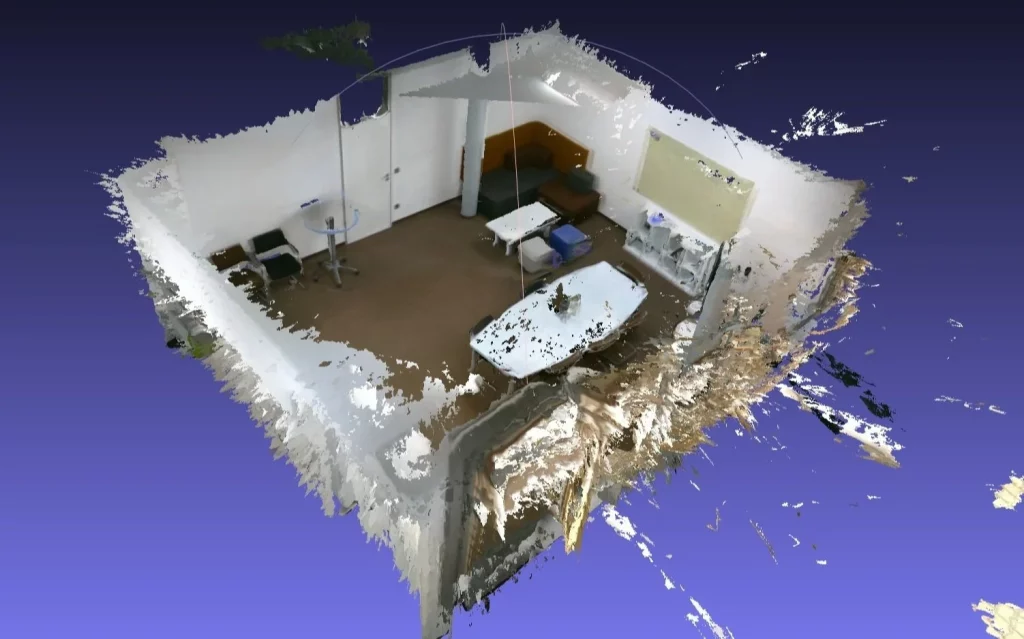
At its core, 3D reconstruction aims to capture the spatial configuration of objects and environments in three dimensions using a set of 2D images from different viewpoints. These images are processed to extract depth information, allowing the creation of a 3D model that can be manipulated or analyzed. The precision of this model depends on factors such as the number of images used, the quality of the images, and the algorithms employed.

In this article, we will explore how multi-view image processing is employed to generate detailed 3D models of environments, discussing the principles, key methods, challenges, and the wide-ranging applications of this technology.


2. The Basics of 3D Reconstruction

2.1 What is 3D Reconstruction?

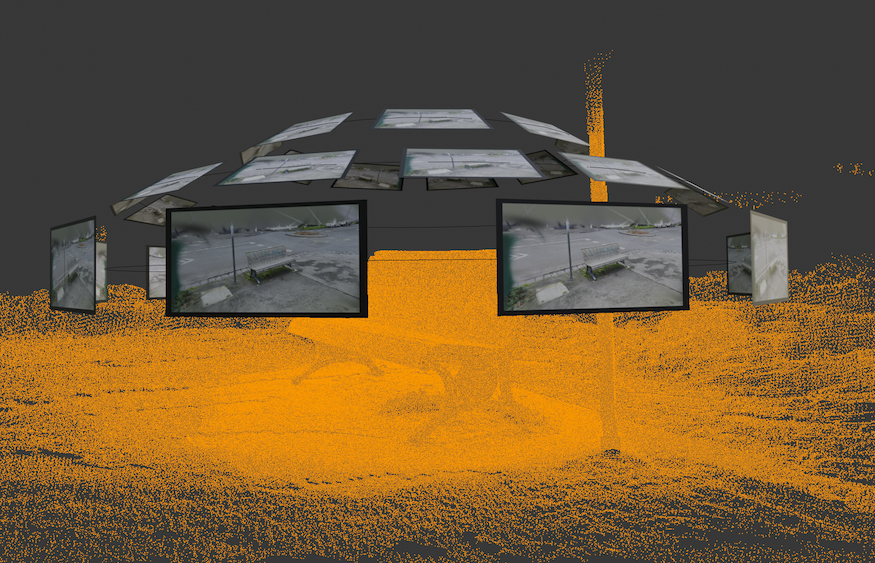
3D reconstruction is the process of creating a 3D model of a real-world object or environment using 2D images captured from different viewpoints. It involves two main steps: structure-from-motion (SfM) and multi-view stereo (MVS).

  • Structure-from-Motion (SfM): This is a technique used to reconstruct 3D points from a series of images taken from different angles. The algorithm identifies common features across images and uses the relative camera positions to triangulate the 3D coordinates of those features.
  • Multi-View Stereo (MVS): Once 3D points are obtained through SfM, MVS refines the model by estimating the depth of each pixel in the images to generate a denser 3D point cloud. MVS improves the reconstruction by capturing finer details, such as texture and geometry, which are necessary for high-precision models.

2.2 Multi-View Image Processing

In the context of 3D reconstruction, multi-view image processing refers to the use of multiple 2D images taken from different viewpoints to reconstruct a three-dimensional model. These images are typically taken from various angles, using either a static camera setup or a moving camera (e.g., on a drone or robot).

Key processes in multi-view image processing include:

  • Feature Detection and Matching: Identifying and matching common features (e.g., edges, corners) across multiple images.
  • Camera Calibration: Determining the intrinsic and extrinsic parameters of the camera to relate 2D image coordinates to 3D world coordinates.
  • Depth Estimation: Estimating the depth information for each pixel to reconstruct the spatial relationship between points.
  • Bundle Adjustment: A refinement process that optimizes the camera parameters and 3D point coordinates to reduce error across all images.

3. Key Technologies and Algorithms in 3D Reconstruction

3.1 Stereo Vision and Depth Estimation

Stereo vision is one of the foundational techniques in 3D reconstruction. By using two or more cameras to capture images from different angles, stereo vision algorithms can estimate the depth of points in the scene by comparing the disparities between corresponding pixels in the images. The greater the disparity, the closer the object is to the camera. This technique is widely used in robotics and autonomous vehicles, where real-time depth information is crucial for navigation and object detection.

3.2 Structure-from-Motion (SfM)

Structure-from-Motion (SfM) is a method that reconstructs 3D structures from a collection of 2D images without requiring explicit depth information. SfM estimates the camera positions and orientations while simultaneously triangulating the 3D positions of feature points. SfM is typically the first step in 3D reconstruction workflows, providing an initial sparse 3D model of the environment.

3.3 Multi-View Stereo (MVS)

After the sparse 3D model is obtained through SfM, Multi-View Stereo (MVS) algorithms refine the reconstruction by estimating depth for each pixel in the images, producing a dense 3D point cloud. Popular MVS algorithms include:

  • PMVS: A popular algorithm for dense reconstruction that works by selecting and matching visible points across all views.
  • CMVS: An extension of PMVS that reduces computational complexity by dividing the image into smaller regions and processing them in parallel.

3.4 Photogrammetry and Texture Mapping

Photogrammetry is the process of extracting three-dimensional information from two-dimensional photographs, often using advanced algorithms that analyze the geometry and appearance of objects. Once a 3D model is generated, texture mapping can be applied, where high-resolution images are mapped onto the 3D model to give it realistic surface details.

This technique is used in applications like creating realistic 3D models for cultural heritage preservation, video games, and virtual reality.

3.5 Deep Learning for 3D Reconstruction

Recent advances in deep learning have brought new methods for 3D reconstruction, with neural networks now able to predict depth information from single images, often outperforming traditional methods in terms of speed and robustness. Convolutional Neural Networks (CNNs) and Generative Adversarial Networks (GANs) are widely used in single-image 3D reconstruction tasks, where they learn to infer 3D structure from a 2D image by training on large datasets.

4. Applications of 3D Reconstruction

4.1 Robotics and Autonomous Vehicles

In robotics, 3D reconstruction is crucial for navigation, object recognition, and manipulation. Robots equipped with cameras can generate 3D maps of their environment in real time, allowing them to better understand spatial relationships, avoid obstacles, and interact with objects. In autonomous vehicles, 3D reconstruction is used to generate detailed maps of roads, traffic, and pedestrians, ensuring safe navigation.

4.2 Virtual and Augmented Reality

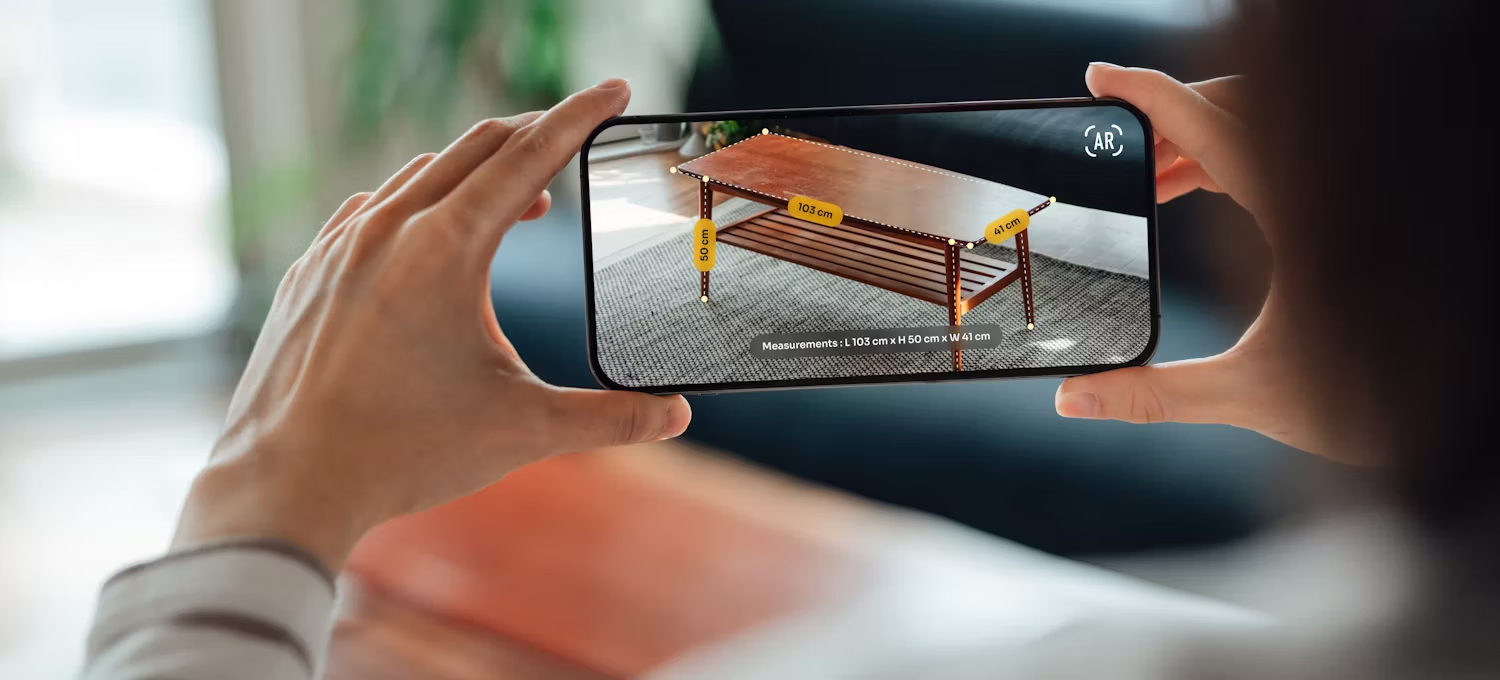
Virtual Reality (VR) and Augmented Reality (AR) rely heavily on 3D reconstruction to create immersive and interactive experiences. By using cameras to capture real-world environments, 3D models are generated in real-time, which can then be used in applications like gaming, virtual tours, or product visualization. For example, AR applications overlay 3D models on top of the physical world, requiring precise reconstruction to align virtual objects with the real world.

4.3 Urban Planning and Architecture

In the field of urban planning, 3D reconstruction allows for the creation of detailed models of cities or specific buildings. These models are essential for simulating urban growth, studying traffic patterns, and planning infrastructure projects. Similarly, in architecture, 3D models are used for design and visualization, helping architects and clients understand how a building will look in its real-world context.

4.4 Cultural Heritage Preservation

3D reconstruction plays an important role in preserving cultural heritage. Museums, archaeologists, and conservationists use 3D scanning and reconstruction to digitally preserve artifacts, monuments, and entire historical sites. These digital models can be studied in detail and shared with the public, helping to protect cultural heritage from degradation over time.

4.5 Medical Imaging

In medical imaging, 3D reconstruction is used to create detailed models of organs, bones, and other body structures from 2D medical scans like CT or MRI. These 3D models are invaluable for surgical planning, diagnosis, and treatment, providing a comprehensive view of a patient’s anatomy.


5. Challenges in 3D Reconstruction

While 3D reconstruction has made significant advancements, several challenges still exist:

5.1 Computational Complexity

Creating accurate and detailed 3D models from multiple images requires significant computational resources, particularly when working with large datasets or high-resolution images. Real-time processing remains a significant hurdle, especially for mobile or embedded devices with limited processing power.

5.2 Noise and Inaccurate Data

Images often contain noise, distortions, or occlusions that can complicate the reconstruction process. Inaccuracies in camera calibration, sensor alignment, and feature matching can also lead to errors in the final model. Addressing these issues requires robust algorithms that can filter out noise and handle imperfect data.

5.3 Scalability

While small-scale 3D reconstructions can be achieved with relative ease, scaling the process to large environments or large datasets (e.g., city-wide reconstructions) introduces new challenges in terms of memory, processing speed, and data management.

5.4 Real-Time Performance

For applications like robotics and AR, real-time 3D reconstruction is a necessity. Current methods often struggle to deliver accurate and detailed 3D models in real-time, especially under dynamic conditions where the environment is constantly changing.


6. Future Trends in 3D Reconstruction

The future of 3D reconstruction is closely linked to advancements in computer vision, AI, and sensor technology. Some promising areas include:

  • AI-enhanced 3D reconstruction: Neural networks will continue to improve the speed and accuracy of 3D reconstruction by enabling systems to infer depth and structure from images without relying on traditional algorithms.
  • Fusion of Multi-Sensor Data: Combining information from different types of sensors, such as LiDAR, infrared cameras, and visual cameras, will lead to more accurate and comprehensive 3D models, especially in challenging environments.
  • Real-time 3D reconstruction: Advancements in GPU processing and edge computing will make it possible to generate high-quality 3D models in real-time, enabling more responsive and intelligent systems.

Conclusion

3D reconstruction through multi-view image processing is one of the most powerful tools in computer vision, enabling the generation of highly accurate and detailed models of real-world environments. The advancements in algorithms and computing power have brought this technology closer to real-world applications in robotics, autonomous systems, AR/VR, and urban planning. However, challenges remain in terms of computational efficiency, real-time performance, and handling noisy data. As research continues and technology advances, the potential for 3D reconstruction will only expand, opening up new possibilities for both industry and society.
Tags: 3D Environment Modeling3D Reconstruction TechnologyTechnology
ShareTweetShare

Related Posts

Edge Computing: A Key Technology for Real-Time Computer Vision Applications
Technology

Edge Computing: A Key Technology for Real-Time Computer Vision Applications

December 1, 2025
Image Fusion in Computer Vision: Enhancing Scene Understanding Through Multi-Sensor Integration
Technology

Image Fusion in Computer Vision: Enhancing Scene Understanding Through Multi-Sensor Integration

November 30, 2025
Sensor Fusion Technology: Achieving High-Precision Environmental Perception in Modern Robotics
Technology

Sensor Fusion Technology: Achieving High-Precision Environmental Perception in Modern Robotics

November 29, 2025
3D Vision Reconstruction and Depth Estimation: Foundations, Techniques, and Applications
Technology

3D Vision Reconstruction and Depth Estimation: Foundations, Techniques, and Applications

November 28, 2025
Computer Vision: The Foundation of Robotic Perception and Its Broad Applications in Autonomous Driving, Industrial Automation, and Medical Surgery
Technology

Computer Vision: The Foundation of Robotic Perception and Its Broad Applications in Autonomous Driving, Industrial Automation, and Medical Surgery

November 27, 2025
Ensuring Robots Do Not Harm Humans While Performing Tasks
Technology

Ensuring Robots Do Not Harm Humans While Performing Tasks

November 26, 2025
Leave Comment
  • Trending
  • Comments
  • Latest
The Revolutionary Impact of Robotics on Disaster Rescue and Environmental Protection

The Revolutionary Impact of Robotics on Disaster Rescue and Environmental Protection

October 20, 2025
Defining the Relationship Between Humans and Robots

Defining the Relationship Between Humans and Robots

October 20, 2025
Biomimetics: A Multidisciplinary Approach to the Future of Robotics and Innovation

Biomimetics: A Multidisciplinary Approach to the Future of Robotics and Innovation

October 20, 2025
How Robots Understand, Respond to, and Simulate Human Emotions to Enhance Interaction Experience

How Robots Understand, Respond to, and Simulate Human Emotions to Enhance Interaction Experience

October 20, 2025
The Integration of Artificial Intelligence and Human-Computer Interaction

The Integration of Artificial Intelligence and Human-Computer Interaction

Researching How Machines Can Recognize and Understand Human Emotions to Improve the Naturalness of Human-Computer Interaction

Researching How Machines Can Recognize and Understand Human Emotions to Improve the Naturalness of Human-Computer Interaction

AI Can Recognize User Emotions Through Facial Expressions, Voice Tones, and Other Signals and Respond Accordingly

AI Can Recognize User Emotions Through Facial Expressions, Voice Tones, and Other Signals and Respond Accordingly

Voice Assistant Research Drives Breakthroughs in Speech Recognition and Natural Language Understanding

Voice Assistant Research Drives Breakthroughs in Speech Recognition and Natural Language Understanding

Robotics and Societal Change: Smart Cities and Digitalized Living

Robotics and Societal Change: Smart Cities and Digitalized Living

December 1, 2025
How to Improve Robot Flexibility While Ensuring Strength and Durability: A Major Technological Challenge

How to Improve Robot Flexibility While Ensuring Strength and Durability: A Major Technological Challenge

December 1, 2025
The Application of Robotics and Automated Logistics Systems in Supply Chain Management

The Application of Robotics and Automated Logistics Systems in Supply Chain Management

December 1, 2025
Edge Computing: A Key Technology for Real-Time Computer Vision Applications

Edge Computing: A Key Technology for Real-Time Computer Vision Applications

December 1, 2025
AnthroboticsLab

Through expert commentary and deep dives into industry trends and ethical considerations, we bridge the gap between academic research and real-world application, fostering a deeper understanding of our technological future.

© 2025 anthroboticslab.com. contacts:[email protected]

No Result
View All Result
  • Home
  • Research
  • Technology
  • Industry
  • Insights
  • Futures

© 2025 anthroboticslab.com. contacts:[email protected]

Welcome Back!

Login to your account below

Forgotten Password?

Retrieve your password

Please enter your username or email address to reset your password.

Log In