






AnthroboticsLab
  • Home
  • Research
    Soft Robotics: Advancements in Bio-Inspired Flexible Systems

    Soft Robotics: Advancements in Bio-Inspired Flexible Systems

    Autonomous Robots and Reinforcement Learning: Paving the Way for Intelligent Machines

    Autonomous Robots and Reinforcement Learning: Paving the Way for Intelligent Machines

    Designing Adaptive User Interfaces: Enhancing Human-Computer Interaction through Dynamic Interfaces

    Designing Adaptive User Interfaces: Enhancing Human-Computer Interaction through Dynamic Interfaces

    Human-Machine Interaction in Augmented Reality and Virtual Reality: A Comprehensive Exploration

    Human-Machine Interaction in Augmented Reality and Virtual Reality: A Comprehensive Exploration

    Affective Computing and Human-Machine Emotional Interaction: The Future of Emotional AI

    Affective Computing and Human-Machine Emotional Interaction: The Future of Emotional AI

    Researching How Machines Can Understand, Recognize, and Respond to Human Emotions

    Researching How Machines Can Understand, Recognize, and Respond to Human Emotions

  • Technology
    Edge Computing: A Key Technology for Real-Time Computer Vision Applications

    Edge Computing: A Key Technology for Real-Time Computer Vision Applications

    Image Fusion in Computer Vision: Enhancing Scene Understanding Through Multi-Sensor Integration

    Image Fusion in Computer Vision: Enhancing Scene Understanding Through Multi-Sensor Integration

    Sensor Fusion Technology: Achieving High-Precision Environmental Perception in Modern Robotics

    Sensor Fusion Technology: Achieving High-Precision Environmental Perception in Modern Robotics

    3D Vision Reconstruction and Depth Estimation: Foundations, Techniques, and Applications

    3D Vision Reconstruction and Depth Estimation: Foundations, Techniques, and Applications

    Computer Vision: The Foundation of Robotic Perception and Its Broad Applications in Autonomous Driving, Industrial Automation, and Medical Surgery

    Computer Vision: The Foundation of Robotic Perception and Its Broad Applications in Autonomous Driving, Industrial Automation, and Medical Surgery

    Ensuring Robots Do Not Harm Humans While Performing Tasks

    Ensuring Robots Do Not Harm Humans While Performing Tasks

  • Industry
    The Application of Robotics and Automated Logistics Systems in Supply Chain Management

    The Application of Robotics and Automated Logistics Systems in Supply Chain Management

    Collaborative Robots and Human Workers: Enhancing Productivity and Ensuring Worker Safety

    Collaborative Robots and Human Workers: Enhancing Productivity and Ensuring Worker Safety

    Modern Production Lines: Emphasizing Flexibility and Customization

    Modern Production Lines: Emphasizing Flexibility and Customization

    The Expanding Role of Robots in Manufacturing: Advancements, Applications, and Future Prospects

    The Expanding Role of Robots in Manufacturing: Advancements, Applications, and Future Prospects

    Industry 4.0: Revolutionizing Manufacturing with IoT, AI, Robotics, and Big Data

    Industry 4.0: Revolutionizing Manufacturing with IoT, AI, Robotics, and Big Data

    Smart Manufacturing and Industry 4.0: Revolutionizing the Future of Production

    Smart Manufacturing and Industry 4.0: Revolutionizing the Future of Production

  • Insights
    How to Improve Robot Flexibility While Ensuring Strength and Durability: A Major Technological Challenge

    How to Improve Robot Flexibility While Ensuring Strength and Durability: A Major Technological Challenge

    Expert Interview: The Future of Biomimicry in Technology and Innovation

    Expert Interview: The Future of Biomimicry in Technology and Innovation

    Biomimetic Robots: Drawing Inspiration from Nature to Simulate the Behavior and Structure of Plants and Animals

    Biomimetic Robots: Drawing Inspiration from Nature to Simulate the Behavior and Structure of Plants and Animals

    Recent Advances in Flexible Materials and Bionic Muscle Actuation Technologies

    Recent Advances in Flexible Materials and Bionic Muscle Actuation Technologies

    Integrating Artificial Intelligence and Biomimetics: How Bionic Robots in Healthcare Can Provide Personalized Treatment Plans

    Integrating Artificial Intelligence and Biomimetics: How Bionic Robots in Healthcare Can Provide Personalized Treatment Plans

    The Great Potential of Bionic Robots in Neurorehabilitation

    The Great Potential of Bionic Robots in Neurorehabilitation

  • Futures
    Robotics and Societal Change: Smart Cities and Digitalized Living

    Robotics and Societal Change: Smart Cities and Digitalized Living

    The Widespread Application of Robotics: Potential Impact on Traditional Jobs

    The Widespread Application of Robotics: Potential Impact on Traditional Jobs

    Smart Homes and Life Assistants: The Future of Everyday Living

    Smart Homes and Life Assistants: The Future of Everyday Living

    The Expanding Role of Robots in the Service Industry: From Customer Service to Personalized Healthcare

    The Expanding Role of Robots in the Service Industry: From Customer Service to Personalized Healthcare

    Fully Automated Production and Services: The Future of Industry and Innovation

    Fully Automated Production and Services: The Future of Industry and Innovation

    The Future of Robots: From Tools to Understanding, Learning, and Responding to Human Society

    The Future of Robots: From Tools to Understanding, Learning, and Responding to Human Society

AnthroboticsLab
  • Home
  • Research
    Soft Robotics: Advancements in Bio-Inspired Flexible Systems

    Soft Robotics: Advancements in Bio-Inspired Flexible Systems

    Autonomous Robots and Reinforcement Learning: Paving the Way for Intelligent Machines

    Autonomous Robots and Reinforcement Learning: Paving the Way for Intelligent Machines

    Designing Adaptive User Interfaces: Enhancing Human-Computer Interaction through Dynamic Interfaces

    Designing Adaptive User Interfaces: Enhancing Human-Computer Interaction through Dynamic Interfaces

    Human-Machine Interaction in Augmented Reality and Virtual Reality: A Comprehensive Exploration

    Human-Machine Interaction in Augmented Reality and Virtual Reality: A Comprehensive Exploration

    Affective Computing and Human-Machine Emotional Interaction: The Future of Emotional AI

    Affective Computing and Human-Machine Emotional Interaction: The Future of Emotional AI

    Researching How Machines Can Understand, Recognize, and Respond to Human Emotions

    Researching How Machines Can Understand, Recognize, and Respond to Human Emotions

  • Technology
    Edge Computing: A Key Technology for Real-Time Computer Vision Applications

    Edge Computing: A Key Technology for Real-Time Computer Vision Applications

    Image Fusion in Computer Vision: Enhancing Scene Understanding Through Multi-Sensor Integration

    Image Fusion in Computer Vision: Enhancing Scene Understanding Through Multi-Sensor Integration

    Sensor Fusion Technology: Achieving High-Precision Environmental Perception in Modern Robotics

    Sensor Fusion Technology: Achieving High-Precision Environmental Perception in Modern Robotics

    3D Vision Reconstruction and Depth Estimation: Foundations, Techniques, and Applications

    3D Vision Reconstruction and Depth Estimation: Foundations, Techniques, and Applications

    Computer Vision: The Foundation of Robotic Perception and Its Broad Applications in Autonomous Driving, Industrial Automation, and Medical Surgery

    Computer Vision: The Foundation of Robotic Perception and Its Broad Applications in Autonomous Driving, Industrial Automation, and Medical Surgery

    Ensuring Robots Do Not Harm Humans While Performing Tasks

    Ensuring Robots Do Not Harm Humans While Performing Tasks

  • Industry
    The Application of Robotics and Automated Logistics Systems in Supply Chain Management

    The Application of Robotics and Automated Logistics Systems in Supply Chain Management

    Collaborative Robots and Human Workers: Enhancing Productivity and Ensuring Worker Safety

    Collaborative Robots and Human Workers: Enhancing Productivity and Ensuring Worker Safety

    Modern Production Lines: Emphasizing Flexibility and Customization

    Modern Production Lines: Emphasizing Flexibility and Customization

    The Expanding Role of Robots in Manufacturing: Advancements, Applications, and Future Prospects

    The Expanding Role of Robots in Manufacturing: Advancements, Applications, and Future Prospects

    Industry 4.0: Revolutionizing Manufacturing with IoT, AI, Robotics, and Big Data

    Industry 4.0: Revolutionizing Manufacturing with IoT, AI, Robotics, and Big Data

    Smart Manufacturing and Industry 4.0: Revolutionizing the Future of Production

    Smart Manufacturing and Industry 4.0: Revolutionizing the Future of Production

  • Insights
    How to Improve Robot Flexibility While Ensuring Strength and Durability: A Major Technological Challenge

    How to Improve Robot Flexibility While Ensuring Strength and Durability: A Major Technological Challenge

    Expert Interview: The Future of Biomimicry in Technology and Innovation

    Expert Interview: The Future of Biomimicry in Technology and Innovation

    Biomimetic Robots: Drawing Inspiration from Nature to Simulate the Behavior and Structure of Plants and Animals

    Biomimetic Robots: Drawing Inspiration from Nature to Simulate the Behavior and Structure of Plants and Animals

    Recent Advances in Flexible Materials and Bionic Muscle Actuation Technologies

    Recent Advances in Flexible Materials and Bionic Muscle Actuation Technologies

    Integrating Artificial Intelligence and Biomimetics: How Bionic Robots in Healthcare Can Provide Personalized Treatment Plans

    Integrating Artificial Intelligence and Biomimetics: How Bionic Robots in Healthcare Can Provide Personalized Treatment Plans

    The Great Potential of Bionic Robots in Neurorehabilitation

    The Great Potential of Bionic Robots in Neurorehabilitation

  • Futures
    Robotics and Societal Change: Smart Cities and Digitalized Living

    Robotics and Societal Change: Smart Cities and Digitalized Living

    The Widespread Application of Robotics: Potential Impact on Traditional Jobs

    The Widespread Application of Robotics: Potential Impact on Traditional Jobs

    Smart Homes and Life Assistants: The Future of Everyday Living

    Smart Homes and Life Assistants: The Future of Everyday Living

    The Expanding Role of Robots in the Service Industry: From Customer Service to Personalized Healthcare

    The Expanding Role of Robots in the Service Industry: From Customer Service to Personalized Healthcare

    Fully Automated Production and Services: The Future of Industry and Innovation

    Fully Automated Production and Services: The Future of Industry and Innovation

    The Future of Robots: From Tools to Understanding, Learning, and Responding to Human Society

    The Future of Robots: From Tools to Understanding, Learning, and Responding to Human Society

AnthroboticsLab
No Result
View All Result
Home Research

The Evolving Dynamics of Human-Robot Collaboration in the Workplace

October 17, 2025
in Research
The Evolving Dynamics of Human-Robot Collaboration in the Workplace

Introduction

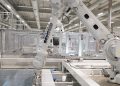
The landscape of the modern workplace is undergoing a significant transformation due to the integration of robotics and automation technologies. As robots become more capable of performing complex tasks, they are increasingly working alongside humans in various industries, ranging from manufacturing and healthcare to retail and logistics. These collaborative relationships—often referred to as human-robot collaboration or cobotics—are changing the way we think about work, productivity, and the role of humans in the workplace.

Gone are the days when robots were isolated in factories or restricted to performing repetitive tasks behind the scenes. Today, robots and humans are co-located, working in close proximity, and sometimes even interacting directly to achieve shared goals. This shift presents both opportunities and challenges, particularly regarding how humans and robots can coexist, complement one another, and maximize their collective potential.

This article explores the various models of human-robot collaboration in the workplace, the technological advancements driving these interactions, and the social, ethical, and practical implications of working alongside robots.


1. The Rise of Human-Robot Collaboration: An Overview

The concept of robots working alongside humans has evolved considerably in recent years. In the past, robots were designed primarily for automation in controlled environments, often performing highly repetitive tasks in industrial settings. They were typically separated from human workers for safety reasons, operating behind barriers or in restricted zones. However, recent developments in robotics and artificial intelligence (AI) have led to the emergence of collaborative robots, or cobots.

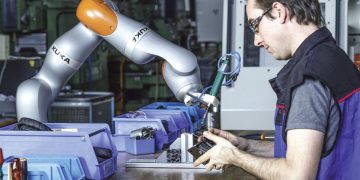
Cobots are robots that are specifically designed to work alongside humans in a shared workspace. Unlike traditional industrial robots, which require safety fences or cages to prevent accidents, cobots are equipped with advanced sensors, AI algorithms, and safety mechanisms that enable them to safely interact with human workers. This has opened the door to a wide range of new applications where robots and humans can collaborate in a fluid, dynamic, and mutually beneficial manner.

The growing sophistication of robots is also supported by advances in AI, machine learning, and robotics engineering, which have enabled robots to perform tasks that were once thought to be exclusive to humans. Whether it’s assembling products on a factory floor, assisting with surgeries in hospitals, or delivering goods in warehouses, robots are becoming indispensable partners in a variety of work environments.


2. Models of Human-Robot Collaboration

There are several different models of human-robot collaboration, each suited to different tasks, industries, and levels of human interaction. Understanding these models is crucial to realizing the full potential of human-robot cooperation.

  • Cooperative Collaboration (Task Sharing): In this model, robots and humans work together to accomplish a shared task, with each contributing complementary strengths. For example, in an assembly line, a robot might handle heavy lifting and precise positioning, while the human worker performs tasks requiring dexterity, problem-solving, or creative thinking. This approach maximizes the strengths of both the robot and the human worker, leading to improved efficiency and productivity.
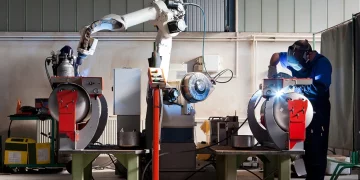
  • Sequential Collaboration (Task Division): In sequential collaboration, robots and humans perform parts of a task in a predetermined order. This model is commonly seen in manufacturing processes, where robots may handle certain phases of production (e.g., welding, painting) while humans perform the final assembly or quality checks. The coordination between robot and human is key to the success of this model, as it ensures a smooth workflow and minimal disruption.
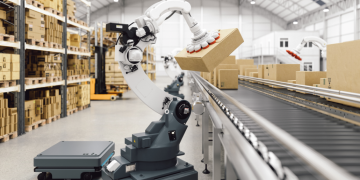
  • Assistive Collaboration: In some work environments, robots are used to assist human workers by providing tools or information, rather than directly participating in the task. For example, in healthcare settings, robots may assist surgeons by providing real-time data or offering tools during surgeries, while the human remains in control of the procedure. Similarly, in logistics, robots can deliver parts or supplies to human workers on the shop floor, reducing downtime and improving efficiency.
  • Autonomous Assistance: In this model, robots work autonomously but are designed to provide assistance to human workers as needed. For example, autonomous robots in warehouses or factories might move materials or products to designated locations, enabling human workers to focus on higher-level tasks. While the robot operates autonomously, its actions are coordinated with human workflows to ensure seamless operation.

Each model of collaboration has its own advantages, depending on the specific task, the level of interaction between the human and robot, and the nature of the work being performed. The key to successful collaboration is understanding the complementary roles that humans and robots can play, and designing systems that allow them to work together in harmony.


3. Technological Advancements Enabling Human-Robot Collaboration

The success of human-robot collaboration hinges on the continuous development of advanced technologies. Several key innovations are driving the progress of cobots, making them more capable and adaptable to a variety of workplace environments:

  • Artificial Intelligence (AI) and Machine Learning: AI and machine learning enable robots to learn from their environment, adapt to new situations, and improve over time. By processing data from sensors and cameras, robots can gain a deeper understanding of their surroundings, recognize objects, and make decisions autonomously or in collaboration with humans. For example, AI-powered robots can be trained to identify defects in products during quality control processes, or they can learn to adapt their movements based on the actions of human workers.
  • Advanced Sensors and Vision Systems: Sensors such as cameras, lidar, and proximity sensors play a crucial role in enabling robots to interact safely with humans. These sensors allow robots to detect and respond to human movements, ensuring that they can work in close proximity without posing a safety risk. In addition, advanced vision systems enable robots to recognize objects and manipulate them with precision, which is critical in many collaborative settings.
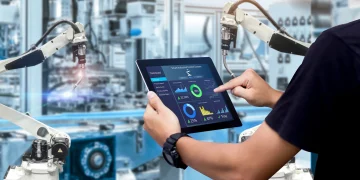
  • Human-Robot Interaction (HRI) Interfaces: To facilitate collaboration, robots must be able to communicate effectively with human workers. HRI interfaces, such as touchscreens, voice commands, and even gesture recognition systems, allow humans to control and communicate with robots intuitively. By simplifying interactions, these interfaces help bridge the gap between human and robotic capabilities, making collaboration more seamless.
  • Safety Mechanisms and Compliance: Safety is a top priority in human-robot collaboration, and significant progress has been made in developing safety systems that allow robots to work safely in close proximity to humans. These systems include collision detection, force sensors, and emergency stop functions, which enable robots to halt operations if they sense a potential danger. Regulatory bodies, such as the International Organization for Standardization (ISO) and the American National Standards Institute (ANSI), have developed guidelines and safety standards to ensure that robots operate in compliance with workplace safety regulations.
4. Benefits of Human-Robot Collaboration

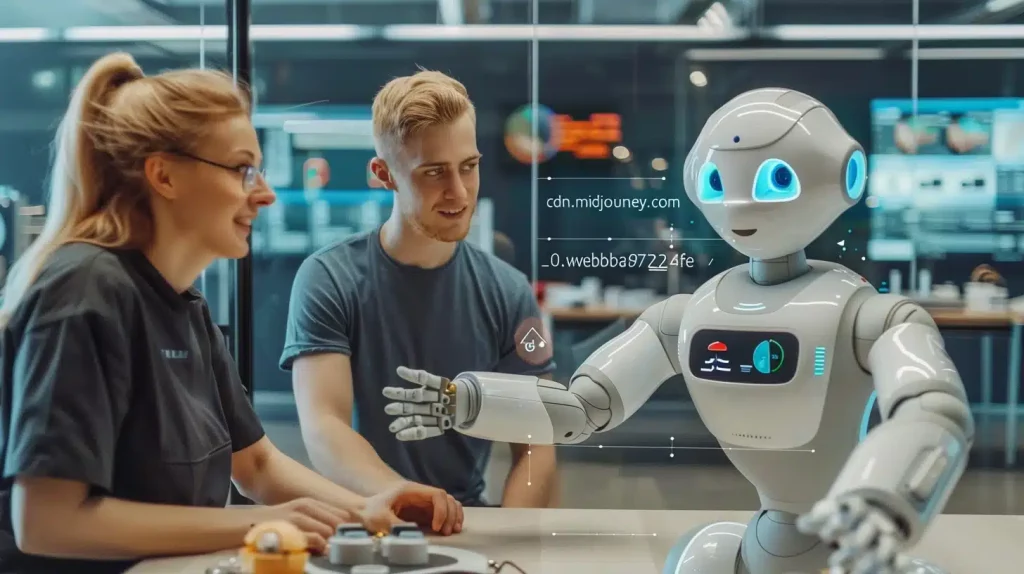
Human-robot collaboration offers a wide range of benefits that can enhance productivity, efficiency, and safety in the workplace. Some of the key advantages include:

  • Increased Productivity: By leveraging the strengths of both humans and robots, workplaces can achieve higher levels of productivity. Robots can handle repetitive, physically demanding, or dangerous tasks, while humans can focus on tasks that require creativity, problem-solving, and decision-making. This balance leads to more efficient workflows and faster output.
  • Improved Safety: Robots can perform dangerous tasks, such as handling hazardous materials or working in high-risk environments, reducing the potential for human injury. For example, in construction, robots can be used to lift heavy objects or operate in hazardous areas, ensuring that human workers are not exposed to dangerous conditions.
  • Enhanced Quality Control: Robots can perform tasks with a high degree of precision, improving the quality and consistency of products. In manufacturing, robots can be used for quality control tasks such as inspection, testing, and assembly, ensuring that products meet rigorous standards. This is particularly valuable in industries like electronics, automotive, and pharmaceuticals, where precision is crucial.
  • Job Creation and Skill Development: While there are concerns that automation may lead to job displacement, human-robot collaboration can actually create new job opportunities. As robots take on more routine tasks, human workers can shift focus to more value-added roles that require higher levels of skill, such as robot programming, maintenance, and process optimization. Furthermore, robots provide opportunities for workers to learn new skills and work alongside cutting-edge technologies.

5. Challenges of Human-Robot Collaboration

Despite the many advantages, there are several challenges that need to be addressed to fully realize the potential of human-robot collaboration. These challenges include:

  • Workplace Integration: Integrating robots into existing workflows and environments can be complex. Robots must be designed to work seamlessly with human workers, and this often requires significant changes to work processes, infrastructure, and training programs. Additionally, ensuring that robots can adapt to different tasks and work with diverse teams of humans is a critical challenge.
  • Human-Robot Interaction: While technology has made great strides in enabling human-robot interaction, there are still hurdles to overcome in making these interactions intuitive and natural. Ensuring that robots understand human intentions, respond to gestures and commands, and effectively collaborate with workers remains a significant research area in robotics.
  • Ethical and Social Considerations: The widespread use of robots in the workplace raises ethical questions about job displacement, data privacy, and the role of humans in the labor market. Addressing these concerns requires careful thought and planning to ensure that robots are integrated into the workplace in a way that benefits both workers and organizations.

6. The Future of Human-Robot Collaboration

The future of human-robot collaboration looks promising, with continued advancements in technology and the growing adoption of robots in various sectors. In the coming years, robots will become even more capable, adaptable, and integrated into the workplace. As AI, machine learning, and robotics continue to evolve, the boundaries between human and robotic roles will continue to blur, leading to more dynamic and flexible work environments.

However, to ensure the successful integration of robots into the workplace, it is essential to address the challenges of safety, ethics, and social impact. By fostering collaboration between technologists, policymakers, and industry leaders, we can create a future where robots and humans work together to unlock new possibilities for productivity, innovation, and human well-being.


Conclusion

Human-robot collaboration is transforming the way we work, creating opportunities for enhanced productivity, safety, and quality control in a variety of industries. While challenges remain in terms of integration, interaction, and ethical considerations, the potential benefits far outweigh the risks. As technology continues to evolve, human-robot collaboration will become an increasingly vital component of the workplace, reshaping how we approach tasks and redefine the future of work. The key to success lies in developing the right balance of innovation, safety, and human-centered design, ensuring that robots can serve as valuable partners without replacing the essential role of human workers.

Tags: CollaborationHuman-RobotResearch
ShareTweetShare

Related Posts

Soft Robotics: Advancements in Bio-Inspired Flexible Systems
Research

Soft Robotics: Advancements in Bio-Inspired Flexible Systems

December 1, 2025
Autonomous Robots and Reinforcement Learning: Paving the Way for Intelligent Machines
Research

Autonomous Robots and Reinforcement Learning: Paving the Way for Intelligent Machines

November 30, 2025
Designing Adaptive User Interfaces: Enhancing Human-Computer Interaction through Dynamic Interfaces
Research

Designing Adaptive User Interfaces: Enhancing Human-Computer Interaction through Dynamic Interfaces

November 29, 2025
Human-Machine Interaction in Augmented Reality and Virtual Reality: A Comprehensive Exploration
Research

Human-Machine Interaction in Augmented Reality and Virtual Reality: A Comprehensive Exploration

November 28, 2025
Affective Computing and Human-Machine Emotional Interaction: The Future of Emotional AI
Research

Affective Computing and Human-Machine Emotional Interaction: The Future of Emotional AI

November 27, 2025
Researching How Machines Can Understand, Recognize, and Respond to Human Emotions
Research

Researching How Machines Can Understand, Recognize, and Respond to Human Emotions

November 26, 2025
Leave Comment
  • Trending
  • Comments
  • Latest
The Revolutionary Impact of Robotics on Disaster Rescue and Environmental Protection

The Revolutionary Impact of Robotics on Disaster Rescue and Environmental Protection

October 20, 2025
Defining the Relationship Between Humans and Robots

Defining the Relationship Between Humans and Robots

October 20, 2025
Biomimetics: A Multidisciplinary Approach to the Future of Robotics and Innovation

Biomimetics: A Multidisciplinary Approach to the Future of Robotics and Innovation

October 20, 2025
The Continuous Evolution of Bionic Robot Technology: A Catalyst for Applications in Complex Environments

The Continuous Evolution of Bionic Robot Technology: A Catalyst for Applications in Complex Environments

October 20, 2025
The Integration of Artificial Intelligence and Human-Computer Interaction

The Integration of Artificial Intelligence and Human-Computer Interaction

Researching How Machines Can Recognize and Understand Human Emotions to Improve the Naturalness of Human-Computer Interaction

Researching How Machines Can Recognize and Understand Human Emotions to Improve the Naturalness of Human-Computer Interaction

AI Can Recognize User Emotions Through Facial Expressions, Voice Tones, and Other Signals and Respond Accordingly

AI Can Recognize User Emotions Through Facial Expressions, Voice Tones, and Other Signals and Respond Accordingly

Voice Assistant Research Drives Breakthroughs in Speech Recognition and Natural Language Understanding

Voice Assistant Research Drives Breakthroughs in Speech Recognition and Natural Language Understanding

Robotics and Societal Change: Smart Cities and Digitalized Living

Robotics and Societal Change: Smart Cities and Digitalized Living

December 1, 2025
How to Improve Robot Flexibility While Ensuring Strength and Durability: A Major Technological Challenge

How to Improve Robot Flexibility While Ensuring Strength and Durability: A Major Technological Challenge

December 1, 2025
The Application of Robotics and Automated Logistics Systems in Supply Chain Management

The Application of Robotics and Automated Logistics Systems in Supply Chain Management

December 1, 2025
Edge Computing: A Key Technology for Real-Time Computer Vision Applications

Edge Computing: A Key Technology for Real-Time Computer Vision Applications

December 1, 2025
AnthroboticsLab

Through expert commentary and deep dives into industry trends and ethical considerations, we bridge the gap between academic research and real-world application, fostering a deeper understanding of our technological future.

© 2025 anthroboticslab.com. contacts:[email protected]

No Result
View All Result
  • Home
  • Research
  • Technology
  • Industry
  • Insights
  • Futures

© 2025 anthroboticslab.com. contacts:[email protected]

Welcome Back!

Login to your account below

Forgotten Password?

Retrieve your password

Please enter your username or email address to reset your password.

Log In